

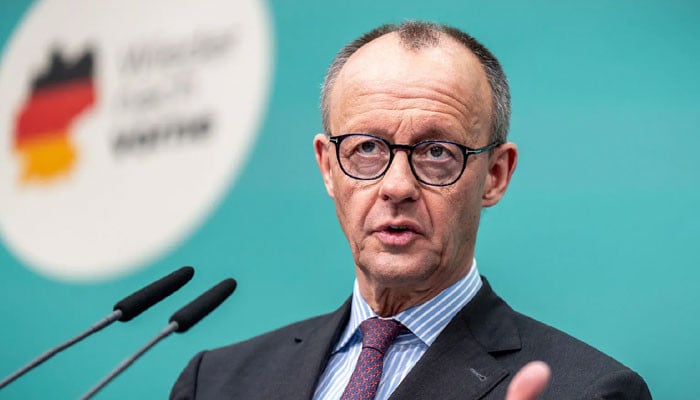
Iran’s military is proving stronger than expected in its conflict with the United States. This has come to light in a statement made by German Chancellor Friedrich Merz, who expressed his concerns about the ongoing situation. Merz stated that Iran’s military has surpassed expectations and that the US has been facing pushback from the Iranian forces. The German Chancellor further stated that he had always suspected that Iran would resort to military action, and that the US lacked a clear strategy for negotiations.
In a separate statement, US President Donald Trump expressed disappointment with European and NATO allies, criticizing them for not providing full support or participating in the conflict. However, despite this, Merz stated that relations with President Trump remain good and that the situation in the Middle East does not appear to be improving.
The US President has directed his administration to maintain pressure on Iran’s economy and oil exports. Trump has instructed his officials to prevent Iranian ships from docking at ports and to continue airstrikes or maintain a blockade, rather than withdrawing from the conflict.
Chinese Foreign Minister Wang Yi and US Secretary of State Marco Rubio have held a telephonic conversation. Amid the ongoing tensions, Trump has called for Iran’s ambassador to the UAE, Abbas Iraqi, to be recalled. Iraqi responded by stating that Trump and his administration continue to refer to the Persian Gulf as the “Hormuz Strait,” which is an incorrect term. Iranian President Ebrahim Raisi stated that Iran is ready to resume diplomatic relations with the US, provided that the US changes its stance.
According to reports, 53 training centers have been established in Bangladesh to teach the Japanese language. In the US, the average price of petrol has increased by 8 cents to $4.30 per gallon, with the highest price recorded in California at $6 per gallon.
Ayatollah Ali Khamenei stated that new phases are being formed in the Persian Gulf and the Strait of Hormuz following the end of the conflict, which began on February 28. He further stated that changes have taken place in the region since then, and that the political and security situation in the area is undergoing a transformation.
The head of the UN’s atomic agency, Rafael Grossi, stated that most of Iran’s enriched uranium is still likely to be stored at the nuclear facility in Isfahan. India has proposed a contentious plan to build a barrier in the difficult riverine sections of its 4,096 km border with Bangladesh to prevent the spread of cobras and other venomous snakes.
A report by the Paris-based organization, Reporters Without Borders, has revealed that press freedom is at its lowest level globally in the past 25 years. Admiral Shahram Irani stated that if the enemy were to make any slight move towards the Strait of Hormuz, they would respond swiftly.
