

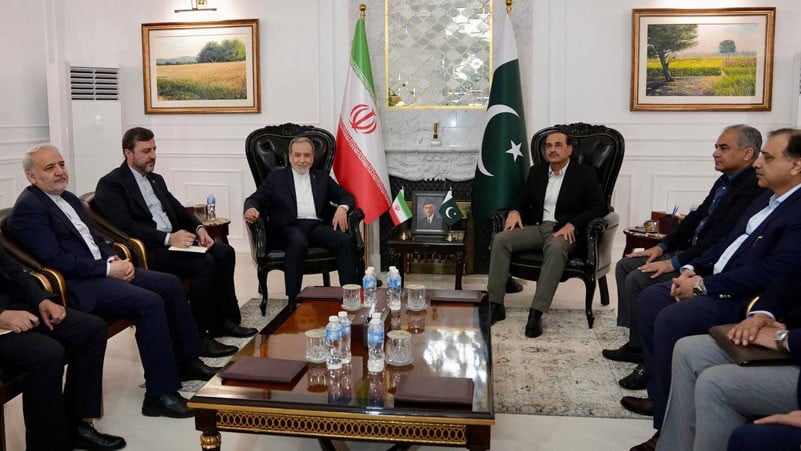
Pakistan’s Prime Minister Shahbaz Sharif has met with Iranian Foreign Minister Hossein Amir-Abdollahian in a crucial diplomatic encounter, signaling a potential shift in the country’s foreign policy. The meeting comes as Iran and the United States are reportedly engaging in talks to revive the Joint Comprehensive Plan of Action (JCPOA), a nuclear deal that was abandoned by former US President Donald Trump.
According to officials, the Iranian Foreign Minister arrived in Islamabad on Sunday, accompanied by a high-level delegation, including Vice Foreign Minister Mohsen Rezaee and Iran’s ambassador to Pakistan, Seyed Mohammad Ali Hosseini. The delegation is believed to have brought new proposals to revive the JCPOA, which was abandoned by the US in 2018.
The meeting between the two leaders is seen as a significant development, as it comes at a time when the US and Iran are reportedly re-engaging in talks to revive the JCPOA. The US Special Envoy for Iran, Robert Malley, is expected to meet with Pakistani officials in the coming days to discuss the revival of the JCPOA.
The meeting between the two leaders also underscores the importance of Pakistan’s role in facilitating dialogue between the US and Iran. Pakistan has long been a key player in regional diplomacy, and its efforts to revive the JCPOA could have significant implications for regional stability.
In a statement, Prime Minister Shahbaz Sharif said that the meeting with the Iranian Foreign Minister was productive and that the two sides discussed a range of issues, including bilateral relations and regional security. The Prime Minister also expressed his commitment to strengthening Pakistan’s relations with Iran and promoting regional cooperation.
The meeting between the two leaders comes as Pakistan is facing growing pressure from the US to take a tougher stance against Iran. However, the Prime Minister’s willingness to engage with the Iranian Foreign Minister suggests that Pakistan is committed to maintaining good relations with its western neighbor.
The JCPOA, also known as the Iran nuclear deal, was abandoned by the US in 2018, when President Trump withdrew from the agreement. Since then, tensions between the US and Iran have continued to escalate, with the US imposing strict sanctions on Iran’s oil exports.
However, with the US and Iran reportedly re-engaging in talks to revive the JCPOA, there are hopes that the deal could be revived, potentially leading to a significant reduction in tensions between the two countries.
In a related development, Pakistani officials have announced that the country’s fuel prices will be reduced by Rs 3.14 per liter, following a decrease in international oil prices. The reduction in fuel prices is expected to provide relief to Pakistani consumers, who have been facing high prices due to the ongoing economic crisis.
The meeting between the two leaders also comes as Pakistan is facing growing criticism for its handling of the economy. The country’s currency has depreciated sharply in recent weeks, and inflation remains high.
In a statement, the Prime Minister’s office said that the meeting with the Iranian Foreign Minister was productive and that the two sides discussed a range of issues, including bilateral relations and regional security. The Prime Minister also expressed his commitment to strengthening Pakistan’s relations with Iran and promoting regional cooperation.
The meeting between the two leaders is seen as a significant development, as it comes at a time when the US and Iran are reportedly re-engaging in talks to revive the JCPOA. The US Special Envoy for Iran, Robert Malley, is expected to meet with Pakistani officials in the coming days to discuss the revival of the JCPOA.
The JCPOA, also known as the Iran nuclear deal, was abandoned by the US in 2018, when President Trump withdrew from the agreement. Since then, tensions between the US and Iran have continued to escalate, with the US imposing strict sanctions on Iran’s oil exports.
However, with the US and Iran reportedly re-engaging in talks to revive the JCPOA, there are hopes that the deal could be revived, potentially leading to a significant reduction in tensions between the two countries.
In a related development, Pakistani officials have announced that the country’s fuel prices will be reduced by Rs 3.14 per liter, following a decrease in international oil prices. The reduction in fuel prices is expected to provide relief to Pakistani consumers, who have been facing high prices due to the ongoing economic crisis.
The meeting between the two leaders also comes as Pakistan is
