

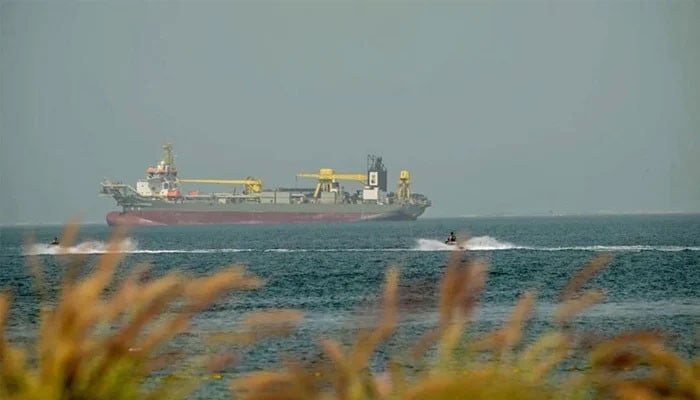
The ongoing conflict between the United States, Israel, and Iran has resulted in a significant disruption to the Global Positioning System (GPS), leaving thousands of ships in the Middle East unable to determine their location. The situation has been compared to a “darkness” in the region, with many ships struggling to navigate through the waters of the Persian Gulf and the Gulf of Oman.
According to Demetris A. Ampatzidis, a senior risk and compliance analyst for the energy market intelligence firm Kpler, the number of affected vessels is around half of the total number of ships in the region, with the majority being located far from the United Arab Emirates and Oman. The GPS system, which relies on a network of satellites orbiting the Earth, has been severely impacted, with many ships relying on a single frequency band that is vulnerable to interference.
The situation has been exacerbated by the fact that many ships, including oil tankers and cargo vessels, are not equipped with advanced navigation systems that can compensate for the loss of GPS signals. The ships are instead relying on outdated technology, including radar and visual signals, which are not sufficient to ensure safe navigation.
The consequences of the GPS disruption are being felt far beyond the Middle East. The global economy is at risk, with many industries, including shipping and trade, relying on the accuracy of GPS signals to operate safely and efficiently. The situation has sparked a new wave of innovation, with start-ups and tech companies racing to develop alternative navigation systems that can mitigate the impact of the GPS disruption.
The conflict between the United States, Israel, and Iran has been ongoing for several weeks, with both sides trading blows in a series of airstrikes and missile attacks. The situation has resulted in significant casualties, with over 1,200 people killed and 12,000 injured in Iran alone. The conflict has also had a significant impact on the global energy market, with oil prices reaching record highs in recent weeks.
The situation in the Middle East is complex and multifaceted, with many countries and interests at play. However, one thing is clear: the disruption to the GPS system has highlighted the risks and vulnerabilities of the global navigation system and has sparked a new wave of innovation and investment in alternative navigation technologies.
In related news, the Israeli military has launched a new wave of airstrikes against Iranian targets in the country, with reports of significant damage and casualties. The situation has sparked a new round of diplomatic efforts, with many countries calling for a ceasefire and an end to the violence.
The conflict has also had a significant impact on the global economy, with many industries, including shipping and trade, feeling the pinch. The situation has sparked a new wave of innovation, with start-ups and tech companies racing to develop alternative navigation systems that can mitigate the impact of the GPS disruption.
In a separate development, the International Cricket Council (ICC) has announced the team of the tournament for the 2026 T20 World Cup, with Pakistan’s Shahid Afridi named as the top scorer. The announcement has sparked a new round of excitement and anticipation among cricket fans around the world.
The situation in the Middle East is complex and multifaceted, with many countries and interests at play. However, one thing is clear: the disruption to the GPS system has highlighted the risks and vulnerabilities of the global navigation system and has sparked a new wave of innovation and investment in alternative navigation technologies.
In conclusion, the conflict between the United States, Israel, and Iran has resulted in a significant disruption to the Global Positioning System (GPS), leaving thousands of ships in the Middle East unable to determine their location. The situation has sparked a new wave of innovation and investment in alternative navigation technologies, with many industries, including shipping and trade, feeling the pinch. The conflict has also had a significant impact on the global economy, with many countries and interests at play.
