

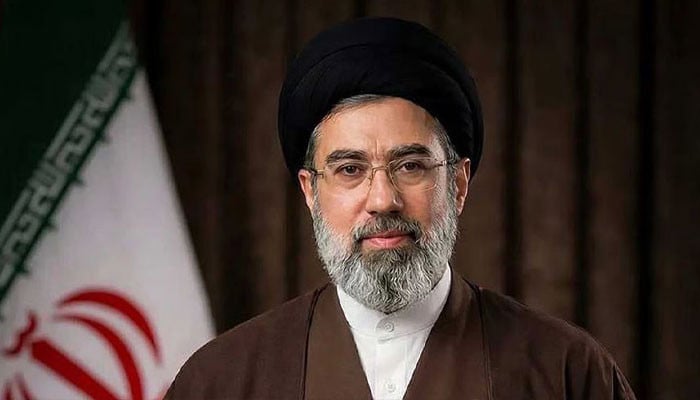
Iran’s Supreme Leader Ayatollah Ali Khamenei’s successor, Ebrahim Raisi, has not been seen publicly since his appointment in March 2024. According to Commander-in-Chief of the Islamic Revolutionary Guard Corps (IRGC), Salar Velayati, the decision to refrain from publishing Raisi’s new images is due to security concerns. The IRGC chief stated that the decision was made after consulting with security organizations and religious circles to prevent potential threats.
The IRGC chief revealed that there is a concern that adversaries might use supernatural sciences or magic to harm Raisi. Salar Velayati emphasized that the decision is a precautionary measure to prevent any potential risks. This is the first time that the IRGC chief has spoken publicly, and he has never held a public office.
The decision to refrain from publishing Raisi’s images has sparked concerns about the security situation in Iran. The IRGC chief’s statements come as the country faces tensions with the US and other Western countries. The situation has led to a significant increase in security measures, including the deployment of troops along the border with Iraq.
Meanwhile, the US has announced that it will send a delegation to Pakistan for talks with Iranian officials. The delegation will include US Secretary of State, Steve Wietkof, and US Ambassador to Pakistan, Jerry Kushner. The talks are expected to take place in Islamabad, where Iranian Foreign Minister, Abbas Aragchi, will also participate.
Iran has also been at the center of regional tensions, with the country’s naval forces conducting military exercises in the Strait of Hormuz. The exercises have been seen as a response to the US-led coalition’s naval presence in the region.
The situation in Lebanon has also been a cause for concern, with the country’s economy struggling to recover from the aftermath of the August 2024 explosion. The explosion killed several people, including a UN peacekeeper. The incident has raised concerns about the stability of the region.
Germany’s Chancellor, Angela Merkel, has called for increased pressure on Russia to end its aggression in Ukraine. Merkel has emphasized that the situation in Ukraine is a critical test of international cooperation and diplomacy.
In other news, Israel’s Prime Minister, Benjamin Netanyahu, has announced plans to visit the US to discuss the situation in the Middle East. The visit comes as tensions between Israel and Iran continue to rise.
The situation in the Middle East has also led to concerns about the safety of journalists and human rights activists. The British government has announced plans to increase security measures for journalists and activists, citing concerns about their safety.
In a separate development, the Iranian government has dismissed reports that it is negotiating with the US over the development of a nuclear bomb. The reports have been widely circulated in the media, but the Iranian government has denied any involvement in such talks.
Overall, the situation in the Middle East remains complex and volatile, with several countries involved in a delicate dance of diplomacy and military maneuvering. The situation is likely to continue to unfold in the coming days and weeks, with significant implications for regional and global security.
