

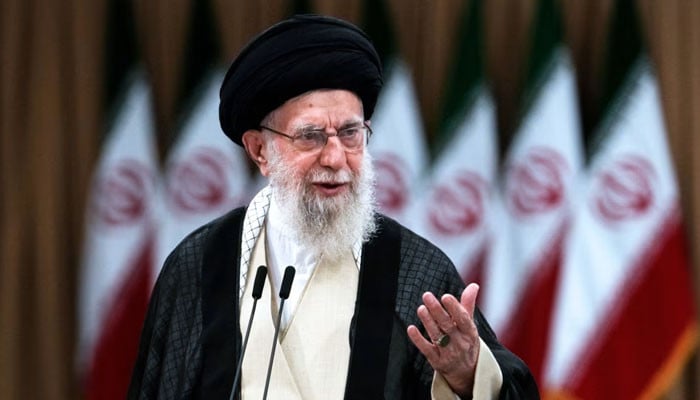
Iran is on the cusp of a new era as the country mourns the death of Supreme Leader Ayatollah Ali Khamenei. Khamenei led Iran for nearly four decades, but did not appoint a clear successor before his passing. The new Supreme Leader will be chosen by the 88-member Assembly of Experts, a body composed of senior clerics elected to represent the Iranian people.
The Assembly of Experts is responsible for selecting the new leader, a process that has only occurred once since the 1979 Islamic Revolution. After Ayatollah Ruhollah Khomeini’s death, Khamenei was elected as the new leader. Following Khamenei’s death, a seven-day mourning period and 40-day bereavement have been announced across Iran.
Iran’s leadership is expected to move quickly to announce a new Supreme Leader, in an effort to maintain stability in the system. However, the current security situation and potential further actions by the US and Israel may pose a challenge to the Assembly of Experts convening for the selection process.
The new leader must be a man with a deep understanding of Shia theology, possess strong administrative skills, and demonstrate high moral authority. He must also be completely loyal to the Islamic Republic. Several potential candidates have emerged in the wake of Khamenei’s death, including:
* Mohammad Mojtaba Khamenei, Khamenei’s younger brother, who is known for his close ties to the Revolutionary Guard Corps and the Basij militia. However, Iran’s constitution prohibits hereditary succession, especially in a system that was established after the monarchy was overthrown.
* Ali Reza Arafi, the Deputy Chairman of the Assembly of Experts, who has served on the Guardian Council and has experience in overseeing election candidates and parliamentarians. However, his influence within the security establishment is seen as limited.
* Mohammad Mehdi Mirbaqeri, a hardline cleric and member of the Assembly of Experts, who is known for his conservative views and anti-Western stance. He is also the head of the Islamic Sciences Academy in Qom.
* Hassan Khamenei, the grandson of Ayatollah Khomeini, who has been involved in the management of the Khomeini shrine. However, he has not held any significant government position and is seen as having relatively moderate views.
* Hashem Hosseini Bushehr, the First Deputy Chairman of the Assembly of Experts, who has played an important role in the succession process and is seen as close to Khamenei. However, he has a relatively low public profile and lacks strong ties to the Revolutionary Guard.
As the country mourns Khamenei’s death, Iranian President Ebrahim Raisi has paid tribute to the late leader, saying that his legacy will be remembered for centuries to come. China has condemned the assassination of Khamenei as a serious breach of Iran’s sovereignty and security.
The international community has expressed deep concern over the escalating tensions in the region. Pope Leo has expressed his worries over the increasing tensions between Iran and the US and Israel. The Israeli military has claimed that it has targeted the central headquarters of the Iranian armed forces in a new wave of airstrikes.
The Iranian Revolutionary Guard has claimed to have hit an American aircraft carrier in the Gulf with four ballistic missiles. The Emirati government has condemned the Iranian attacks, which have caused significant damage to infrastructure and lives.
The UAE has announced a state of emergency and called for calm. The Iranian government has denied responsibility for the attacks, but has vowed to respond to any further aggression.
As the situation continues to unfold, the international community is watching with bated breath. The Iranian people are mourning the loss of their leader, while the country’s leaders are grappling with the challenges of selecting a new Supreme Leader. The fate of the region hangs in the balance, as tensions between Iran, the US, and Israel continue to escalate.
