Shared Control of the Strait of Hormuz? The Question Nobody Wanted to Ask Has Finally Been Asked
By:Raja Zahid Akhtar Khanzada
There are questions that powerful nations spend decades refusing to ask, not because the questions are unanswerable, but because the asking itself is an admission — an acknowledgment that the world has changed in ways that the official story cannot yet accommodate. These questions circulate in the back rooms of think tanks, in the careful hedging of former officials who no longer have careers to protect, in the silence between the lines of policy papers written by people who know more than they are permitted to say.
And then, one day, someone asks the question out loud.
The question that has recently surfaced in Washington’s strategic circles — in its forums and its analytical journals and its quietly anxious policy conversations — is this: could the United States and Iran, two nations that have spent nearly half a century perfecting the art of mutual hostility, move toward a shared arrangement to govern the Strait of Hormuz? Could they, together, impose tolls on the ships that pass through those waters — waters through which nearly a fifth of the world’s oil supply must travel, through which the economic stability of nations on every continent depends?
I want to be careful here, because carelessness is the enemy of clarity, and this particular question deserves all the clarity we can bring to it. No formal agreement has been announced. No policy has been codified. What exists, at this moment, is a convergence of signals — statements made and then walked back, remarks offered as questions rather than conclusions, the particular silence of governments that are thinking hard about something they are not yet ready to say plainly.
But silence, as I have learned over a long life of paying attention, is itself a form of speech. And the silence around this question is beginning to speak.
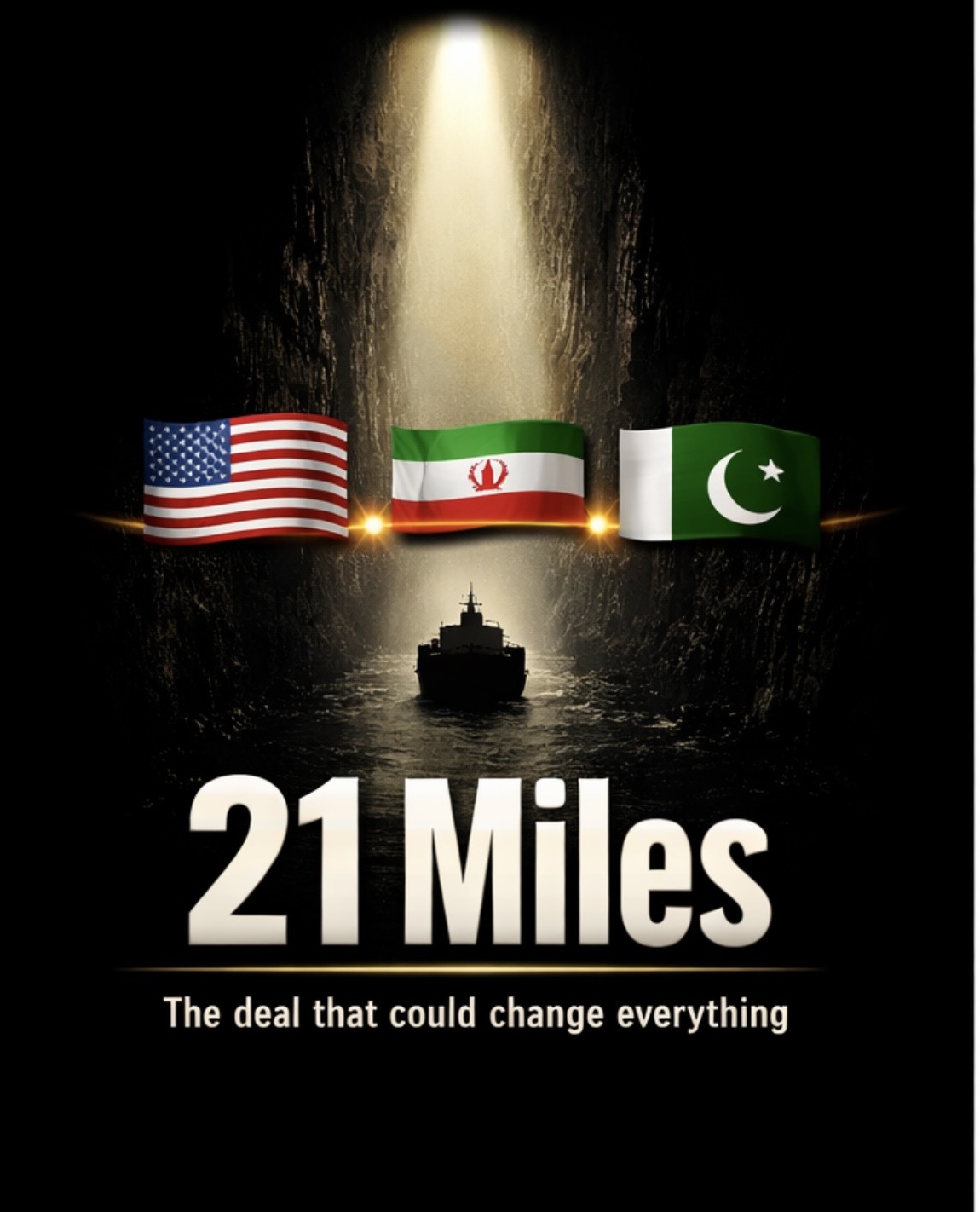
The Strait of Hormuz is twenty-one miles wide at its narrowest point. Twenty-one miles. You could drive that distance in less than half an hour on an American highway, barely enough time to finish a cup of coffee. And yet through those twenty-one miles passes the economic lifeblood of the modern world — oil from Saudi Arabia, from Iran, from Iraq, from Kuwait, from the United Arab Emirates, oil that heats homes in Europe, powers factories in Asia, fills the gas tanks of cars in cities and suburbs across the globe.
To control the Strait of Hormuz is not merely to hold a piece of water. It is to hold a piece of the world’s nervous system. It is to possess, or to share in the possession of, a lever whose movement can be felt from Tokyo to Frankfurt to São Paulo to Chicago. This is why, for decades, the United States Navy has treated the freedom of navigation through those waters as something close to sacred not because America is generous, but because America understood that its own economic dominance was inseparable from the free flow of energy that sustained the global system it had built and from which it profited most.
That understanding has not disappeared. But it is being tested, in ways that are no longer possible to ignore, by the accumulated weight of its own contradictions.
It was Bill Clinton who gave the question its most public airing, speaking on his YouTube channel, “Clarity Brief,” with the particular freedom that former presidents acquire once the burdens of office have been transferred to someone else. His tone, by all accounts, was measured — the tone of a man raising a possibility rather than endorsing a conclusion. But the concern beneath the measurement was unmistakable. A toll-based system in the Strait of Hormuz, he suggested, shared between Washington and Tehran, would be unconventional. Controversial. Capable of introducing dynamics into global politics that the existing architecture was not designed to absorb.
What struck me about Clinton’s remarks was not their content alone but their timing and their source. This is a man who understands, from the inside, how American power works and how American policy is made. When such a man raises a question in public, it is because the question has already been raised in private, by people with access to information that does not appear in newspapers, and the raising of it in public is a signal — an invitation to the broader political culture to begin processing what the inner circles are already considering.
The world, in other words, is being prepared for something. What that something is, exactly, remains to be seen.
Into this already complicated picture has stepped a name that surprises some but perhaps should not: Pakistan.
Donald Trump, in a statement that was widely dismissed at the time as the kind of vague, transactional musing that characterized so much of his public commentary, once said: “We have just concluded a Deal with the Country of Pakistan… Who knows, maybe they’ll be selling Oil to India some day!”
I remember how that statement was received — with the particular combination of condescension and dismissal that Washington tends to apply to anything that does not fit its established frameworks. Speculative. Implausible. The ramblings of a man who sees the world as a real estate transaction.
But I have lived long enough, and watched the powerful dismiss the inconvenient long enough, to know that what gets dismissed today has a way of returning tomorrow in a form that is harder to ignore. Trump’s statement, whatever one thinks of the man who made it, contains within it a recognizable logic — the logic of a world being reorganized around energy, around the transactional rather than the ideological, around the question not of who shares your values but of who controls what you need.
In that reorganized world, Pakistan is not a peripheral actor. It is a nation positioned at one of the great crossroads of regional diplomacy, a country that has, in recent months, demonstrated a capacity for mediation that its own complicated history had led many in the West to underestimate. The role it played in the Islamabad talks — not choosing sides, not performing allegiance, but attempting with genuine seriousness to create a space where adversaries could speak — is the kind of role that, in a world being remade, suddenly becomes very valuable indeed.
Whether Pakistan emerges as a formal participant in any arrangement concerning the Strait, whether its involvement takes the form of logistics, security coordination, or broader regional diplomacy, it is no longer possible to speak of this question without speaking of Islamabad. That, in itself, represents a shift whose significance should not be minimized.
I want to speak now about money, because money is always the subtext of these conversations, even when — especially when — it is dressed in the language of strategy and security.
The petrodollar system — the arrangement, established in the wake of the 1973 oil crisis, by which global oil transactions are conducted in U.S. dollars — has been the hidden architecture of American power for half a century. It is the reason that America can run deficits that would bankrupt any other nation. It is the reason that American financial institutions occupy the center of the global economy. It is, in a very real sense, the foundation upon which the entire structure of American dominance has been constructed.
That foundation is cracking. Not collapsing — I want to be precise here, because precision matters — but showing the kinds of stress fractures that engineers recognize as warnings, as signs that the load being carried is approaching the limits of what the structure was designed to bear. The introduction of the euro. The growing use of alternative currencies in oil trade. The quiet, persistent, patient effort of China and Russia and others to create financial systems that route around the dollar rather than through it. These are not isolated events. They are components of a process whose direction is clear even if its pace remains uncertain.
In this context, the idea of a toll system in the Strait of Hormuz — shared between the United States and Iran, with the revenue flowing to both — is not simply a diplomatic novelty. It is, potentially, a mechanism for sustaining American economic leverage in a world where the old mechanisms are failing. A new form of rent collection, imposed not through the dollar’s reserve currency status but through physical control of a critical passage. Commerce replacing ideology. Geography replacing currency.
Whether this is wise is a question I will leave to others. What I will say is that it is consistent with a pattern I have observed throughout my life, which is that empires, when their traditional instruments of power begin to falter, do not surrender gracefully. They innovate. They find new forms for old ambitions. They repackage dominance in the language of partnership, of mutual benefit, of arrangements that serve everyone’s interests — while ensuring, with careful and practiced attention to detail, that they serve some interests more than others.
Europe is watching all of this with the anxiety of a continent that has never fully made peace with its own dependence. The nations of Western Europe — Germany, France, Italy, the smaller economies of the periphery — are deeply, structurally reliant on the energy that passes through the Strait of Hormuz. Any arrangement that imposes costs on that passage imposes costs, directly or indirectly, on European industry, on European consumers, on the already strained social contracts of European governments trying to navigate the turbulence of this particular historical moment.
Reports of consultations among European leaders, of internal deliberations about the potential consequences of a toll system, suggest that the concern in Brussels and Berlin and Paris is real and growing. The language being used in these conversations — measured, diplomatic, carefully non-committal — is the language of governments that are genuinely uncertain, that do not yet know which way to lean because they do not yet know which way the world is leaning.
China and Russia have their own calculations. For Beijing, which has spent years building economic relationships throughout the Middle East and which depends on Gulf energy to sustain its industrial growth, any change in the governance of the Strait is a matter of direct and immediate strategic concern. For Moscow, which has watched the post-Cold War order fray with the particular satisfaction of a power that was declared finished and refused to finish, the emergence of new arrangements in old chokepoints represents opportunity, the chance to insert itself, to complicate, to extract concessions in exchange for cooperation or its absence.
I have been a journalist for more than four decades. I have watched enough of history’s turning points, from close enough, to have learned a certain humility about prediction. I do not know what will happen in the Strait of Hormuz. I do not know whether the negotiations between Washington and Tehran will produce an agreement, or whether that agreement, if it comes, will include anything resembling the arrangements being discussed in the policy forums of the capital. I do not know whether Pakistan will find a formal role in what follows, or whether Trump’s offhand remark about oil and India will turn out to be prophecy or noise.
What I know is this: the conversation has changed. The questions being asked today are not the questions that were being asked five years ago, or even two years ago. The frameworks that organized our thinking about the Middle East, about American power, about the relationship between energy and geopolitics — these frameworks are under pressure, and pressure, sustained long enough, produces transformation.
Bill Clinton did not raise the question of shared control over the Strait of Hormuz because he was speculating idly. He raised it because it is being considered, somewhere, by someone with the authority to act on it. That is how these things work. The public conversation is always, by some distance, behind the private one.
The question, then, is not whether this conversation is happening. It is whether we, as citizens of a world that will be affected by its outcome, are paying close enough attention to understand what is at stake before the decisions are made.
Twenty-one miles of water. The fate of a fifth of the world’s oil. The credibility of American power. The economic survival of nations on every inhabited continent. The future of an Iran that has endured, against all predictions, against all pressure, with a tenacity that should compel even its harshest critics to reckon seriously with the question of what it wants and why.
These are not small matters. They do not fit neatly into the language of press releases or the short attention spans of the daily news cycle. They require the kind of sustained, serious, unflinching attention that this moment, for all its noise and distraction, genuinely demands.
The question has been asked. Aloud. By people who know more than they are saying.
Now we must decide whether we are willing to sit with the difficulty of it — or whether we will choose, as we so often do, the comfort of not knowing.