

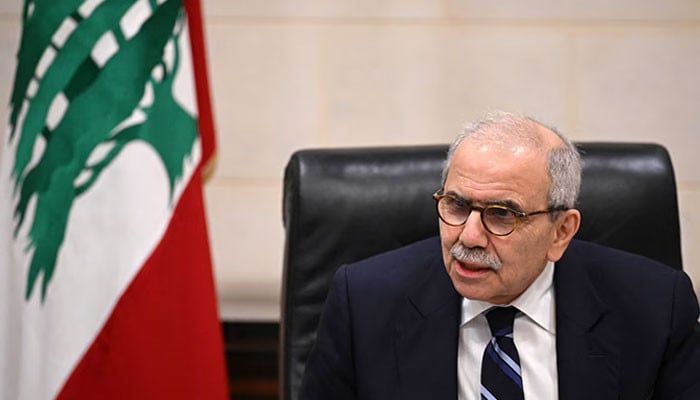
Lebanon’s Prime Minister Najib Mikati has postponed his scheduled visits to the United Nations and the United States. In a statement on social media, Mikati stated that he had decided to delay his trip to the US, citing the need to monitor government affairs from Beirut. The development comes as Lebanon grapples with an ongoing crisis that has left the country’s situation precarious.
Mikati’s decision to postpone his trip has been met with a mix of reactions from various stakeholders. Israeli Prime Minister Benjamin Netanyahu has stated that his government will continue to pursue its fight against Iran and its proxy groups, under his leadership. The Israeli premier’s comments were made in the wake of a recent meeting between US President Donald Trump and Iranian President Ebrahim Raisi, which was described as productive by the US leader.
The meeting between Trump and Raisi reportedly lasted for nearly 20 hours, with both sides agreeing on several key issues. However, a sticking point remained, with Trump stating that the two sides had not reached a consensus on the nuclear issue. The development has been met with disappointment from some quarters, including the UK and Australia, which have called for the resumption of talks and a return to the negotiating table.
Meanwhile, Turkish President Recep Tayyip Erdogan has weighed in on the crisis, describing Israeli Prime Minister Benjamin Netanyahu as the “Hitler of the present era.” Erdogan’s comments come as tensions between Turkey and Israel continue to simmer.
In a separate development, the head of the Catholic Church, Pope Francis, has delivered a weekly address in the Vatican, calling for an end to the ongoing crisis. Former Iranian Foreign Minister Javad Zarif has also weighed in, stating that the US must understand that Iran cannot be dictated to.
The crisis has also led to a flurry of diplomatic activity, with Russian President Vladimir Putin holding talks with Iranian President Ebrahim Raisi. The talks were reportedly productive, with both sides agreeing on several key issues.
In a related development, the Pakistani government has been criticized for its handling of a recent incident involving a former US diplomat, who was stripped of his diplomatic passport. The incident has sparked a diplomatic row between the US and Pakistan.
In a surprise move, the Pakistani government has announced that it will reopen a key refinery in the country, following a recent shutdown. The move is seen as a bid to ease tensions with the US, which has been critical of Pakistan’s handling of the crisis.
The crisis has also led to a re-evaluation of the role of the US in the region, with some calling for a more hands-off approach. The US has been a key player in the region, with its military presence in Iraq and Syria seen as a key factor in the crisis.
As the crisis continues to unfold, one thing is clear: the situation in the region is precarious, and a resolution is needed to prevent further destabilization. Only time will tell if the US and Iran can reach a consensus on the key issues at stake, and if the region can avoid further conflict.
