

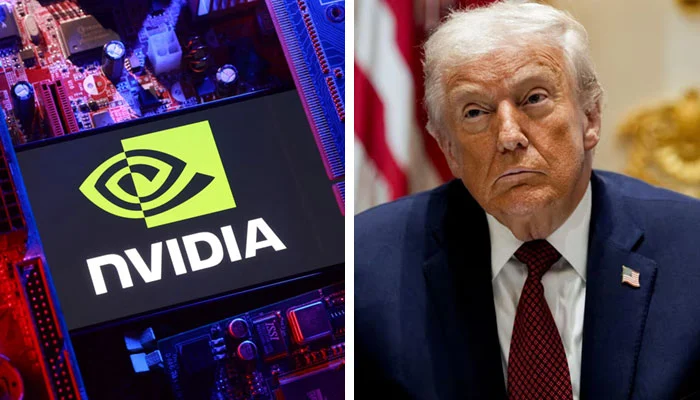
WASHINGTON, USA—The administration of US President Donald Trump has made a delicate decision, granting conditional permission to the American technology firm Nvidia to export its advanced, though less powerful, H200 Artificial Intelligence (AI) processors to China. The move is seen as a “middle ground” in the ongoing struggle to balance the preservation of American technological superiority with commercial interests.
According to international news agencies, the authorization stipulates that the US government will levy a 25 percent fee on the sale of every chip exported. This decision follows an internal debate among US policymakers over whether to sell chips to capitalize on technical superiority or restrict exports to slow China’s technological advancement.
National Security vs. Commercial Gain
Under this calculated strategy, the US will maintain its ban on the export of its most advanced ‘Blackwell’ chips, keeping the cutting-edge technology out of Chinese hands. The comparatively less powerful H200 chips, however, can be shipped to China, provided specific security conditions are met. The administration aims to achieve commercial benefits while simultaneously safeguarding US national security interests.
However, hardline factions in Washington are fiercely critical of the decision, labeling it a dangerous move. They fear that these sophisticated chips could significantly enhance China’s military and surveillance capabilities, fueling intense political division over the policy.
Meanwhile, China is actively working to reduce its reliance on US technology by developing domestic alternative chips. Despite these efforts, performance benchmarks show that Nvidia’s H200 chips remain substantially superior to China’s current domestic technology, underscoring the vital importance of American hardware to China’s rapidly growing AI sector.
