

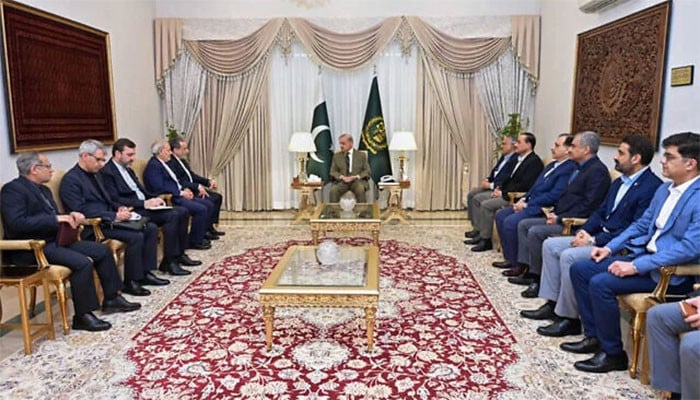
Iran has submitted its revised peace plan to the US via Pakistani mediators, according to the Iranian official media outlet Arna. The move comes as the US has rejected Iran’s initial peace proposals, which included a guarantee of no further attacks, an end to the war, and the reopening of the Strait of Hormuz in case of a ceasefire.
In a recent development, the Iranian government has stated that it is willing to engage in negotiations with the US, but only if the US agrees to lift its economic sanctions and return to the 2015 nuclear deal. The Iranian government has also accused the US of “naval piracy” for seizing an Iranian oil tanker, and has threatened to take action if the US does not release the seized tanker and its crew.
Meanwhile, the US has announced that it will start its “Project Freedom” initiative in the Middle East, which aims to promote energy security and stability in the region. The US has also announced that it will provide $70 billion in funding for energy and digital projects in the region by 2035.
In other news, a plane was forced to make an emergency landing in Shajah after a passenger attempted to open the emergency door during the flight. Two people were killed in a blast in Bristol, UK, and Pakistan Super League (PSL) teams Peshawar Zalmi and Karachi Kings competed in the final match, with Zalmi emerging victorious.
The PSL final match saw Zalmi win by 5 wickets, securing their second title in eight years. The teams received praise from fans and critics alike for their performances, with Zalmi’s captain Shadab Khan being named the best all-rounder of the tournament.
In a separate development, Pakistani Prime Minister Shehbaz Sharif met with former Prime Minister Nawaz Sharif in Lahore. The meeting was seen as a significant step towards resolving the country’s ongoing political crisis.
Iran’s Foreign Ministry has confirmed that the US has responded to Tehran’s 14-point peace plan, which was submitted via Pakistani mediators. The US has rejected Iran’s initial peace proposals, which included a guarantee of no further attacks, an end to the war, and the reopening of the Strait of Hormuz in case of a ceasefire.
As tensions between the US and Iran continue to escalate, the international community is watching with bated breath. The situation remains volatile, with both sides refusing to back down. The UN has called for a peaceful resolution to the crisis, but so far, talks have been unsuccessful.
The crisis has also had significant economic implications, with oil prices soaring due to the ongoing tensions. The situation has also led to a significant increase in military spending, with both the US and Iran allocating more funds for their military efforts.
As the situation continues to unfold, one thing is clear: the stakes are high, and the consequences of failure will be severe. The international community must come together to find a peaceful resolution to this crisis before it’s too late.
