

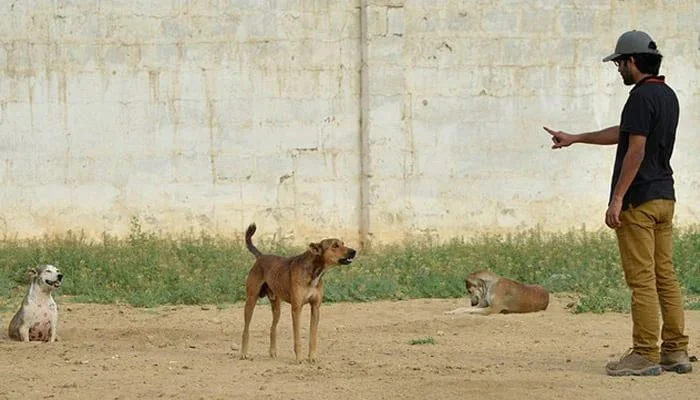
According to hospital officials, six people have died from rabies in Karachi between May and August after being bitten by dogs. Medical authorities stated that three of the victims were being treated at Jinnah Hospital and the other three at Trust Hospital in Korangi.
Officials reported that the number of rabies-related deaths across Sindh has now climbed to 14 this year. Eight of these deaths occurred at Jinnah Hospital and six at Trust Hospital. Health officials further disclosed that over 22,000 cases of dog bites have been reported so far this year, highlighting a growing public health concern.
Alarmingly, a number of dog bite victims do not seek professional medical help and instead resort to home remedies for their wounds. Health experts emphasize that anyone bitten by a dog must report to a public healthcare facility and follow a standard protocol to prevent rabies. They stress that once symptoms appear, the disease is 100% fatal for both animals and humans.
The public needs to be aware that rabies cases are more common during the summer in this region, including Pakistan. Studies show that in extremely hot weather, stray dogs are more likely to become rabid. Additionally, dog bite incidents increase in the summer because animals, including dogs, are more active in warmer months, which increases the chances of their interactions with humans.
According to a report by The News, rabies is one of the most neglected diseases in Pakistan, despite its high incidence. It is estimated that 2,000 to 5,000 cases occur annually, meaning the disease claims 2,000 to 5,000 lives each year because it is 100% fatal once symptoms develop.
Experts stress that people must take measures to avoid dog bites, especially in warmer months, and should not take them lightly. Studies reveal that rabies is an acute infectious zoonotic disease of the central nervous system that can affect almost all mammals, including humans. It is transmitted through close contact with the saliva of an infected animal via bites, scratches, or licks on broken skin and mucous membranes.
In the case of a rabid animal bite, the virus spreads from the injured part to the nerves and then to the spinal cord, causing damage to the victim’s brain and ultimately resulting in death. Symptoms include convulsions, an inability to move, strange behavior, and the development of hydrophobia (an intense aversion to water, particularly the fear of drinking liquids).
