

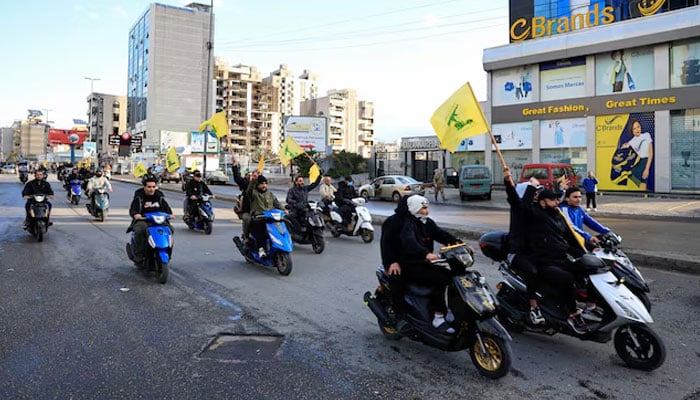
According to a copy of a Lebanese cabinet agenda reviewed by Reuters, the United States has put forward a plan to Lebanon to fully disarm Hezbollah by the end of the year. This move is aimed at easing tensions and bringing stability to the region.
The plan, presented by US President Donald Trump’s envoy to the region, Tom Barrack, was discussed at a Lebanese cabinet meeting on Thursday. It outlines the most detailed steps yet for disarming the Iran-backed Hezbollah group, which has rejected repeated calls to disarm since last year’s war with Israel.
Following the cabinet meeting, Lebanese Information Minister Paul Morcos stated that the cabinet had approved only the objectives of the plan, not its full details. Morcos said, “We did not delve into the details or components of the US proposal. Our discussion and decision were limited to its objectives.”
The goals of the US proposal include the phased elimination of the armed presence of non-state actors like Hezbollah, the deployment of Lebanese forces to key border and internal areas, Israel’s withdrawal from five positions, resolving prisoner issues through indirect talks, and permanently demarcating Lebanon’s borders with Israel and Syria.
The US State Department welcomed the Lebanese government’s decision to task the Lebanese Armed Forces with bringing all weapons under state control. The Israeli prime minister’s office declined to comment, while Hezbollah had no immediate statement. However, three political sources told Reuters that ministers from Hezbollah and its Shia allies walked out of the cabinet meeting in protest.
Iran’s Foreign Minister Abbas Araghchi told state TV that while Iran supports the group, it does not interfere in its decision-making, and that the final decision rests with Hezbollah itself.
The US proposal aims to “extend and stabilise” a ceasefire agreement between Lebanon and Israel brokered in November. It notes that the urgency of the proposal is heightened by increasing complaints of Israeli violations of the ceasefire, which “risk triggering a collapse of the fragile status quo.”
The plan is divided into four phases. Phase 1 requires the Beirut government to issue a decree within 15 days committing to Hezbollah’s full disarmament by December 31, 2025. In this phase, Israel would also cease military operations. Phase 2 would require Lebanon to begin implementing the disarmament plan within 60 days, while Israel would begin withdrawing from its positions in south Lebanon. Phase 3, within 90 days, would see Israel withdraw from the last two of its five positions and secure funding for reconstruction. In Phase 4, within 120 days, Hezbollah’s remaining heavy weapons must be dismantled, and an economic conference would be organized by the US and other friendly states to support Lebanon’s economy and reconstruction.
