

Iran has unequivocally stated it has no plans to restart nuclear talks with the United States, directly contradicting claims from Washington. This firm stance comes in the wake of recent American airstrikes on Iranian nuclear sites, which Tehran has accused the US of exaggerating in terms of their impact.
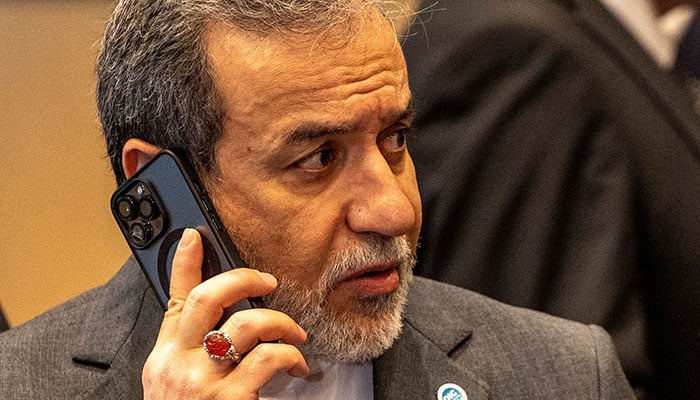
Iran’s Foreign Minister, Abbas Araghchi, dismissed any rumors of upcoming negotiations, emphasizing that “no discussions or agreements had been made” for new talks. He described such speculation as “not to be taken seriously” and explicitly stated on state television that “No plan has been set yet to start negotiations.”
This denial from Iran follows the most serious conflict yet between Israel and Iran, which disrupted earlier nuclear talks. Despite this, US President Donald Trump had optimistically stated that Washington would hold discussions with Tehran next week, with his special envoy Steve Witkoff expressing hope for “a comprehensive peace agreement.”
Iran’s Defiance and Claims of “Victory”
Araghchi’s denial was further underscored by Iranian lawmakers passing a “binding” bill to suspend cooperation with the UN nuclear watchdog. Moreover, Supreme Leader Ayatollah Ali Khamenei publicly accused Trump of exaggerating the impact of the US strikes.
In a televised speech – his first appearance since a ceasefire in the war with Israel – Khamenei hailed what he called Iran’s “victory” over Israel, vowing never to bow to US pressure. He insisted that Washington had been dealt a humiliating “slap” and rejected US claims that Iran’s nuclear program had been set back by decades. Khamenei maintained that the strikes had done “nothing significant” to Iran’s nuclear infrastructure. However, Araghchi acknowledged the damage as “serious” and stated a detailed assessment was underway.
President Trump, on his Truth Social platform, claimed key facilities, including the underground Fordo uranium enrichment site, had been “obliterated” by American B-2 bombers. He dismissed speculation that Iran might have removed enriched uranium before the raid, asserting: “Nothing was taken out… too dangerous, and very heavy and hard to move!” He added that satellite images showing trucks at the site only indicated Iranian crews attempting to shield the facility with concrete. Khamenei, conversely, declared, “The Islamic Republic won, and in retaliation dealt a severe slap to the face of America.”
Both sides have claimed victory in the recent conflict: Israeli Prime Minister Benjamin Netanyahu called it a “historic win,” while Khamenei asserted that Iran’s missile retaliation had brought Israel to the brink of collapse.
US Defense and Intelligence Debates
In Washington, the true impact of the strikes has ignited sharp political and intelligence debates. A leaked classified assessment suggested that damage to Iran’s nuclear program might be less severe than initially claimed, possibly delaying progress by only a few months. This assessment directly contrasts with statements from senior US officials:
- CIA Director John Ratcliffe stated several facilities would need to be “rebuilt over the course of years.”
- Pentagon chief Pete Hegseth accused the media of misrepresenting the operation. He confirmed the US used massive GBU-57 bunker-buster bombs on Fordo and another underground site, while submarine-launched Tomahawk missiles targeted a third facility. Hegseth declared, “President Trump created the conditions to end the war, decimating — choose your word — obliterating, destroying Iran’s nuclear capabilities.”
Doubts persist about whether Iran quietly removed some 400 kilogrammes (880 pounds) of enriched uranium from its most sensitive sites before the strikes, potentially hiding nuclear material elsewhere. The US administration has strongly denied such suggestions.
Regional Conflict and Casualties
The recent escalation followed waves of Israeli attacks on nuclear and military sites and retaliatory missile fire from Iran since mid-June, marking the deadliest exchange between the two countries to date. The US subsequently bombed three key Iranian atomic facilities. Initial intelligence reports, first revealed by CNN, suggested the strikes did not destroy critical components and only delayed Iran’s nuclear program by months.
Netanyahu stated that Israel had “thwarted Iran’s nuclear project,” warning that any attempt by Iran to rebuild it would be met with the same resolve and intensity. Iran has consistently denied seeking a nuclear weapon and defends its “legitimate rights” to the peaceful use of atomic energy.
Tragically, according to Iran’s health ministry, Israeli strikes on Iran killed at least 627 civilians. Iran’s attacks on Israel resulted in 28 deaths, according to Israeli figures.
