News package by The Jago times
By Raja Zahid Akhtar Khanzada
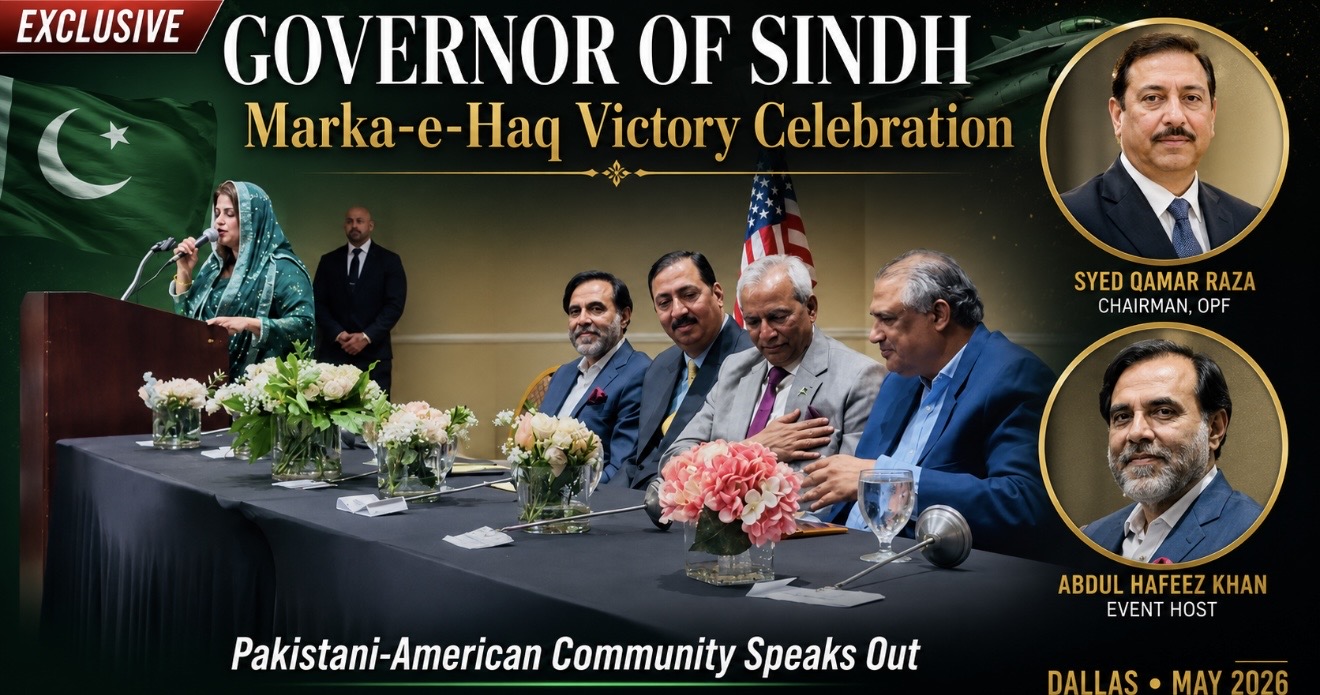
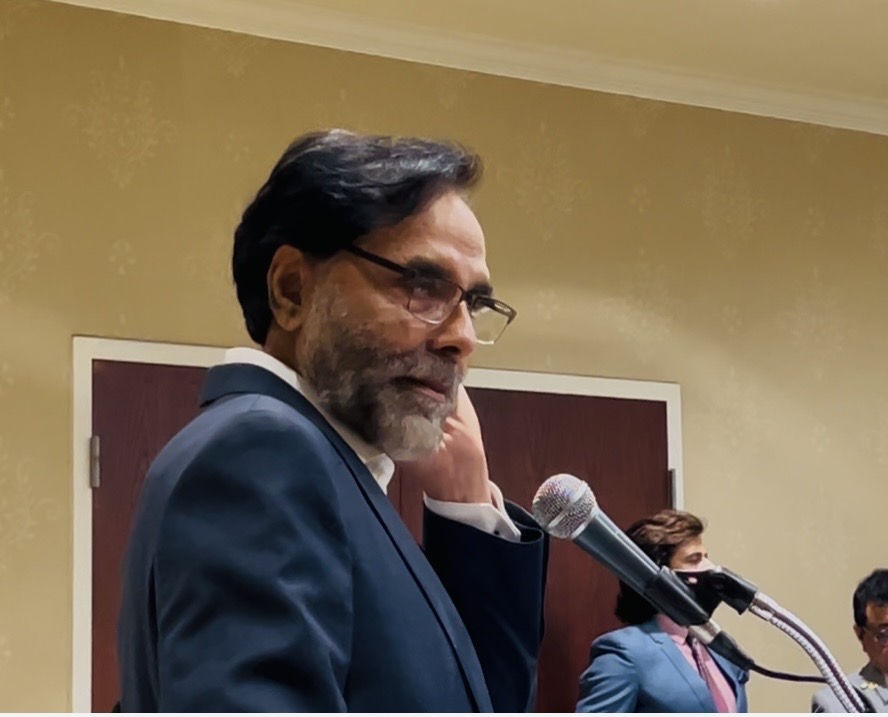
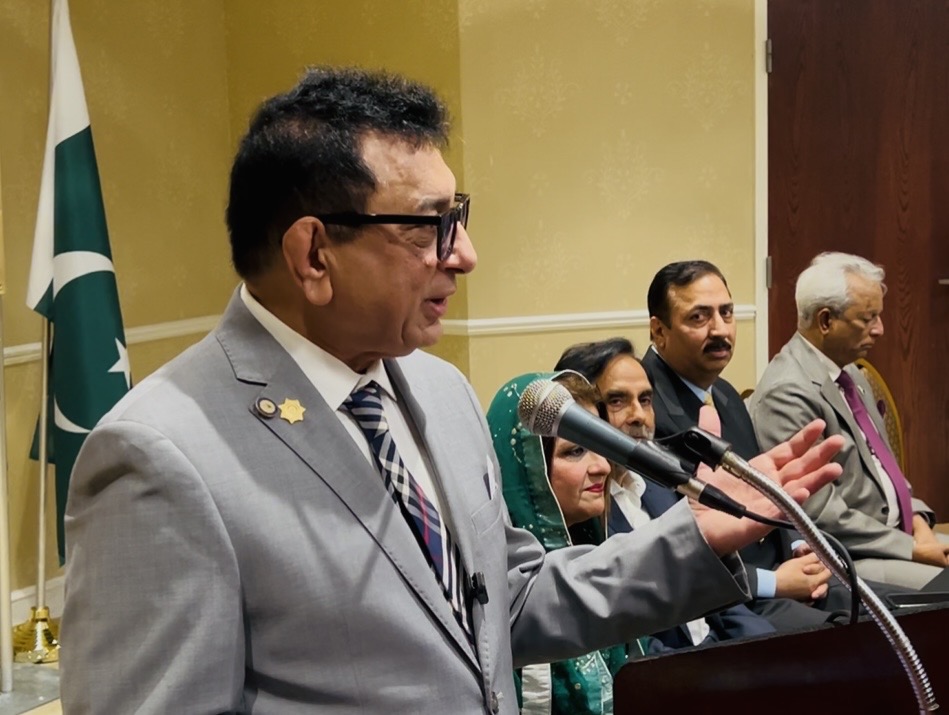
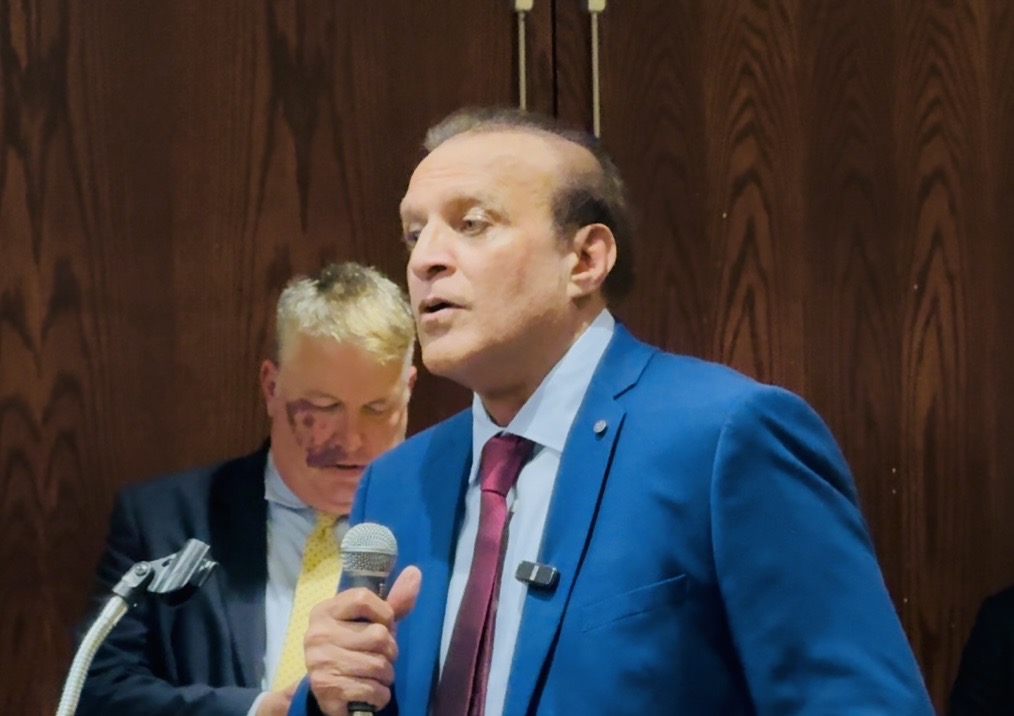
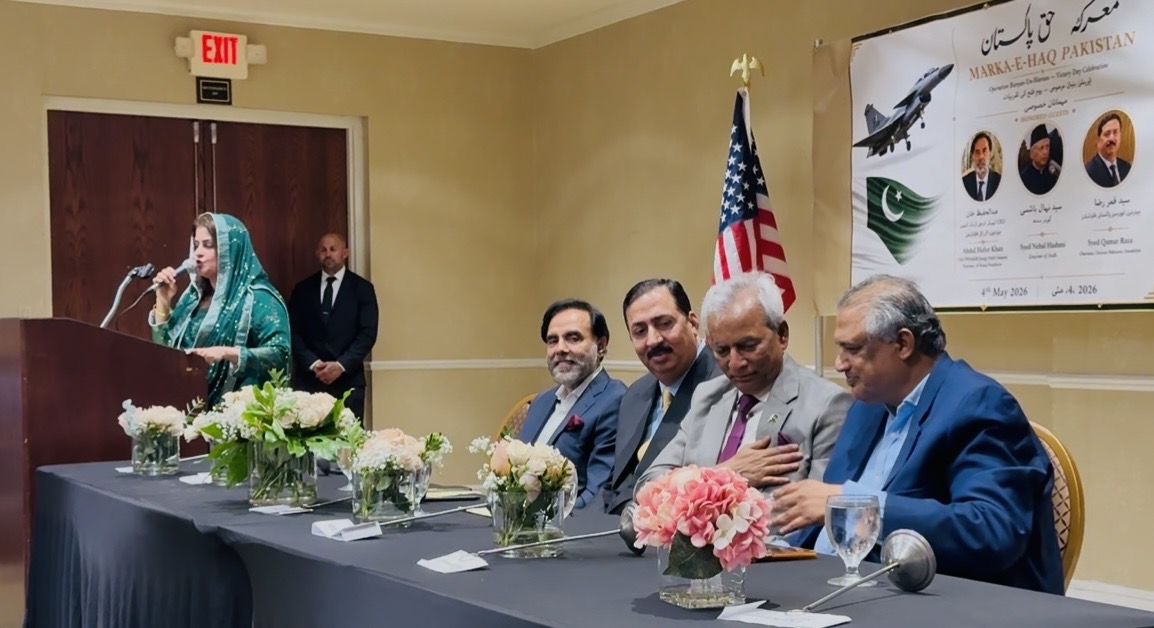
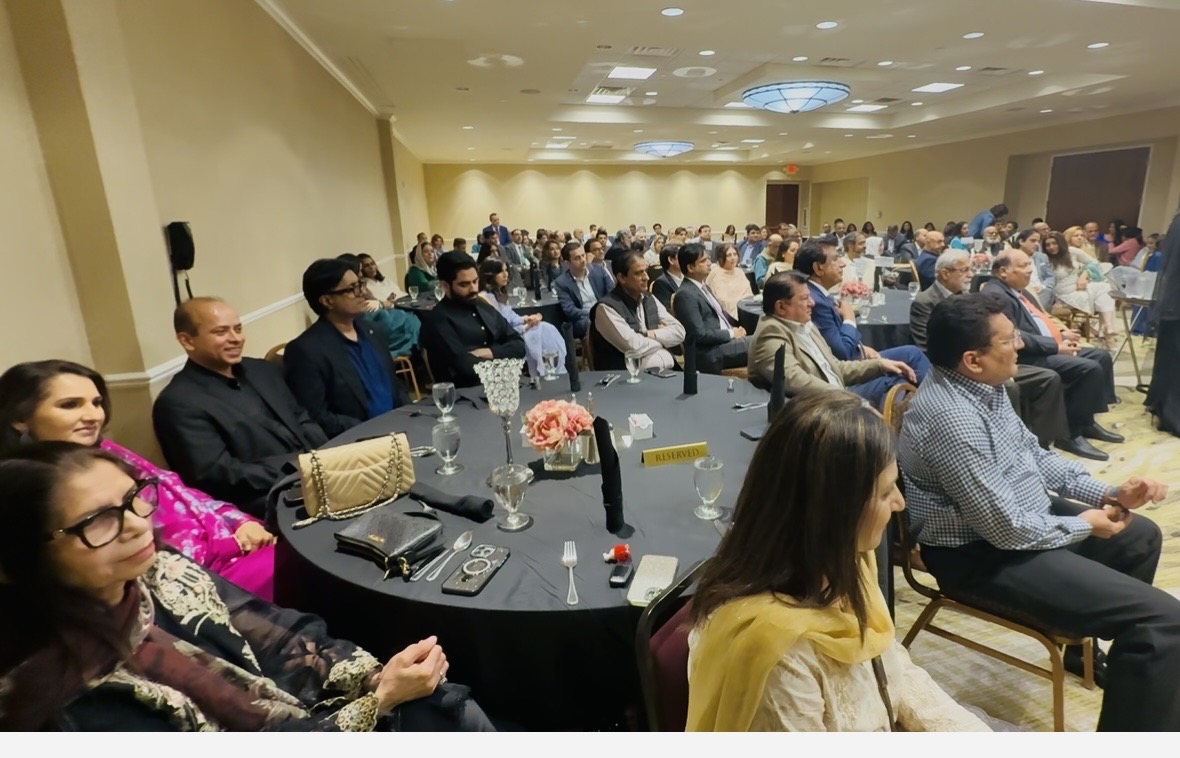
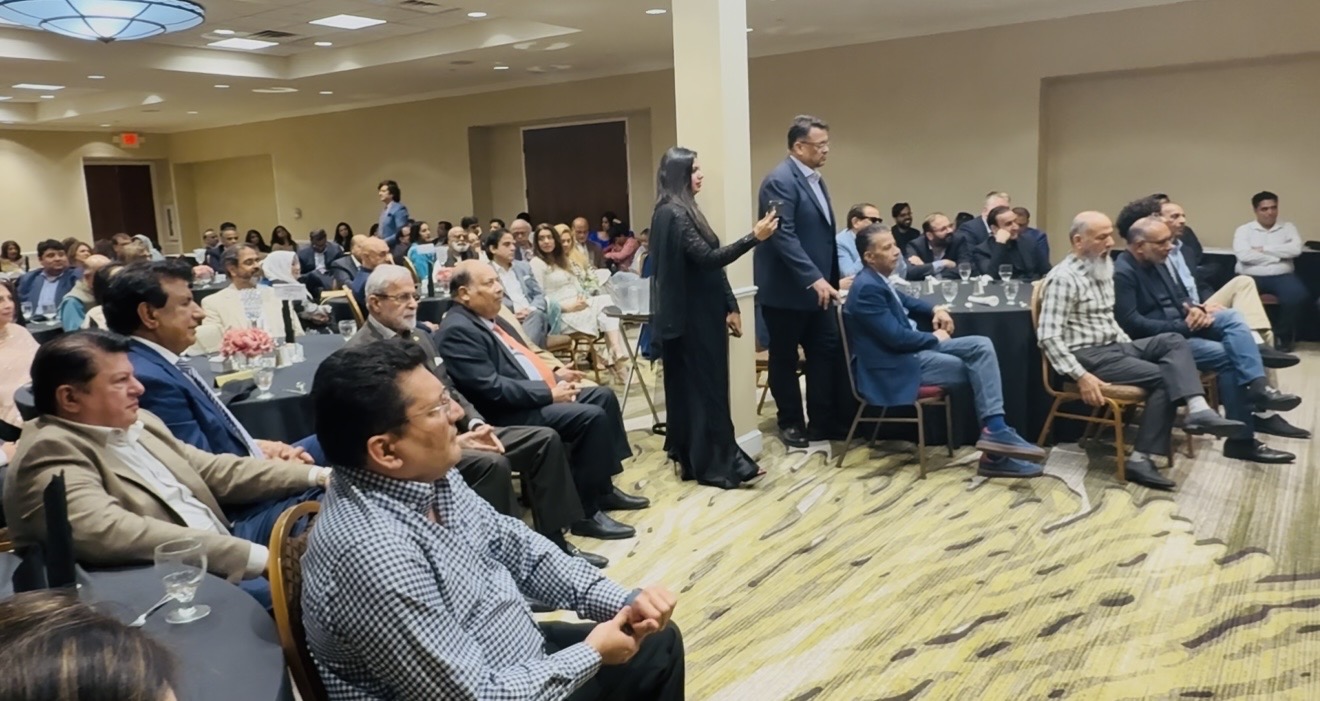
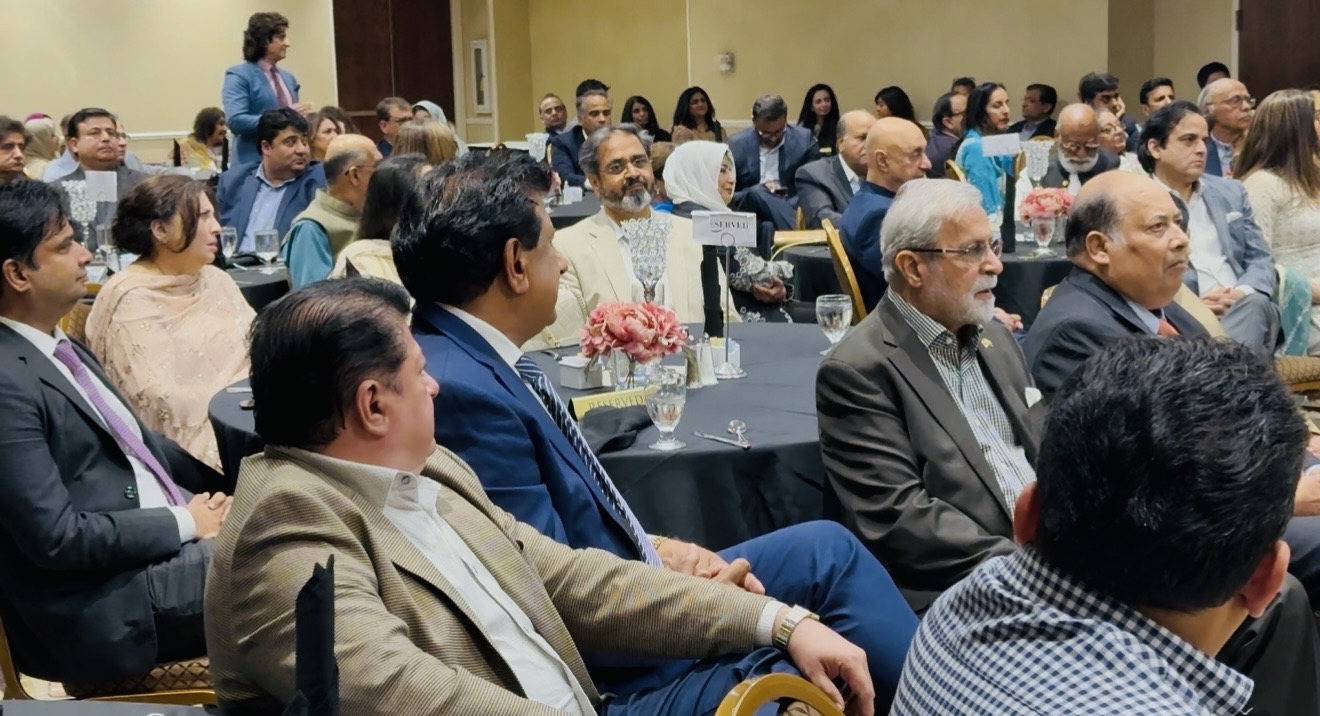
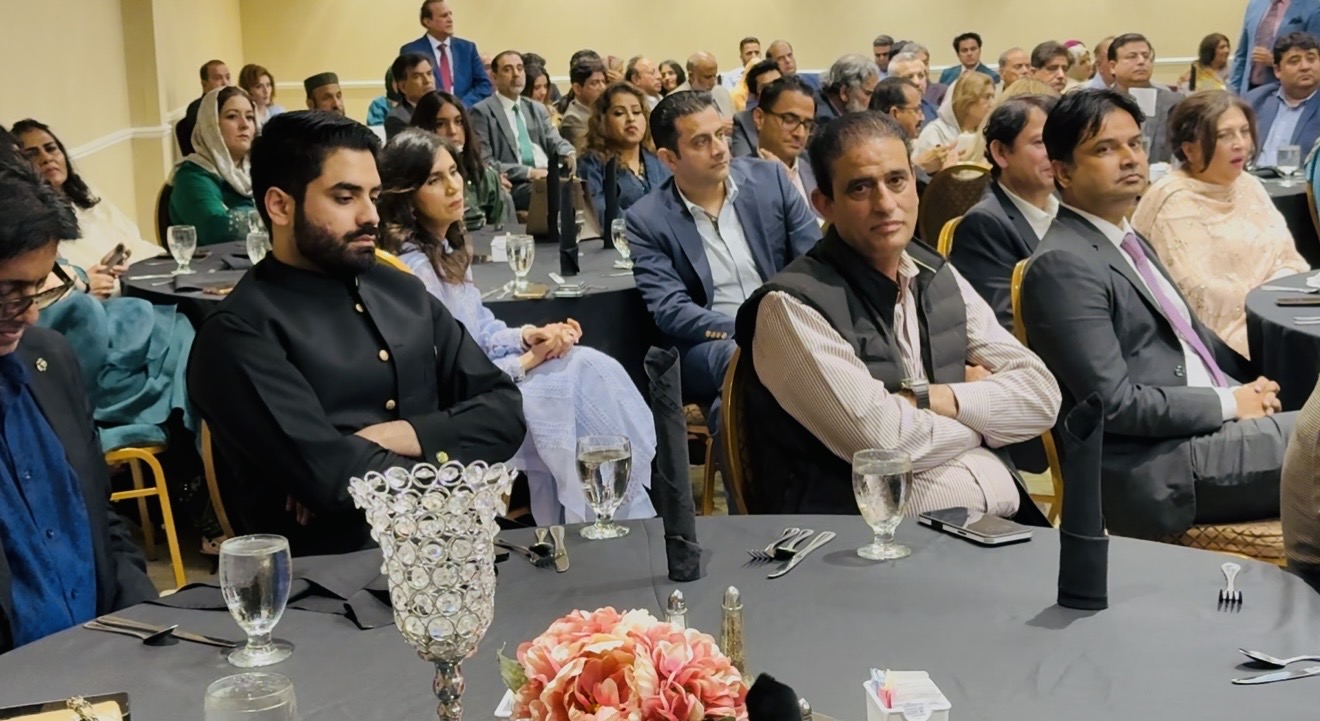
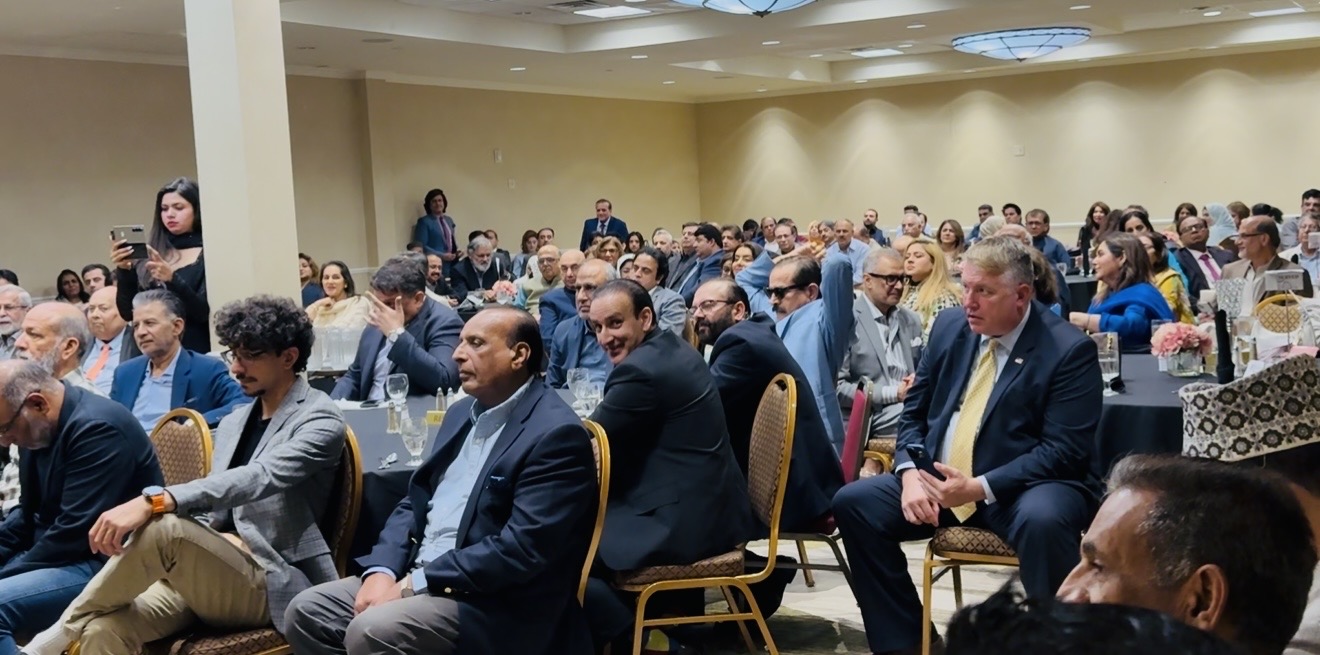
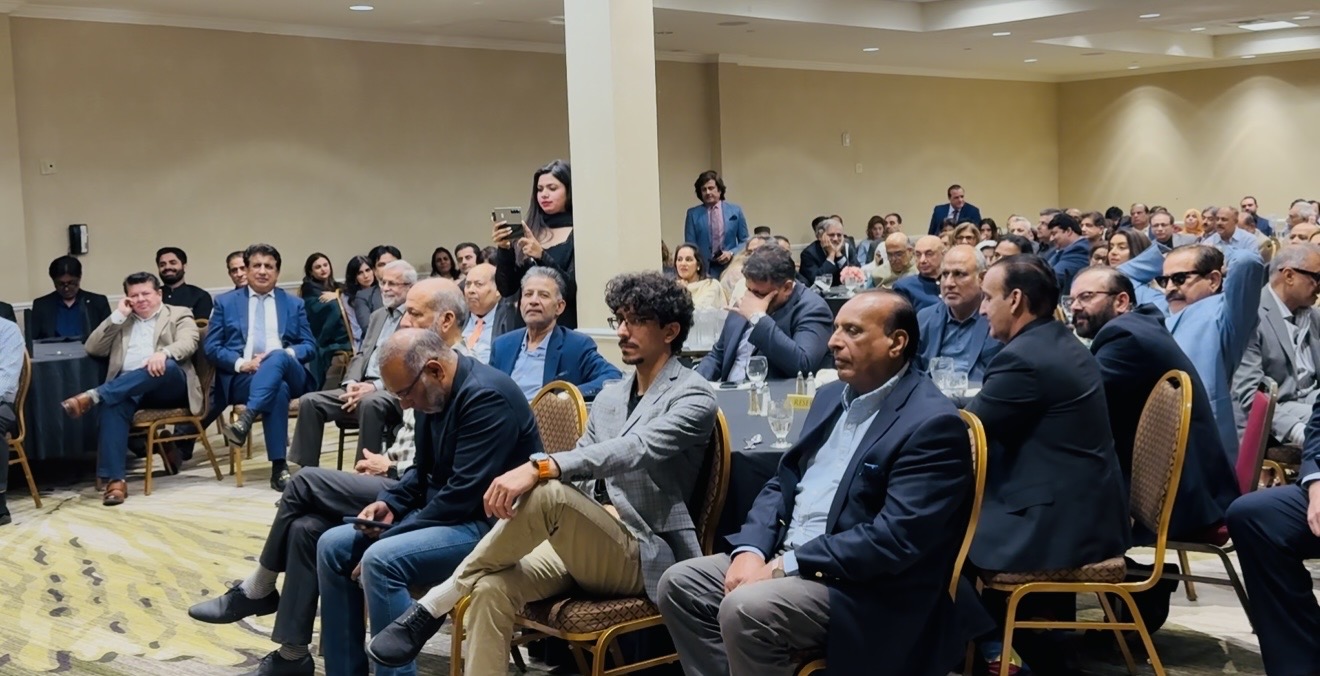
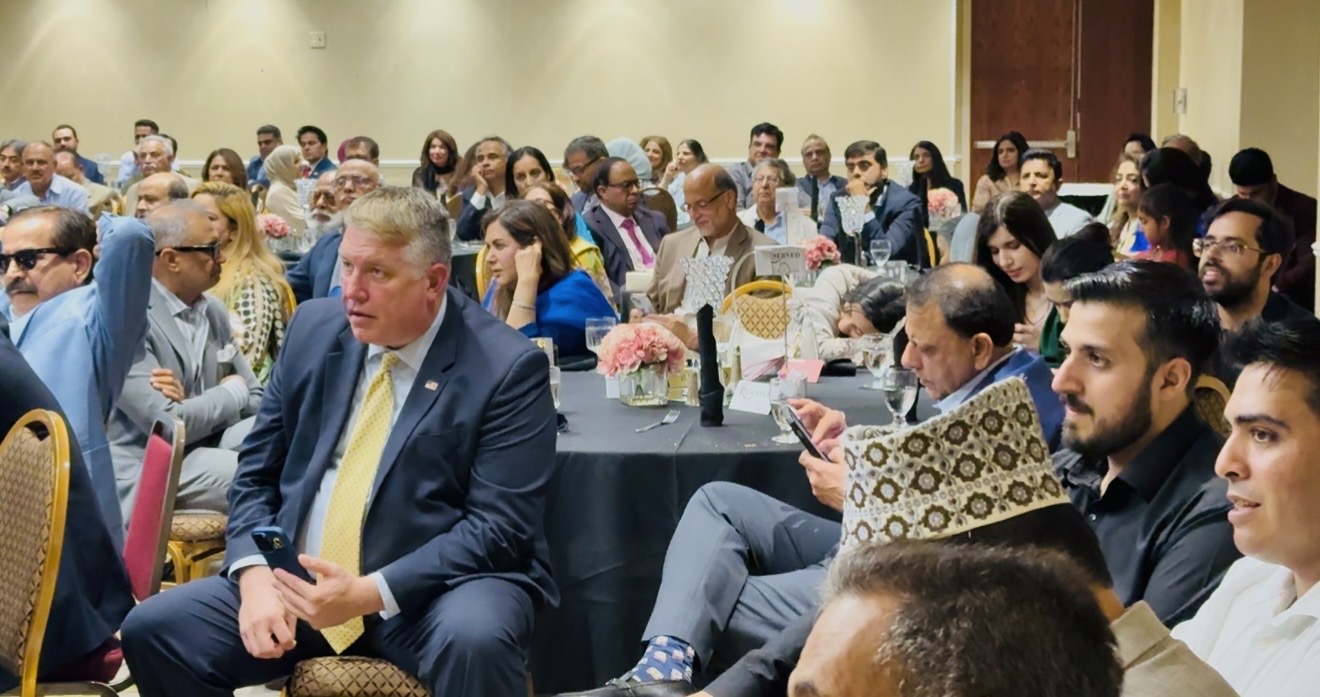
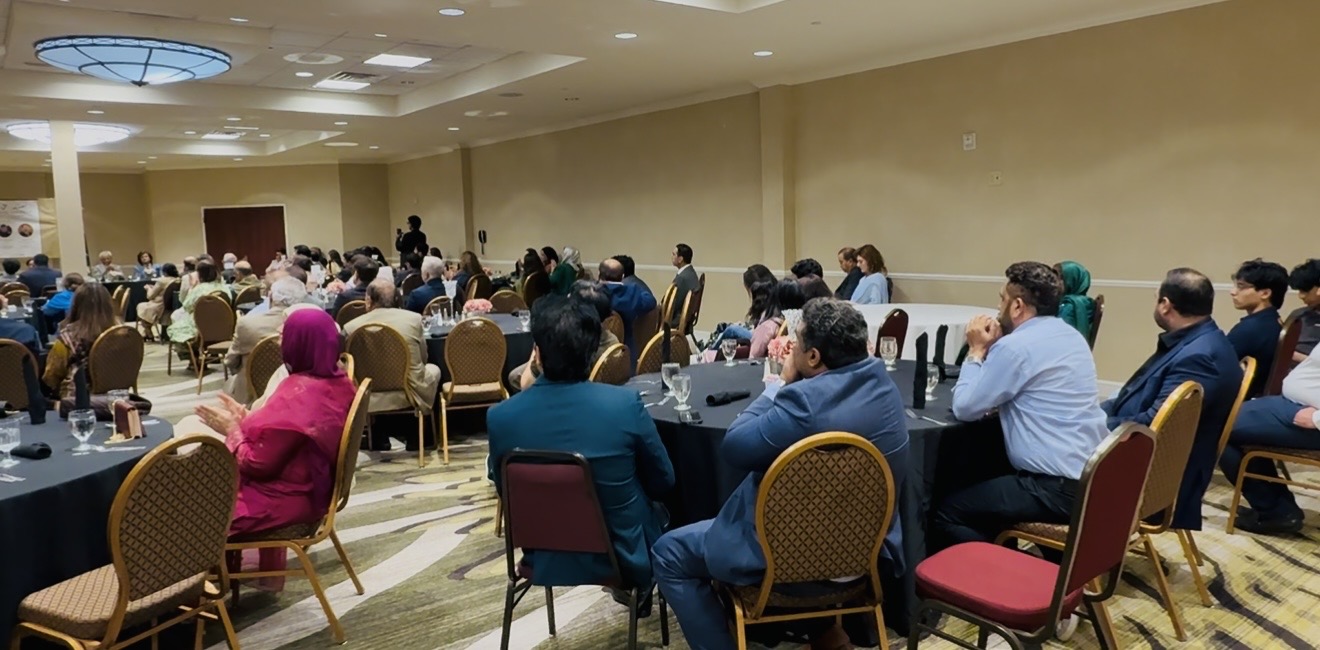
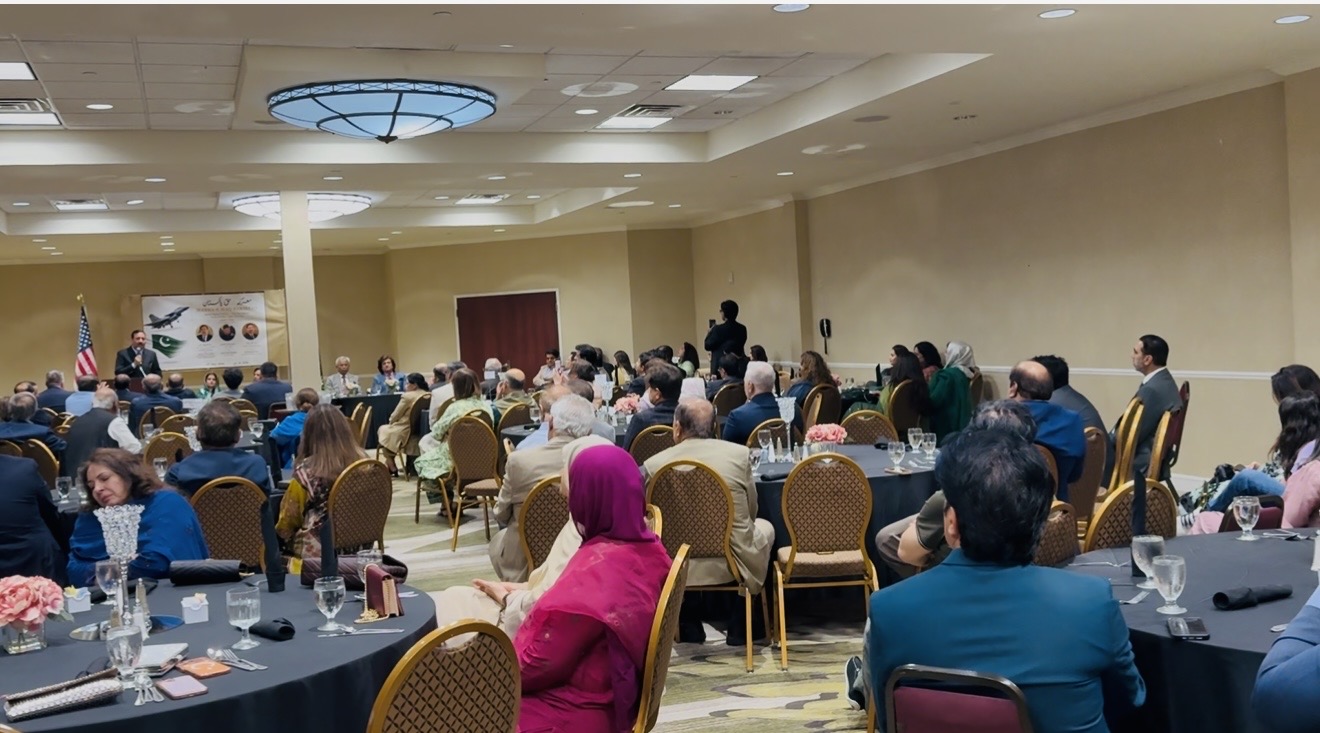
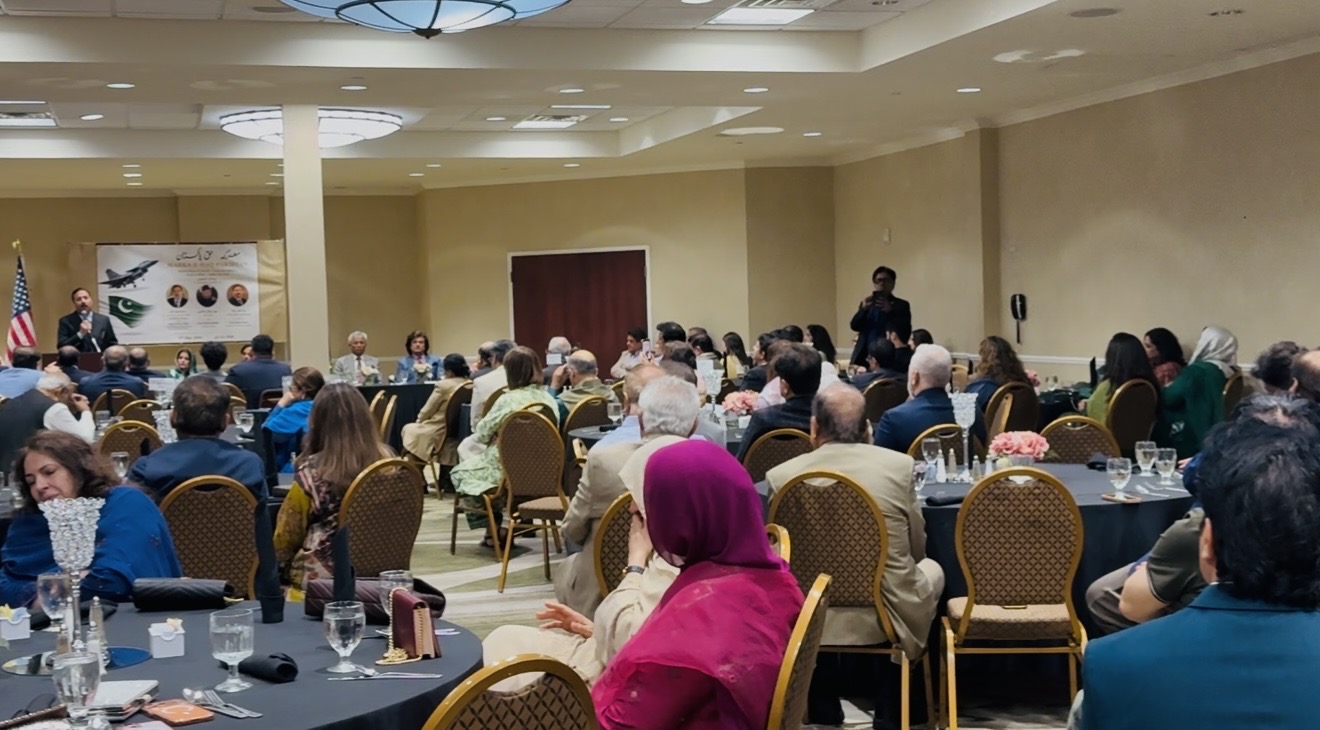
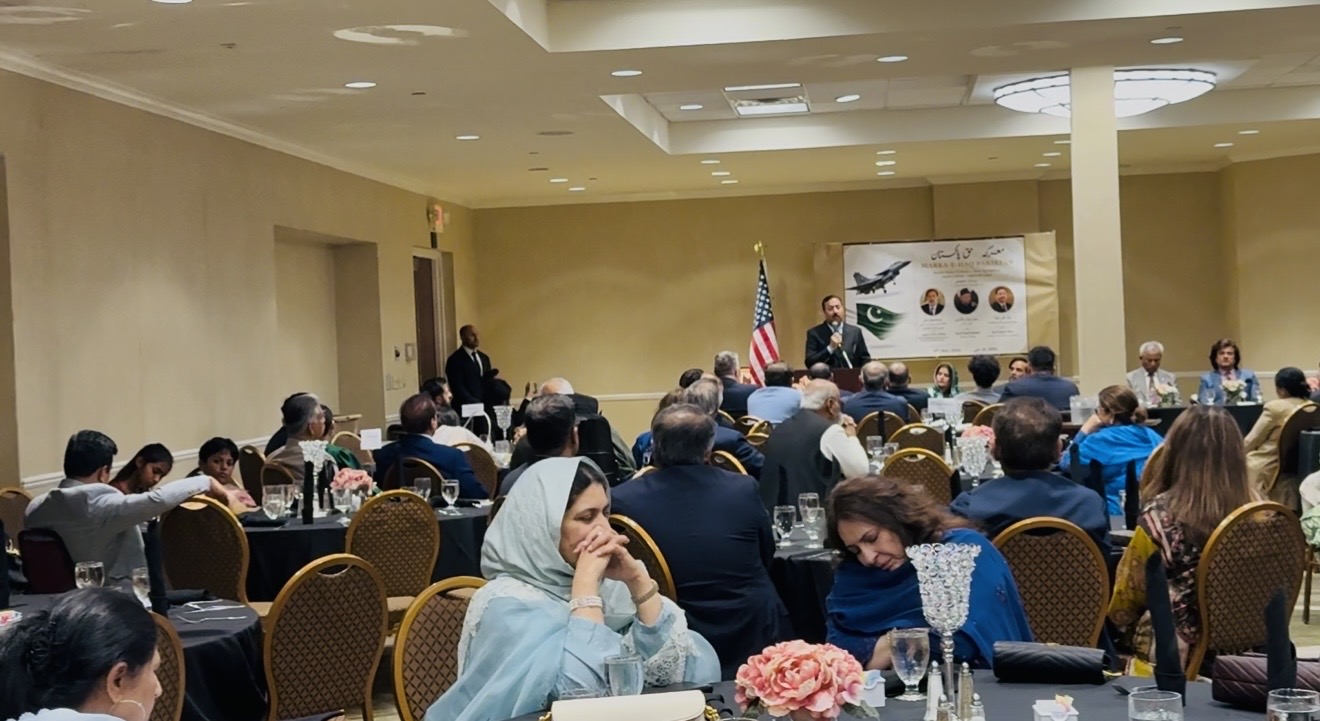
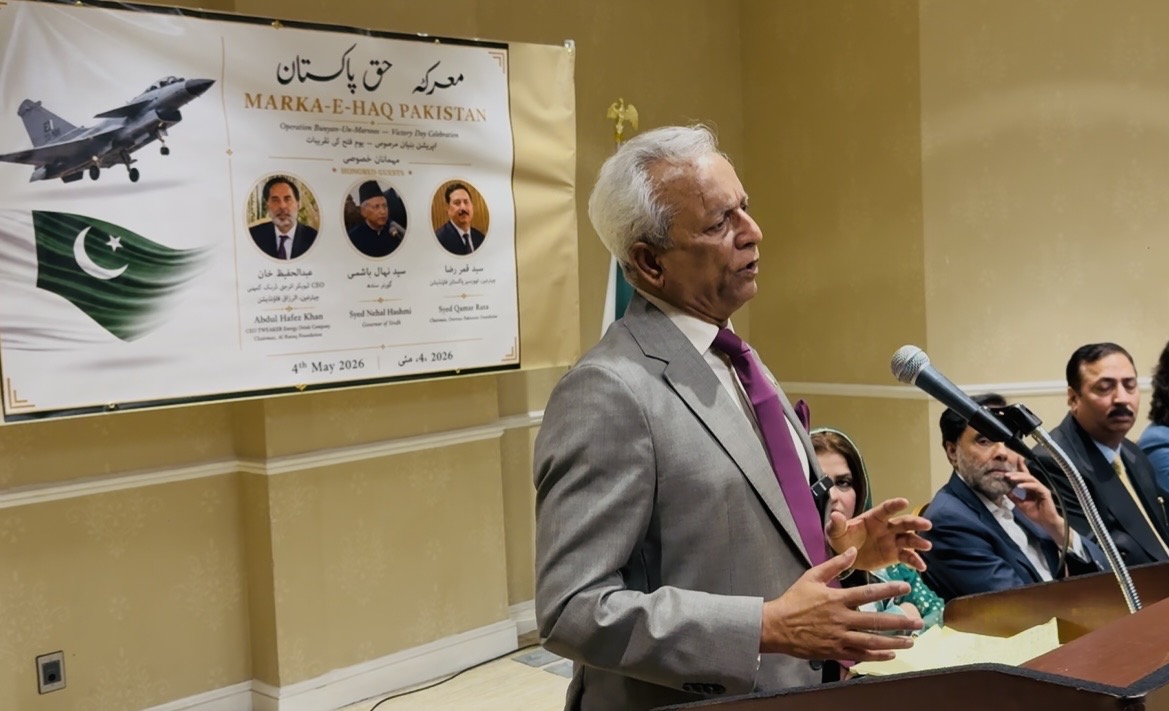
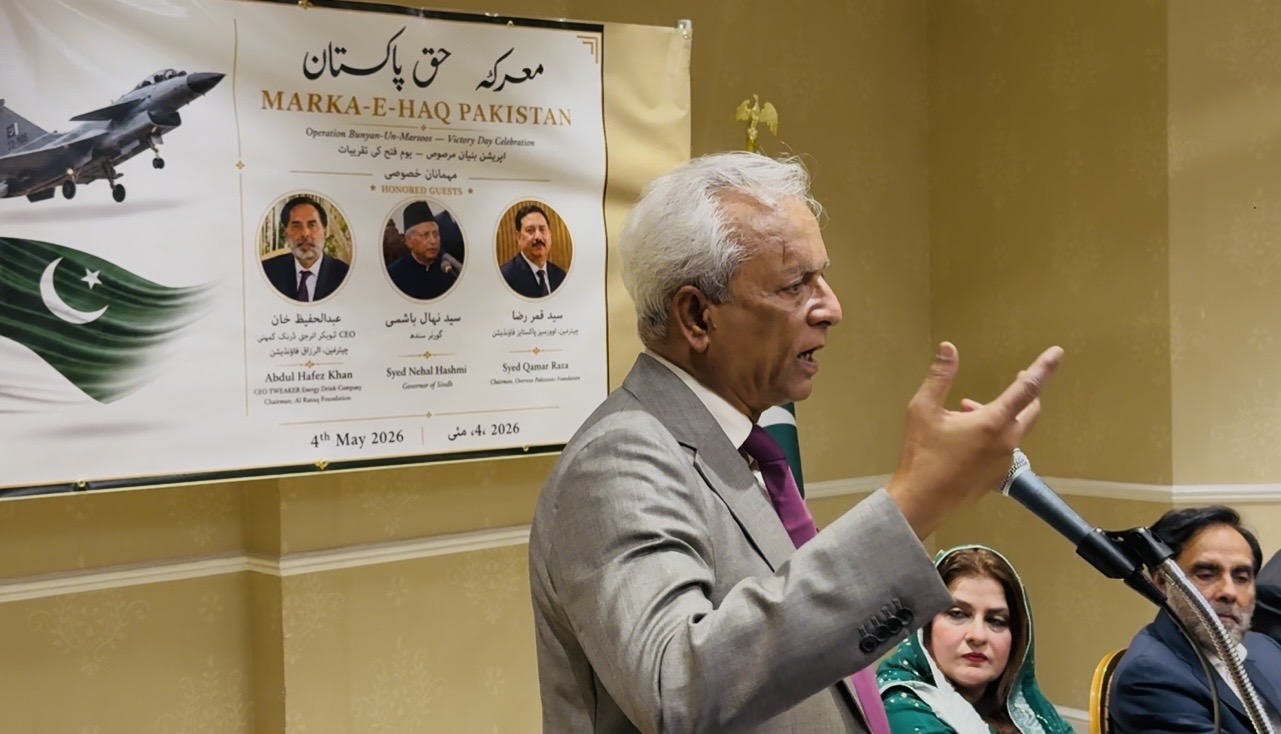
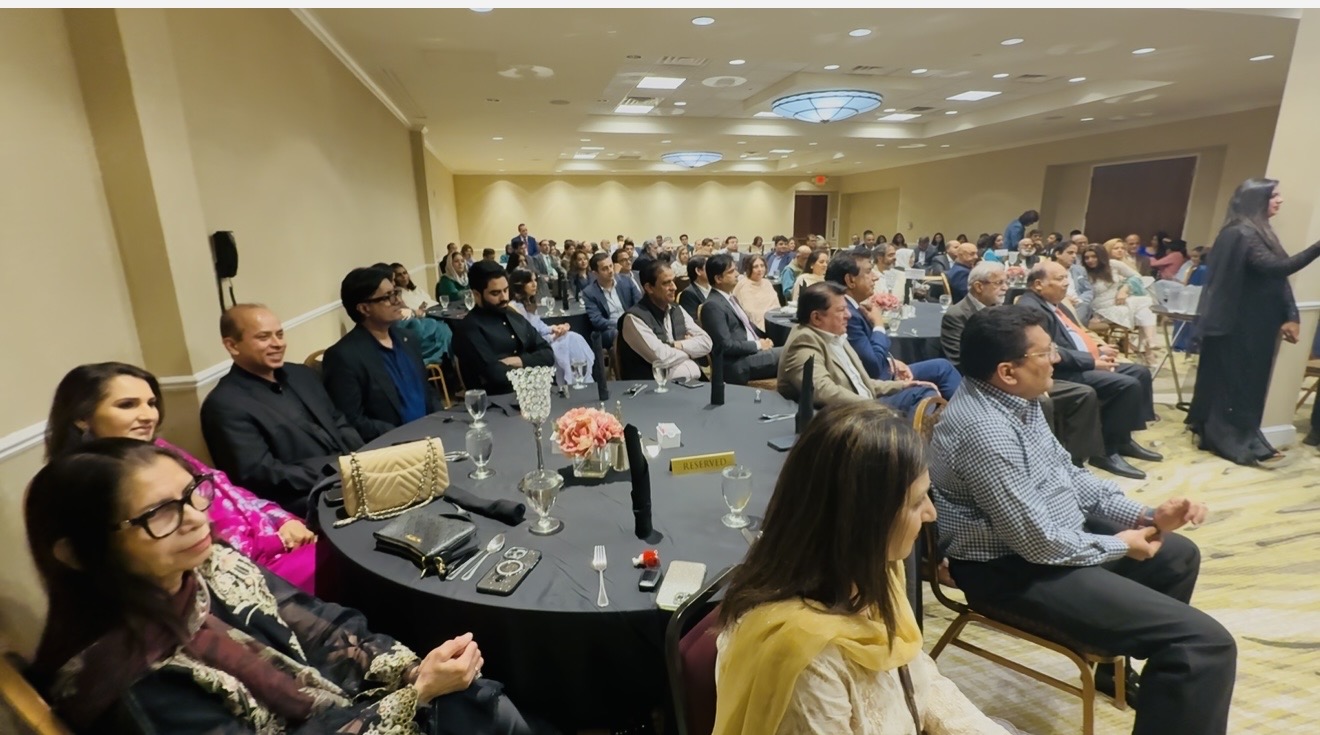
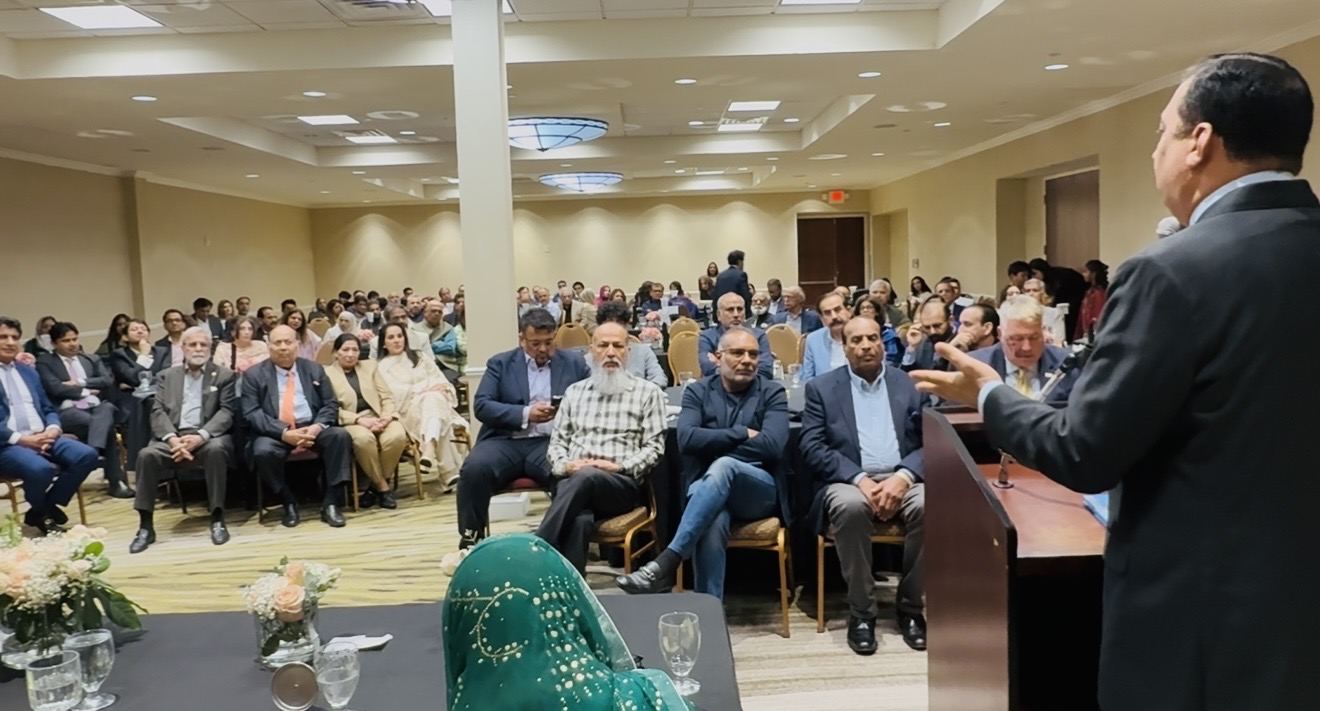
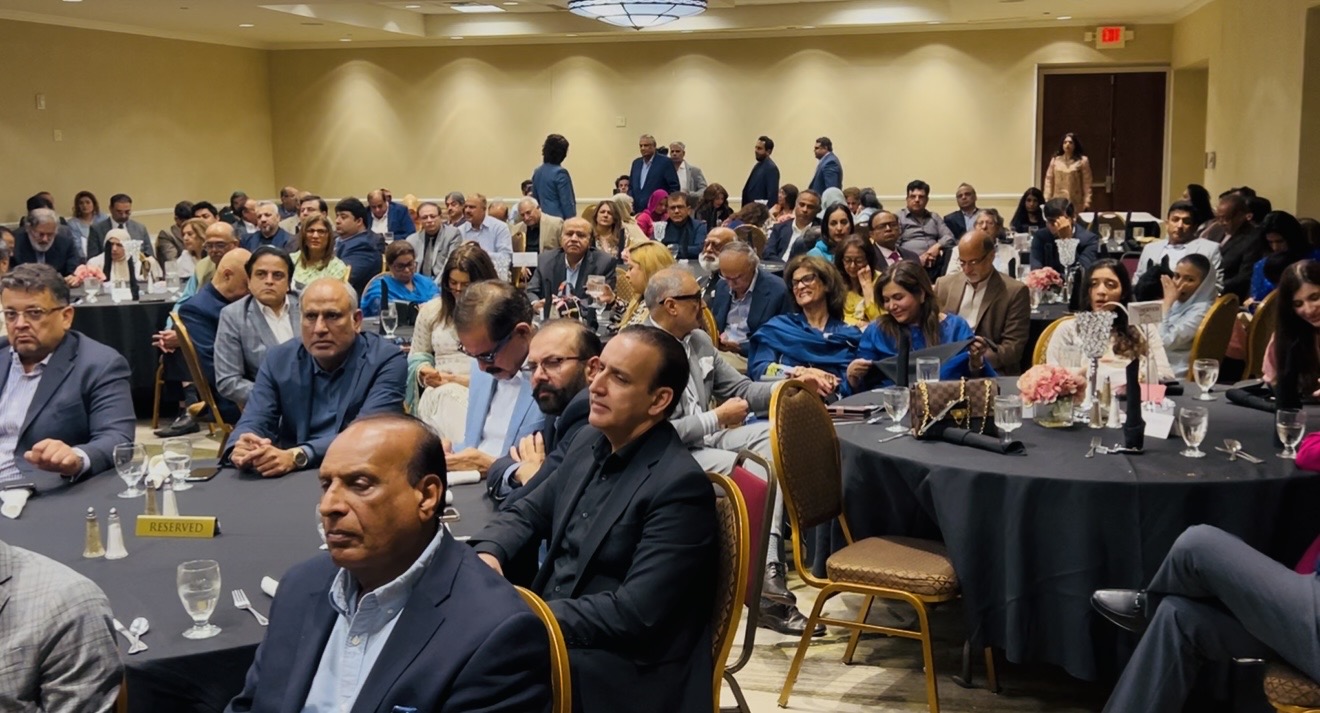
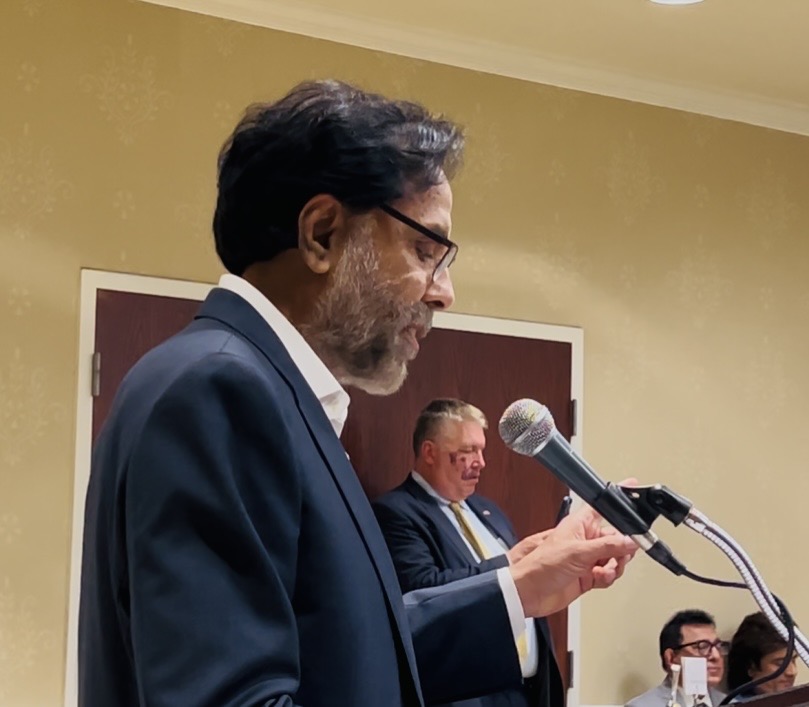
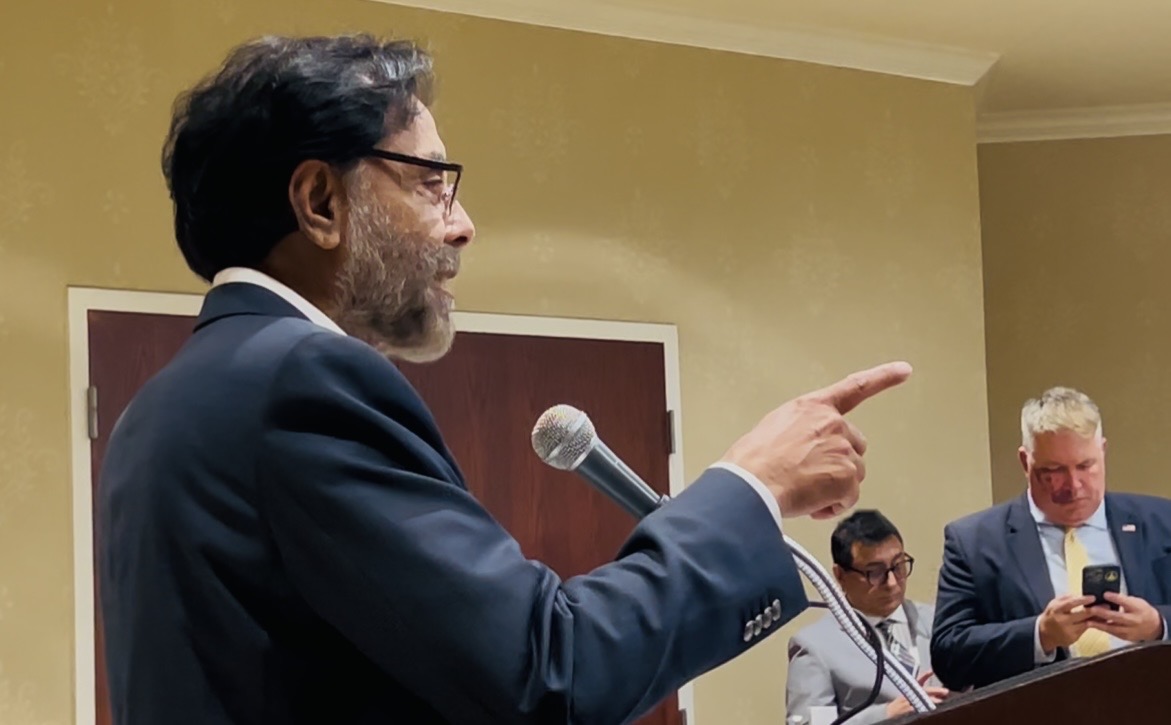
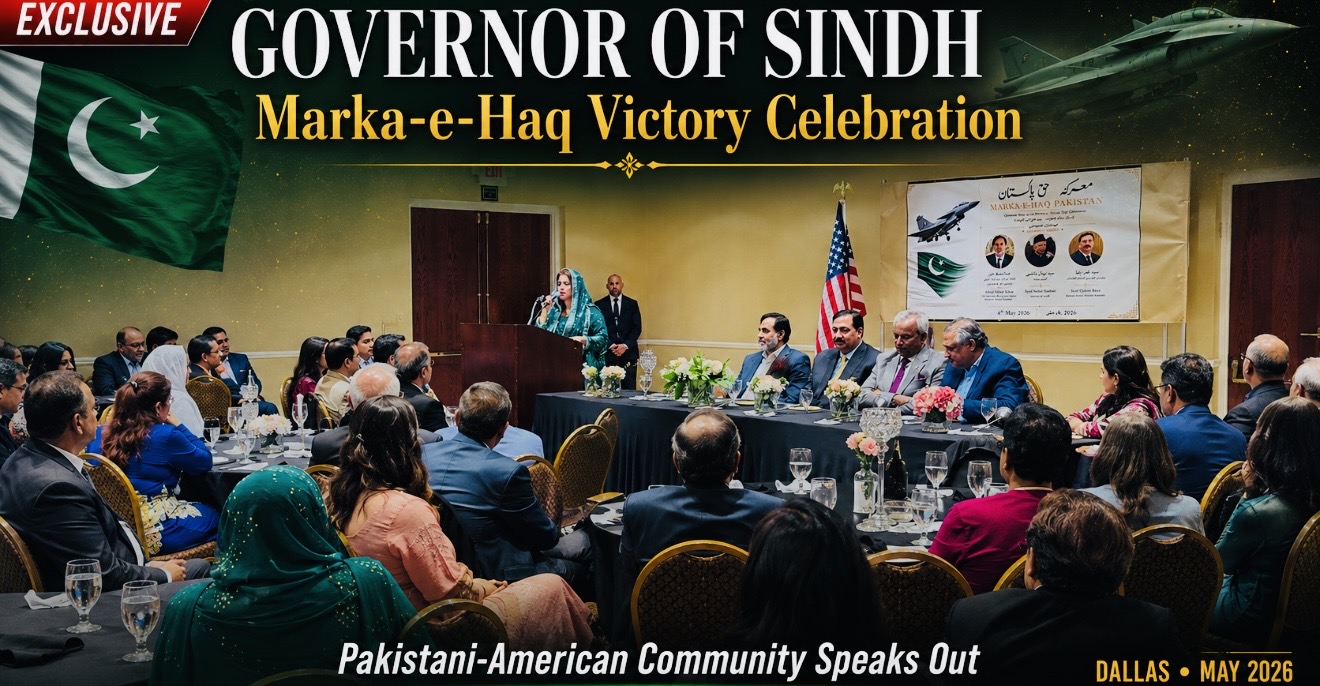
A large and emotionally charged gathering titled “Maarka-e-Haq, Youm-e-Fatah” was held in Dallas, drawing an overflowing crowd from the Pakistani-American community in what became both a patriotic celebration and a reflection on Pakistan’s political, military and ideological identity. The event was hosted by community leader and businessman Hafeez Khan, and as the hall exceeded capacity, chants of “Pakistan Zindabad” and “Pakistan Army Zindabad” echoed repeatedly throughout the evening.
The chief guests included Sindh Governor Syed Nehal Hashmi and Overseas Pakistanis Foundation Chairman Syed Qamar Raza. The event was moderated by Ghazala Habib, while Houston-based Vice Consul General Ashar Shehzad, along with prominent social, business and media figures from across the Dallas community, also attended.
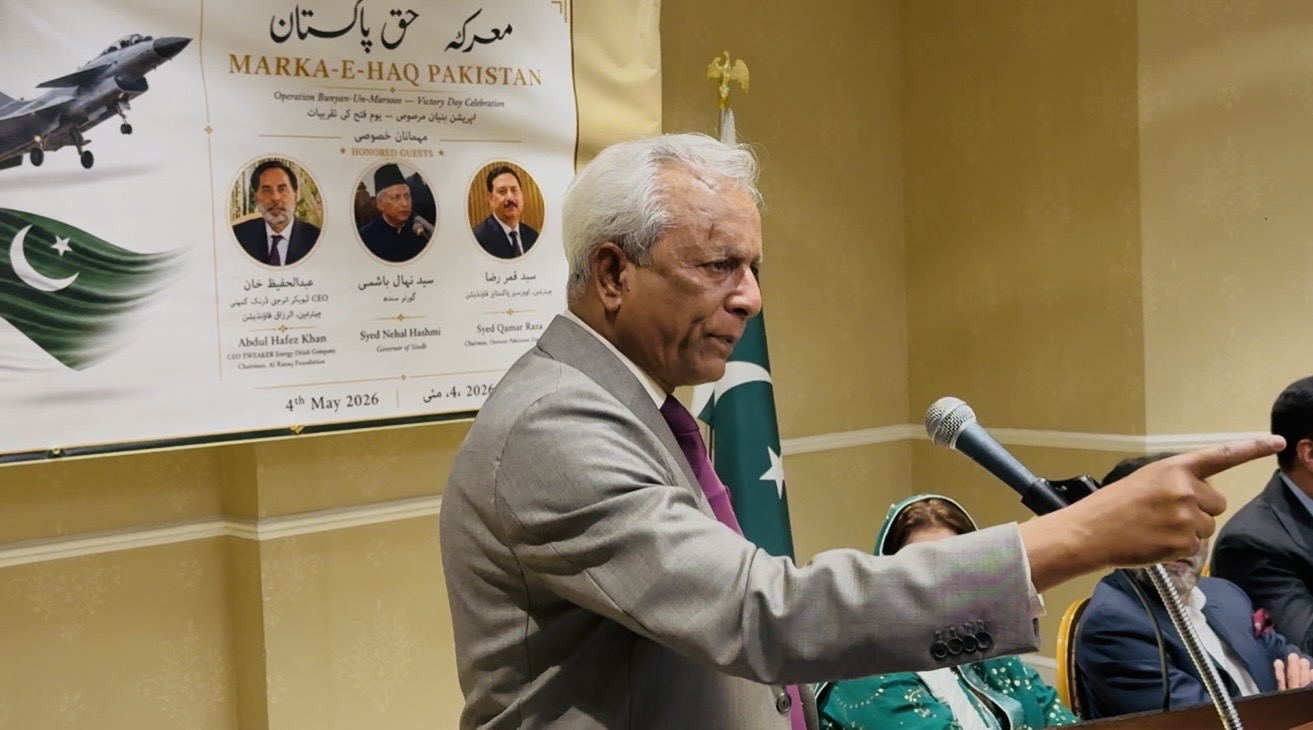
In a lengthy and deeply emotional speech, Governor Nahal Hashmi framed Pakistan not merely as a state, but as the realization of an ideological struggle led by Muhammad Ali Jinnah. Pakistan, he said, “was never a slave nation,” adding that it was their forefathers who had lived under subjugation before Jinnah carved out a separate homeland for Muslims through leadership and vision.
He argued that ideology remains the true strength of nations and warned that when nations lose their ideological direction, they also lose their sense of purpose. Referring to the Quranic phrase “Nasrun Min Allah wa Fathun Qareeb,” he said nations that remain united in faith and conviction cannot be defeated by external powers.
Hashmi linked those ideas to Pakistan’s recent military successes, saying the country had responded to its enemies in a way that surprised the world and left hostile aircraft “falling from the skies one after another.” He credited former Prime Minister Zulfikar Ali Bhutto with laying the foundations of Pakistan’s nuclear program and said later leadership completed that mission, while Nawaz Sharif made the country “untouchable” through the nuclear tests.
“Today,” he said, “no enemy dares look toward Pakistan with hostile intent.”
The governor also invoked the legacy of Pakistani Air Force pilot M.M. Alam, describing him as a symbol of military courage whose achievements are still remembered internationally. He said a single Pakistani pilot had once brought down multiple enemy aircraft within moments and entered history forever.
The most emotional moment of the evening came when Hashmi turned toward the younger generation. His voice broke as he spoke about Pakistan’s centennial in 2047.
“One of you may become governor, one of you may become prime minister,” he told the audience. “But if, by 2047, the nation is still standing with a begging bowl in its hands, then even my soul will remain restless.”
At that point, he became visibly emotional and tearful. He then added that nations are not made great by expensive clothes or luxury cars, but by character, sacrifice and meaningful work.
Hashmi challenged the younger generation directly, asking: “We defeated India in the military arena. Can you defeat it economically?” He described Pakistan’s next battle as one against dependence on the International Monetary Fund and against economic weakness itself.
In unusually personal remarks, the governor also spoke about his own life and political journey. “I have never committed corruption,” he told the audience. “I have never been dishonest, and I have never betrayed Pakistan.” He added that even the clothes he was wearing had been gifted to him by friends, and that the shirt he wore that evening had been given to him 17 years ago by his friend Iftikhar, who was present in the audience. Real change, he said, begins with reforming oneself before attempting to reform society.
Speaking afterward, Overseas Pakistanis Foundation Chairman Syed Qamar Raza said the recent national confrontation had elevated Pakistan’s image globally and strengthened the confidence of overseas Pakistanis around the world. Referring to comments attributed to Pakistan’s field marshal, he said Pakistan had the capability to destroy many more Indian aircraft, but chose restraint and responsibility, limiting its response to six aircraft in order to send a message not only of strength, but also of maturity and calculated discipline.
Qamar Raza described overseas Pakistanis as the backbone of Pakistan’s economy, noting that Pakistanis abroad send billions of dollars annually through legal channels. He said remittances reached $38.3 billion last year and could surpass $41 billion this year. If overseas Pakistanis committed themselves entirely to legal banking channels and remittances eventually rose to $60 billion, he argued, Pakistan could free itself from dependence on IMF programs.
“Pakistanis abroad are not just workers,” he said. “They are ambassadors of Pakistan, representing the country through their hard work, conduct and success.”
Host Hafeez Khan said Pakistan’s recent military response had lifted the morale of Pakistanis worldwide and restored a sense of dignity and confidence among overseas communities. He said Pakistan’s response to India had elevated the nation’s standing and echoed across the world.
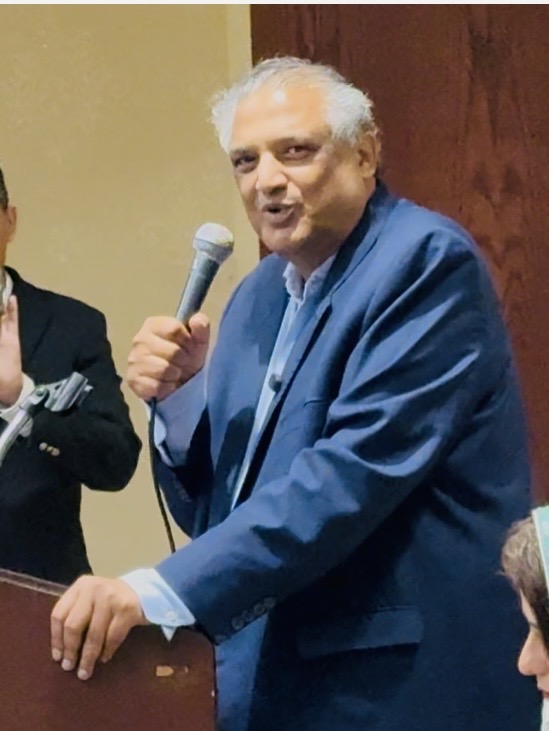
Community leader Iftikhar Darpan said the recent events had given overseas Pakistanis renewed pride and respect. Pakistan, he said, remains a country that advocates peace, but also knows how to respond decisively to aggression when necessary.
Veteran journalist Sohail Warraich said that for perhaps the first time in Pakistan’s history, the world was openly acknowledging Pakistan’s success. Reflecting on history, he said Pakistanis often searched for explanations for their defeats in the actions of others while failing to critically examine their own weaknesses. But now, he said, a new sense of hope appears to be emerging.
“It feels,” Warraich said, “as though the dream of Muhammad Ali Jinnah and Allama Iqbal is beginning to come alive once again.”
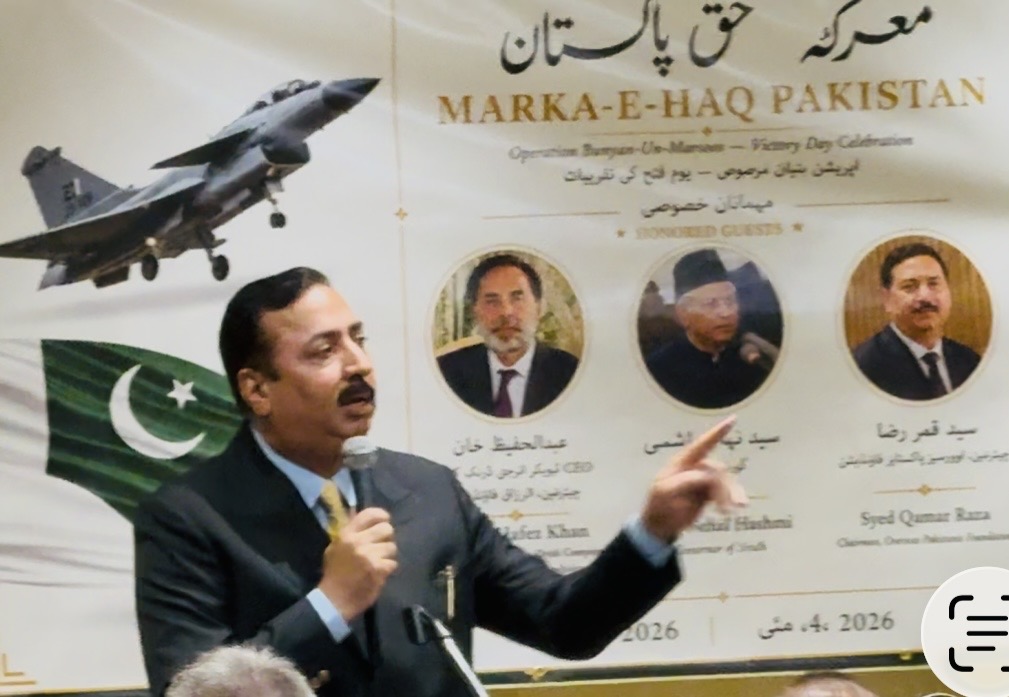
Senior journalist Raja Zahid Akhtar Khanzada, speaking during the ceremony, said Pakistanis had seen moments in the past when captured enemy pilots were treated with dignity and sent home with tea, but this time the response carried a different clarity and decisiveness.
“The difference this time,” he said, “was that there was no hesitation. There was resolve.”
He credited national leadership with transforming critical moments into history and demonstrating that nations fight not only with weapons, but with courage and collective will. The real battle, he added, is not confined to military conflict alone, but also involves truth, ideas, hope and national unity. Nations, he said, are ultimately strengthened not by guns, but by faith, unity, discipline and sacrifice.
The evening concluded with prayers for Pakistan’s stability, security and prosperity, after which chants of “Pakistan Zindabad” once again filled the hall.
Earlier, Governor Nahal Hashmi received a warm welcome upon his arrival in Dallas. Community leaders including Hafeez Khan, Ghazala Habib, Raja Zahid Akhtar Khanzada, Ashraf Bashir and others greeted him at the venue. During the event, the governor walked personally from table to table, shaking hands and meeting attendees individually, a gesture widely appreciated by guests.
The gathering was attended by representatives of various Pakistani organizations and prominent figures from different walks of life, including Dr. Riaz Haider, Barkat Basria, Abid Malik, Dr. Hassan Hashmi, Salma Hashmi, Jan Hameed, Allama Babar Rehmani, Ghulam Jhangda, Aftab Siddiqui, Syed Fayaz Hassan Sabeel Abbasi, Naim Sukhia, Iftikhar Ifti, Nadeem Akhtar, Dr. Daud Nasir, Dr. Kamran Rao, Zulfiqar Halepota and several other community leaders.