

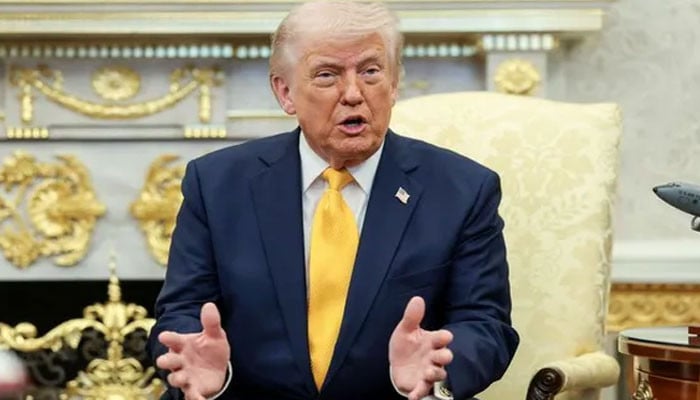
The United States has taken control of an Iranian oil tanker that allegedly attempted to breach the American naval blockade in the Strait of Hormuz. President Donald Trump announced the development, stating that the US Navy had intercepted the tanker, which was attempting to defy the naval blockade in the strategic waterway.
According to Trump, the Iranian tanker, named “Toshka,” is approximately 900 feet long and weighs as much as an aircraft carrier. The US Navy’s guided missile destroyer, operating in the Gulf of Oman, intercepted the tanker and issued a warning to its crew, but the Iranian sailors refused to comply. The US Navy then took control of the tanker by breaching the engine room, and it is now under the custody of the US Marines.
Iran has responded by reopening its airports in Tehran, with officials stating that the country is “positively assessing” its participation in the international community. However, the Iranian government has not made a final decision on its participation.
Meanwhile, the UAE has announced that it has arrested several members of the terrorist organization, and the US has imposed conditions on its security cooperation with Iraq, following a rocket attack on the American embassy in Baghdad. Austria’s oil and gas company has been forced to purchase crude oil from the US emergency reserve, while China has expressed concerns over the US decision to seize the Iranian tanker.
In the Gaza Strip, the Palestinian Health Ministry has reported that two Palestinians were killed in Israeli military attacks over the past 24 hours. Chinese President Xi Jinping has stated that China supports a comprehensive and immediate ceasefire, and Israel’s Prime Minister Benjamin Netanyahu has expressed regret over the destruction of a statue of Jesus Christ by Israeli soldiers.
As tensions between the US and Iran continue to escalate, President Trump has stated that negotiations are ongoing and that no game is being played. He has also indicated that he is willing to meet with Iranian leaders if negotiations break down.
The situation remains fluid, with several countries weighing in on the crisis. The value of Iran’s frozen assets and the amount of money frozen in various countries remains unclear. The situation is likely to continue to unfold in the coming days, with potential consequences for the global economy and international relations.
