When Wealth Falls Silent and Conscience Speaks: Aamir Makhani, Makhani Welfare, and a Model of Service Built on Trust
By Raja Zahid Akhtar Khanzada
This is not merely the story of one man’s success. It is an answer to a question that awakens, sooner or later, in the heart of anyone who achieves everything yet still feels an unspoken incompleteness.
Born in the soil of Tando Muhammad Khan, a marginalized district of Sindh, Aamir Makhani grew up amid scarcity, limited opportunity, and the quiet endurance of poverty. It is in such landscapes that certain questions are born. Questions that begin as hardship, transform into ambition, and eventually become a longing for education strong enough to carry a young man across oceans.
For Makhani, that journey led to the United States. He pursued higher education, established himself in new social and professional circles in Chicago and Dallas, entered the world of business, and steadily climbed the ladder of success. Wealth followed. Recognition followed. His enterprises strengthened. By every conventional measure, he had arrived.
Yet the final verdict in the court of the heart was still pending.
Some people mistake wealth for the destination. For others, it is merely a means. When a person attains everything and still feels unrest, it is often the soul reminding him that the true reckoning remains unfinished. Within Makhani, too, this awareness began to stir. What he had gained was not his alone. His homeland, his identity, and the countless individuals who never had the chance to advance had all played a part in shaping his journey. The time had come to repay that debt.
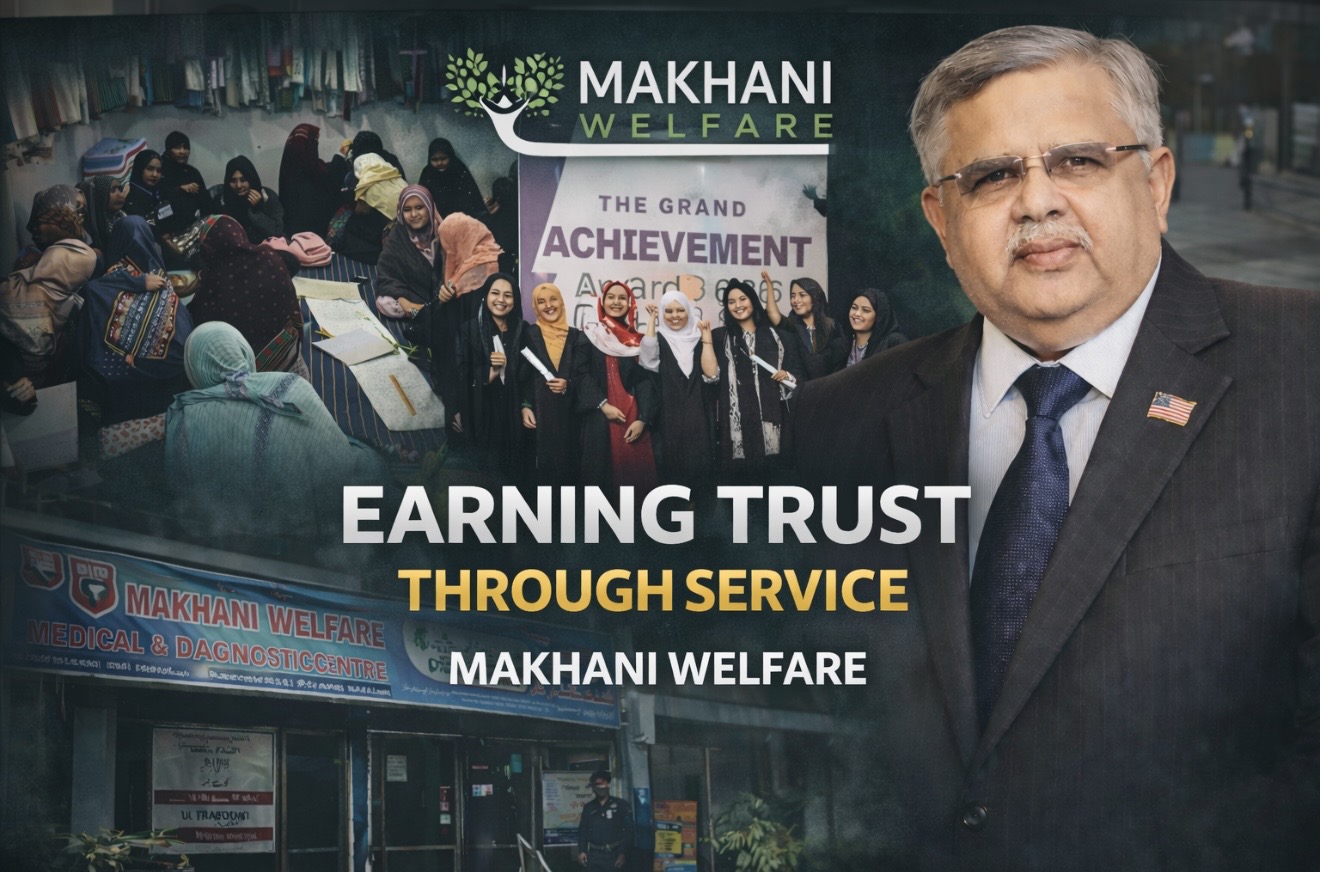
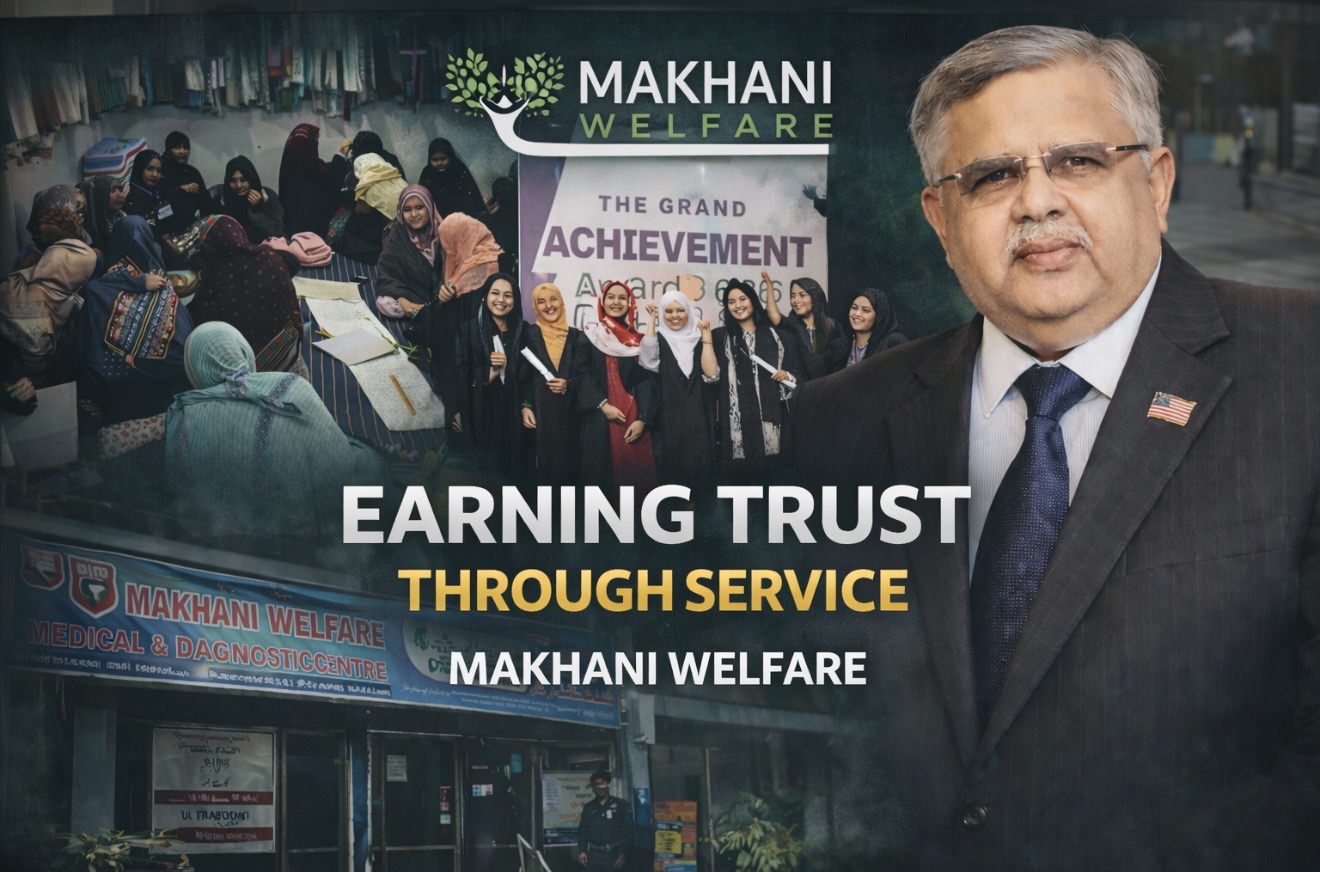
He had long participated in charitable activities. But five years ago, he made a decision that moved beyond temporary charity and laid the foundation for lasting transformation. In the state of Texas, he established Makhani Welfare. There were no donation drives, no emotional appeals, no advertising campaigns. Using his own resources and personal earnings, land was purchased in underserved neighborhoods of Karachi. Two fully functioning centers were constructed. These centers are registered with the Government of Sindh, yet their true identity is not found in paperwork but in the faces of the women who walk through their doors and begin rewriting their destinies.
For more than five years, these two centers in Karachi’s disadvantaged communities have quietly generated meaningful social change. Training programs in stitching and embroidery, beautician courses, fashion designing, Montessori instruction, and information technology are offered. These are not simply skills. They are steps toward autonomy. They are forms of knowledge that lift women from dependency to self-reliance. Between seven and eight thousand girls and women have received training and emerged as productive members of society. These are not statistics. They are lives transformed, families stabilized, futures reshaped.
In recognition of these efforts, a ceremony was held at the Pakistan American Cultural Center in Karachi, where Makhani Welfare’s work was formally acknowledged. Among those present was the then spokesperson of the U.S. Consulate in Pakistan, Rewa Gupta. She commended Aamir Makhani’s commitment to women’s empowerment, emphasizing that in today’s world, providing women with education and practical skills is not optional but essential. She underscored that democracy, collaborative effort, and gender equality are core American values, and that the United States continues to cooperate with Pakistan in the fields of education and health. Makhani Welfare, an American organization operating with a global conscience, stands as a tangible example of that spirit.
At the same time, an important question stands before the Pakistani American community. In the United States, there is no shortage of charitable organizations. Fundraising campaigns, donation appeals, and ambitious claims are everywhere. Yet it is equally true that doubts have arisen around many institutions. Questions of transparency, concerns about administrative integrity, and uncertainty regarding the use of donations have cast shadows in certain cases. In such an environment, it becomes even more vital for a community to decide carefully where it invests its time, money, and trust.
There are institutions in the world that do not demand blind trust but earn tested confidence. In Pakistan, the example of Imran Khan is frequently cited. Whether through Shaukat Khanum Memorial Cancer Hospital or Namal University, public confidence was built upon visible transparency, consistency, and accountability. Over time, integrity became their strongest currency. It is to such institutions that Pakistanis abroad are willing to contribute, because their past is clear and their intentions evident.
Makhani Welfare belongs to this category. There is no spectacle, no race for donations, no noise. There is only sustained work. It stands as proof that when intention is sincere, resources find their own path. For Pakistanis living in America, particularly the younger generation, this is an invitation to reflect. If you truly wish to see change, if you want your single dollar to make a real difference in someone’s life, then support institutions whose credibility is strong, whose foundations rest on integrity, and whose histories remain untarnished.
Aamir Makhani’s story teaches us that real success is not measured by a bank statement. It is measured by the skill placed in a woman’s hands, the dignity restored within a household, and the hope planted in a child’s future. When someone living abroad begins to ask what he can give back to the soil that shaped him, it is a sign that he has moved beyond wealth to a higher destination.
This is not merely the story of an organization. It is a path. A path through which the community residing in America can strengthen its identity and set an example for generations to come that the true measure of service is not noise, but character. You, too, can become part of this journey and stand alongside Aamir Makhani in advancing this mission through meaningful, practical support.