

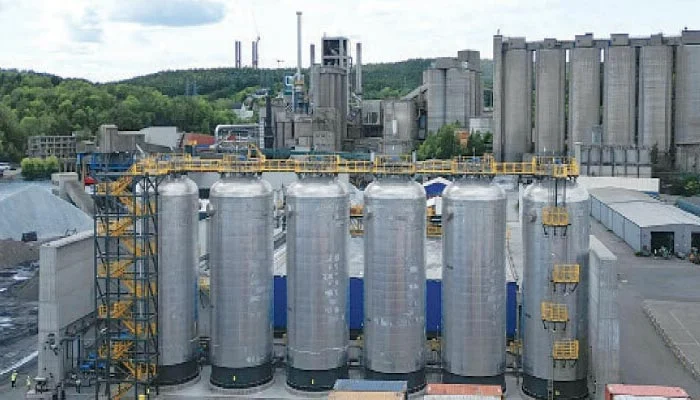
The world’s first commercial service for carbon storage has performed its inaugural CO2 injection into the North Sea seabed off the coast of Norway, as announced on Monday by the Northern Lights consortium that operates the site.
The project, which is led by oil giants Equinor, Shell, and TotalEnergies, involves capturing CO2 emissions from industrial sources across Europe and permanently burying them deep beneath the sea. The goal is to prevent these emissions from being released into the atmosphere, thereby helping to combat climate change.
“We have now injected and stored the very first CO2 safely in the reservoir,” said Tim Heijn, Northern Lights’ managing director, in a statement. “Our ships, facilities, and wells are now in operation.”
The process works in a series of steps:
- Capture: CO2 is captured at industrial sites.
- Transport: The captured CO2 is liquified and transported by ship to the Øygarden terminal on Norway’s western coast.
- Storage: It is then transferred to large tanks before being injected through a 110-kilometer (68-mile) pipeline into a geological formation beneath the seabed, at a depth of approximately 2.6 kilometers, for permanent storage.
Carbon Capture and Storage (CCS) technology has been listed as a critical climate tool by the UN’s Intergovernmental Panel on Climate Change (IPCC) and the International Energy Agency (IEA), particularly for reducing the carbon footprint of difficult-to-decarbonize industries like cement and steel.
The first CO2 injection came from Germany’s Heidelberg Materials cement plant. However, despite its potential, the CCS technology is complex and costly. For many industries, it is currently more profitable to purchase “pollution permits” on the European carbon market than to pay for capturing, transporting, and storing their CO2.
So far, the Northern Lights consortium has signed only three commercial contracts in Europe. The project is largely financed by the Norwegian state and has an annual CO2 storage capacity of 1.5 million tonnes, which is expected to increase to five million tonnes by the end of the decade.
