

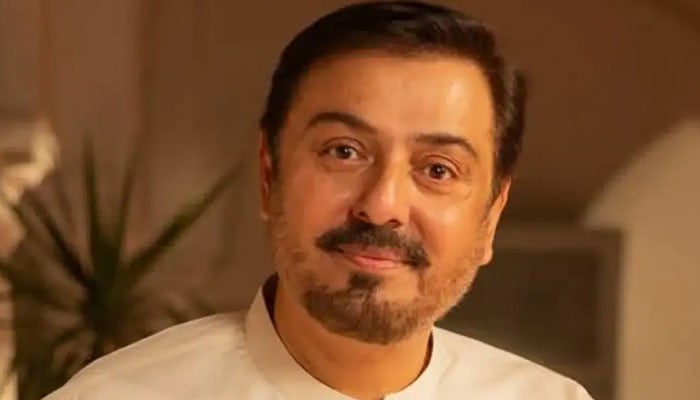
**Lahore, Pakistan** – Veteran Pakistani actor Noman Ijaz, currently garnering widespread praise for his compelling performance in the drama serial “Sharpsand,” has recently clarified his past statements regarding performing with ablution (Wudu) and his perception of work as worship. The seasoned artist addressed the recurring controversy in a recent interview with a private fashion magazine, also shedding light on his reasons for generally avoiding interviews.
Ijaz’s previous remarks, particularly those made during an interview with Geo News, where he stated he considers his work an act of worship and performs while in a state of ablution, had sparked significant debate and social media criticism.
In his latest interaction, Ijaz delved deeper into the context of his comments, explaining that his perspective hails from an older era that the current generation may struggle to comprehend. “I speak of a time that people today cannot understand,” he stated, highlighting the enduring debate within the entertainment industry about the religious permissibility (Halal or Haram) of acting. Despite this, he noted, artists continue their craft.
Elaborating on his philosophy, Ijaz reiterated his belief that “I perform my work considering it an act of worship, and when I act, I am in a state of Wudu.” He emphasized that if Allah has guided individuals towards a particular profession, their duty is to approach it with pure intentions. “The ultimate judgment of what is Halal or Haram rests with Allah,” he affirmed.
The versatile actor expressed disappointment over the misinterpretation and mockery his statements have often faced. He recounted how his advice, inspired by elders who encouraged maintaining ablution before leaving home for blessings in one’s work, was twisted. “When I say our elders used to advise leaving home with Wudu for blessings, young people, instead of understanding, mock it by saying Noman Ijaz works with non-Mahram women while in Wudu,” he lamented.
Ijaz underscored the importance of societal learning and constructive discourse. “The day we learn to extract lessons from good advice without ridicule, our society will improve,” he asserted. He concluded by explaining that the constant misinterpretation and mocking of his words have led him to largely abstain from giving interviews, finding it counterproductive when nuanced discussions are distorted.
