

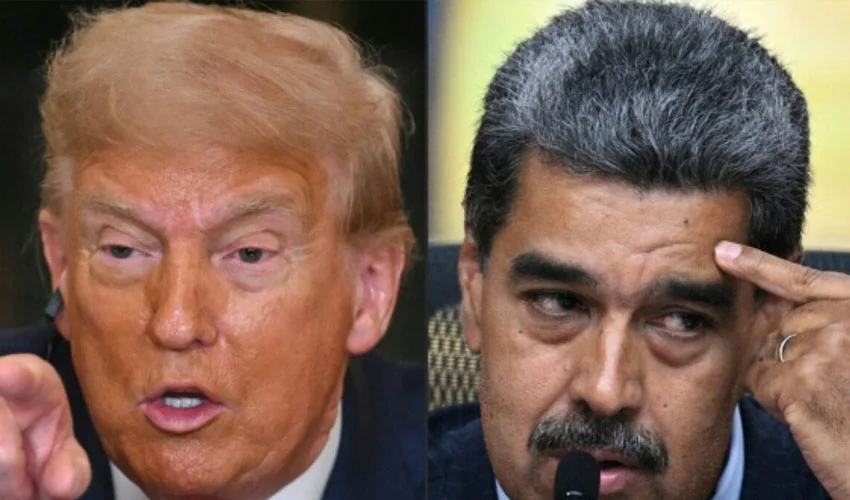
Three US Navy warships are reportedly on their way to the coast of Venezuela and are expected to arrive by the weekend. This move is part of the Trump administration’s intensified campaign against Latin American drug cartels and its pressure on President Nicolás Maduro. According to sources cited by Reuters and AFP, the amphibious squadron consists of three Aegis-class guided-missile destroyers—the USS San Antonio, USS Iwo Jima, and USS Fort Lauderdale—carrying approximately 4,500 military personnel, including 2,200 Marines. The fleet could reach Venezuelan waters as soon as Sunday.
While officials have not disclosed the specific mission, US authorities state the deployment is part of a broader effort to combat what Washington has labeled as “narco-terrorist” threats in the Caribbean region.
Washington’s Increased Pressure on Maduro
The operation follows the Trump administration’s recent decision to double the reward for Maduro’s arrest to $50 million, based on alleged cocaine trafficking connections. The US accuses him of leading the Venezuela-based Cartel de los Soles (Cartel of the Suns), which is linked to Mexico’s Sinaloa Cartel and Venezuela’s Tren de Aragua crime group. White House Press Secretary Karoline Leavitt said on Tuesday: “President Trump has been very clear and consistent, he’s prepared to use every element of American power to stop drugs from flooding into our country and to bring those responsible to justice.”
Venezuela’s Response: Mobilizing Militia
In response, President Maduro announced the activation of over 4.5 million militia members across Venezuela to defend against what he called US “threats.” “This week, I will activate a special plan with more than 4.5 million militiamen to ensure coverage of the entire national territory,” Maduro stated in a televised address. He also ordered all drones to be grounded for 30 days, a precaution that observers believe is a measure against potential airstrikes.
Regional Implications
Lucia Newman, Al Jazeera’s Latin America editor, noted that Trump’s action is being viewed as a message to the entire region, not just Venezuela: “They say today it may be Venezuela, tomorrow it could be any one of them.” This aggressive military posture has raised questions throughout Latin America about why Washington is escalating force so close to home, even as it portrays itself as a global peacemaker.
