

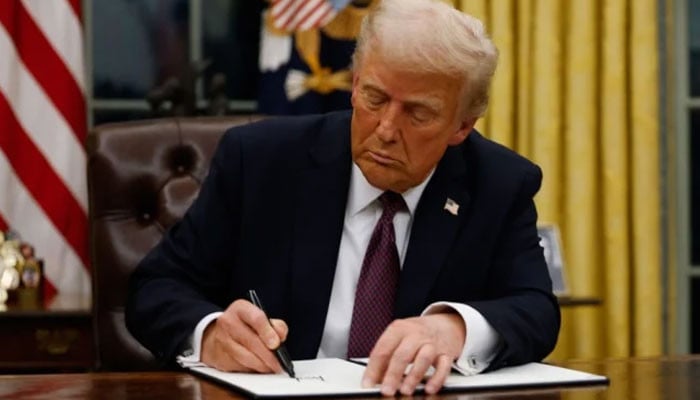
US President Donald Trump has imposed travel restrictions on 35 countries, including Pakistan, South Sudan, Niger, Mali, and Burkina Faso, effective from January 1. The new policy will affect students, family members of US citizens, and Afghan Special Immigrant Visa holders from these countries. Trump administration has also imposed partial restrictions on 24 countries, including Angola, Antigua, Barbuda, Benin, Ivory Coast, Dominica, Gabon, Gambia, Malawi, Mauritania, Nigeria, Senegal, Tanzania, Tonga, Zambia, and Zimbabwe.
This move comes after Trump’s previous decision in June to impose travel restrictions on 12 countries, including Afghanistan, following a shooting incident at the White House that resulted in the deaths of two National Guardsmen. The latest development has taken the total number of countries under travel restrictions to 35. Additionally, the Trump administration has also imposed restrictions on 15 more countries, mainly from Africa.
According to the White House spokesperson, the US aims to prevent individuals from entering the country who could pose a threat to national security. The restrictions are part of the administration’s efforts to strengthen border security and reduce the risk of terrorism.
Meanwhile, Saudi Arabia’s northwestern province of Tabuk experienced its first snowfall of the season. Further details have emerged about the suspects involved in the Sydney attack in Australia, which occurred on Sunday. A woman doctor’s brother has stated that his sister has decided not to join government service, citing mental pressure. The European Parliament has approved a ban on Russian gas imports by the end of 2027.
In a separate incident, a man in Bangalore, India, died on the spot after suffering a heart attack due to a lack of ambulance and medical assistance. The Philippines’ National Security Adviser has stated that the suspects involved in the Bondai Beach attack have no known training or affiliation with any terrorist group.
Senior Congress leader and former Maharashtra Chief Minister Prithviraj Chavan has questioned the effectiveness of Operation Sardar, stating that India suffered a major setback in the initial stages of the operation. The US administration has announced a plan to charge a $100,000 fee for new H-1B workers, which could put Indian IT companies like Tata Consultancy Services, Infosys, and Cognizant under significant financial pressure.
A Pakistani passport holder who was granted a 10-year visa by the Indian embassy on February 24, 2022, has been linked to a terror plot. The Indian government has defended a woman doctor who was forced to remove her hijab in Bihar. A 28-year-old Indian-American has been arrested for allegedly murdering his 67-year-old father with a hammer in the US.
The Indian Health Minister has accused striking doctors of trying to harm the National Health Service. The Philippines’ military spokesperson has stated that there have been no major anti-terror operations in the country since the start of 2024, and the rebel group is dispersed with no leadership. A Congress session in Mexico City turned violent when disagreements escalated into physical altercations.
US President Donald Trump has expressed well-wishes to his son and future daughter-in-law. A woman has been charged in Bangalore, India, for allegedly harassing a police inspector, hindering official duties, and threatening suicide. The government and Goods Transporters have reached an agreement, ending the strike.
