

On Monday, US President Donald Trump committed to delivering “top-of-the-line weapons” to Ukraine through NATO allies. Concurrently, he issued a stern warning to Russia, threatening it with extensive secondary tariffs if a peace agreement is not reached within 50 days.
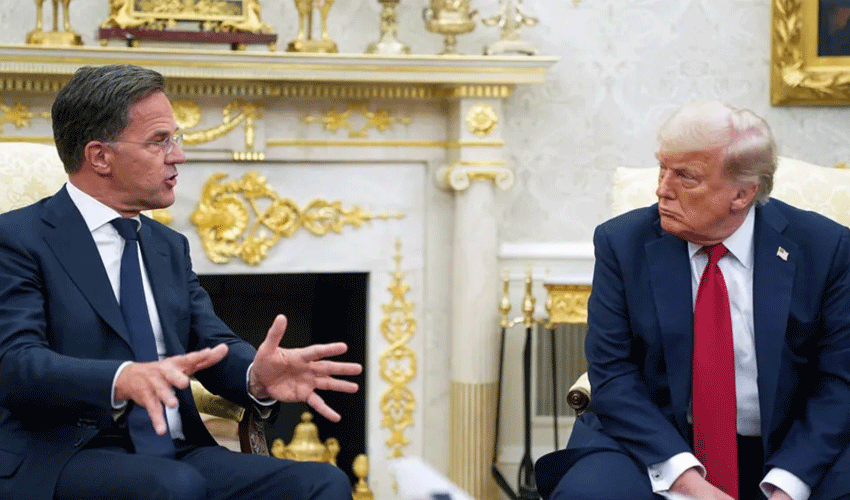
This declaration followed a meeting in Washington between President Trump and NATO Secretary-General Mark Rutte, where both leaders signaled a substantial escalation in Western support for Ukraine amidst Russia’s ongoing invasion.
“We want to make sure Ukraine can do what it wants to do,” Trump told reporters at the joint press conference. Rutte affirmed that the United States had agreed to “massively supply Ukraine with what is necessary through NATO,” adding that European countries would be responsible for financing the deliveries.
While specific details remained somewhat limited, both leaders indicated that the aid package would encompass missiles and ammunition. Critically, Patriot air defense systems, vital for intercepting Russian aerial assaults, would be dispatched by European nations, with the United States providing replacements for their stocks.
Trump stated that the weapons were valued at “billions of dollars” and would be delivered to the battlefield “very quickly.” Rutte, with a nod of agreement from Trump, added, “If I was Vladimir Putin today… I would reconsider whether I should not take negotiations about Ukraine more seriously.”
Tariff Warning Unleashed
In a separate measure designed to exert pressure on Moscow, Trump announced that the US would impose 100% secondary tariffs on countries that continue to trade with Russia, should a ceasefire or peace agreement not materialize within the 50-day timeframe.
This significant measure would render it economically unfeasible for US companies to import goods from nations like India, if they continue their energy trade with Russia. “This is about choking the financial lifelines that fund Russia’s war machine,” Trump asserted.
Given that oil and gas constitute over 60% of Russian exports and nearly a third of its state revenue, these tariffs could severely undermine Moscow’s capacity to sustain its military operations in Ukraine.
However, the Russian stock market responded unexpectedly. The Moscow Stock Exchange Index surged, reflecting investor relief that the announced measures were less severe than initially anticipated.
Zelensky’s Response
Following the briefing, Ukrainian President Volodymyr Zelensky confirmed via a post on social media platform X that he had spoken with Trump. He conveyed his gratitude to the US leader for his “willingness to support Ukraine” and described their dialogue as being focused on “solutions to protect civilians from Russian attacks.”
“We are ready to work as productively as possible to achieve peace,” Zelensky added.
The Ukrainian president is also currently hosting US envoy Keith Kellogg in Kyiv, characterizing their discussions as “productive.”
Trump’s Shifting Tone Towards Putin
Trump, who has previously faced criticism for his conciliatory demeanor towards Russian President Vladimir Putin, adopted a notably harsher tone during Monday’s briefing.
“I don’t want to call him an assassin, but he’s a tough guy. It’s been proven over the years — he fooled a lot of people — Clinton, Bush, Obama, Biden,” Trump stated emphatically. “He didn’t fool me.”
He expressed deep frustration over “nice phone calls” with Putin being consistently followed by intensified Russian airstrikes, arguing that such actions rendered diplomatic efforts meaningless. “At a certain point, talk doesn’t talk, it’s got to be action,” he declared.
Reactions from Moscow and Beyond
The Kremlin did not immediately release a formal statement. However, Russian analysts largely downplayed the US president’s remarks. Former Putin aide Sergei Markov dismissed the tariff threat as “a bluff,” contending that it indicated Trump had “given up on trying to achieve peace in Ukraine.”
Meanwhile, Russian Senator Konstantin Kosachev argued that the announcement fell short of expectations. “If this is all Trump had to say about Ukraine today, then so far it’s been much ado about nothing,” he commented.
Mixed Reception in the US and Europe
The response to Trump’s announcement has been varied. While critics within the Democratic Party welcomed the pledge of weapons, they questioned its timing and long-term sustainability.
Senator Jeanne Shaheen, a senior Democrat on the Senate Foreign Relations Committee, described the announcement as “positive, but overdue.”
She stated, “The decision to send Patriot missiles, made possible through the meaningful investments of our European partners, will save countless Ukrainian lives from Putin’s horrific assault.” However, she stressed the critical need for “a sustained flow of security assistance” to bring an end to the conflict.
In Ukraine, the announcement was met with cautious optimism. Denys Podilchuk, a Kyiv-based dentist, told Reuters that he believed European leaders had influenced Trump’s decision.
“I am pleased that finally European politicians, with their patience and convictions, have slightly swayed him (Trump) to our side,” he said. “From the very beginning it was clear that he did not really want to help us.”
Uncertain Outlook
Two rounds of ceasefire negotiations were held earlier this year, but no subsequent meetings have been scheduled, with Moscow attributing the deadlock to Kyiv.
With a 50-day deadline now looming and Trump’s latest shift in rhetoric, observers are keenly awaiting whether these new measures—both military and economic—will compel Russia back to the negotiating table or instead lead to a further escalation of the conflict.
