

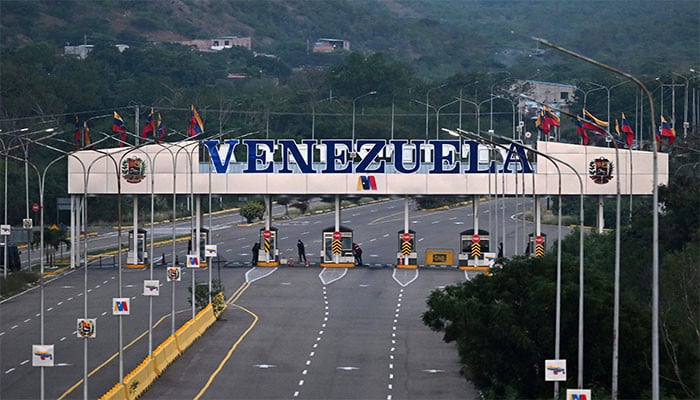
Venezuela, the 32nd largest country in the world by area, spanning 916,445 square kilometers, has been invaded by the United States. The South American nation is rich in natural resources, including the world’s largest oil reserves, vast natural gas reserves, gold, iron, and bauxite deposits. These resources have made Venezuela an essential player in global politics.
President Nicolás Maduro was taken into custody by US special forces during an unexpected operation in Caracas, the capital city, on Saturday morning. Venezuela is the sixth-largest country in South America and is comparable in size to Pakistan and Nigeria, and roughly 1.5 times larger than the US state of Texas.
The country’s vast size and geographic diversity make it an important nation, not only geographically but also defensively and economically. Venezuela’s geography is divided into several distinct regions. In the west, the Andes Mountains are located, where the country’s highest peaks are found, and the region is relatively cold due to its high altitude.
The northern and eastern parts of the country have a coastal mountain range, which borders the Caribbean Sea, and this region is home to a significant portion of the country’s population and major cities. The area is also prone to earthquakes.
Venezuela has a large agricultural sector and a significant population, with a coastal plain in the north and east, where the majority of the country’s population and major cities are located. The region is also prone to earthquakes.
The country’s interior is home to vast plains, where the Orinoco River, the country’s largest river, flows. The river and its tributaries play a crucial role in agriculture, electricity generation, and transportation.
In the south, Venezuela has extensive Amazon rainforests, which are home to a rich biodiversity. The region is rich in mineral resources, but it is sparsely populated.
US President Donald Trump said that some American personnel were injured in a helicopter incident during the operation to apprehend Maduro. The preparation for the secret operation began in early December.
The US has significant interests in Venezuela, which is a major oil producer and has vast natural resources. The country’s strategic location, bordering the Caribbean Sea and the northern and southern regions of the Americas, makes it an essential player in global energy, trade, and military strategy.
Venezuela has a population of approximately 33 million people and 23 states. The country’s capital, Caracas, is located in the northern part of the country, while the country’s federal territories are separate.
Venezuelans have expressed mixed views on the US invasion, with 33% of Americans supporting the operation, according to a survey by a news agency. Greenland’s Prime Minister, Jens Frederik Nielsen, said that his country’s situation is not comparable to Venezuela’s, and he hopes that the US will improve its relations with his country.
The Liberal Democrats have called for a legal opinion on the US operation in Venezuela, stating that the silence of the US administration is tantamount to providing political protection to the President. US Vice President Mike Pence expressed gratitude to those who condemned the vandalism of his home, and he thanked the special agencies for their cooperation in the matter.
Iran’s chief justice, Gholamhossein Mohseni-Eje’i, said that those involved in the unrest in Iran will face the consequences of their actions. Venezuela’s First Lady, Cilia Flores, also denied the allegations made by the US, stating that she is innocent.
After the US threat, interim President Delcy Rodríguez has surrendered and offered cooperation to the US. The UN Secretary-General has expressed concern about the situation in Venezuela during a Security Council meeting.
A cold record of -10.9 degrees Celsius was set in Cumberland, England, on Sunday night, making it the coldest night of the season.
