

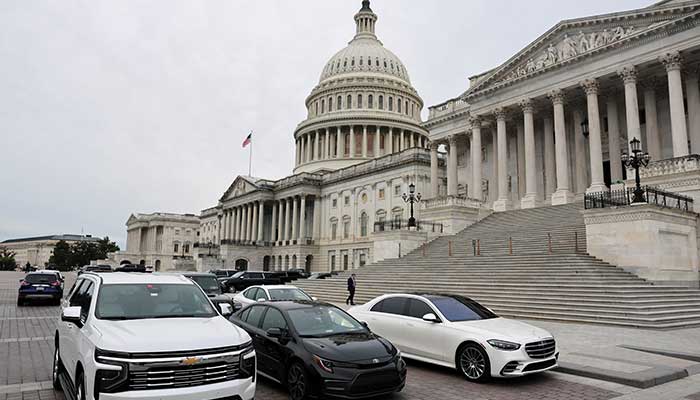
WASHINGTON—The U.S. government shut down much of its operations on Wednesday after deep partisan divisions in Congress and the White House prevented a deal on federal funding. This closure, the 15th since 1981, sets off what analysts fear could be a long, gruelling standoff threatening thousands of federal jobs.
The shutdown commenced hours after the Senate rejected a short-term spending measure, opposed by Democrats who insisted on attaching an extension of health benefits for millions of Americans set to expire soon. Republicans maintained that the healthcare issue must be addressed in separate legislation. The funding dispute centers on $1.7 trillion for agency operations, about one-quarter of the government’s total budget.
Impact and Political Standoff
The consequences of the shutdown are severe:
- Furloughs and Cost: Approximately 750,000 federal workers are being furloughed at a daily cost of $400 million.
- Essential Services: The government warned the shutdown would withhold pay from U.S. troops, halt the release of the key September employment report, slow air travel, and suspend scientific research.
- Trump’s Stance: President Trump, who is already planning to cut some 300,000 federal jobs by December, warned Democrats that the shutdown could clear the path for “irreversible” actions, including cutting more jobs and programs. Budget Director Russell Vought, who favors “less bipartisan” appropriations, threatened permanent layoffs last week.
Senate Democratic leader Chuck Schumer accused Republicans of trying to “bully us,” while Senate Majority Leader John Thune blamed Democrats, arguing their opposition to a “nonpartisan” spending bill was purely political because “President Trump is in the White House.”
Political Analysis
Independent analysts, like the University of Chicago’s Robert Pape, warn that the current highly polarized political climate—exacerbated by recent events—makes it harder for party leaders to compromise. The longest previous shutdown lasted 35 days in 2018-2019, also under President Trump, over border security.
Democrats, needing a victory before the 2026 midterm elections, have unified behind the popular issue of extending healthcare subsidies. Their push for healthcare funding, combined with the partisan rancor—highlighted by a deepfake video targeting Schumer and House Democrat Hakeem Jeffries that Trump shared—suggests the impasse could be protracted.
