

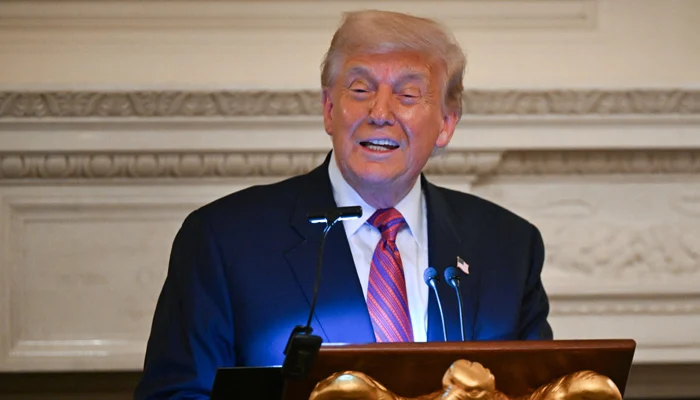
U.S. President Donald Trump reiterated on Saturday that American bombing campaigns had “completely destroyed” Iranian nuclear facilities, a claim that resurfaced after a report suggested some sites largely survived the attacks.
On his Truth Social platform, Trump repeated his frequent assertion that “all three nuclear sites in Iran were completely destroyed and/or OBLITERATED.” He stated that it would “take years to bring them back into service and, if Iran wanted to do so, they would be much better off starting anew, in three different locations.”
The U.S. bomb and missile attacks, carried out on June 22, targeted Iran’s controversial nuclear program. Strikes hit the uranium enrichment facility at Fordo, south of Tehran, as well as nuclear sites in Isfahan and Natanz. These bombings, which coincided with an Israeli campaign against Iranian nuclear and military infrastructure, were presented by Washington as a decisive blow to what it described as a years-long covert effort to develop nuclear weapons. Iran, however, maintains that it has not sought to weaponize its civilian nuclear power program.
Despite Trump’s claims of unequivocal success, several U.S. media outlets have reported on leaked intelligence that paints a less definitive picture. The most recent challenge came from an NBC News report on Friday, which cited a military damage assessment indicating that only one of the three sites was largely destroyed. NBC, quoting five current and former U.S. officials familiar with the assessment, reported that the other two sites were considered repairable and potentially capable of resuming uranium enrichment activities within “the next several months.”
NBC also revealed that the Pentagon had prepared an option to inflict far more extensive damage on Iran’s facilities through a bombing campaign that would have spanned several weeks, rather than the single-night operation chosen by Trump. According to the report, citing one current and one former official, Trump rejected the more comprehensive attack plan due to concerns about potential casualties and entanglement in the conflict.
