

President Trump’s New Year’s Party, “Ice Ice Baby,” and the Knock of 2026 on Immigrants’ Hearts
By Raja Zahid Akhtar Khanzada
Trump immigration fears 2026 are no longer abstract political debates but a lived reality for millions of immigrant families across the United States.
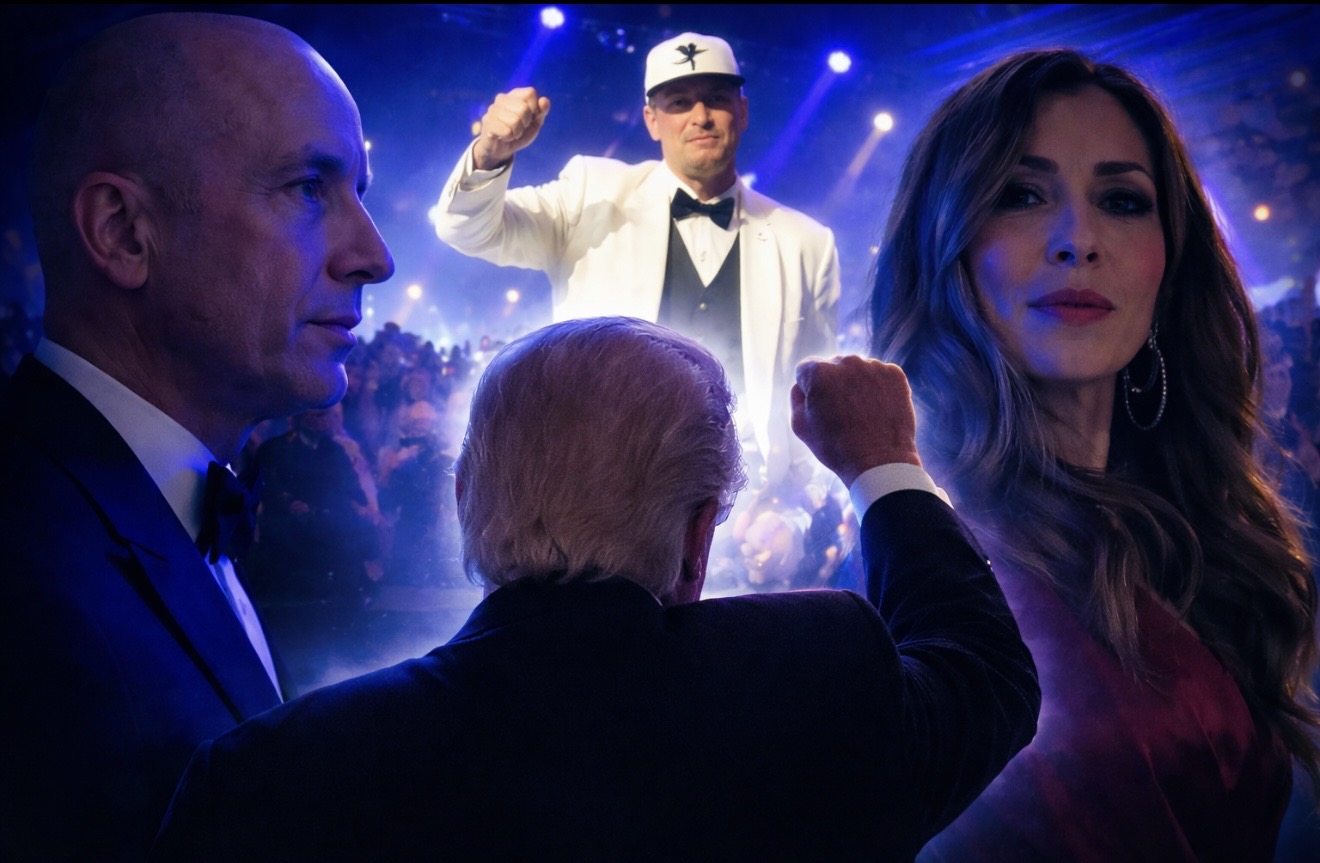
For decades, America has been described as a land of dreams a country where people from across the world arrive carrying hope for a better future. Yet at certain moments, that same America quietly transforms into a symbol of fear for its own dreamers. One such moment unfolded during President Donald Trump’s New Year’s Eve celebration, when festivities filled the glittering halls of Mar-a-Lago, the lavish Palm Beach club in Florida. The ballroom shimmered under bright lights. Guests wore black-tie attire. Power, privilege, and influence mingled freely, accompanied by music in the background.
The gathering brought together several prominent figures from the MAGA world, including former New York City Mayor Rudy Giuliani, MyPillow CEO Mike Lindell, and U.S. attorney Jeanine Pirro. President Trump’s three sons were present, as was First Lady Melania Trump and Israeli Prime Minister Benjamin Netanyahu. These were faces that collectively represented America’s political, economic, and diplomatic authority.
But within this display of luxury and celebration, a moment emerged that transformed the party into something symbolic.
During the evening, White House Deputy Chief of Staff Stephen Miller and Homeland Security Secretary Kristi Noem were seen dancing to the popular song “Ice Ice Baby.” On the surface, it appeared harmless a nostalgic pop track from the past. But for millions of immigrants living in America, the song landed differently. It became a signal. Miller and Noem are widely viewed as the architects and enforcers of President Trump’s hardline immigration agenda. Under the shadow of the word “ICE,” their dance felt less like entertainment and more like a message one colder, sharper, and more enduring than words. For many families already living under Trump immigration fears 2026, the symbolism was unmistakable.
To understand why, one must understand what “ICE” represents. ICE is the acronym for Immigration and Customs Enforcement, a federal agency operating under the Department of Homeland Security. Its mandate includes enforcing immigration laws, identifying undocumented individuals, detaining them, and in many cases deporting them. While immigration is treated as a legal process in much of the world, in the United States the name ICE has become synonymous with fear. Its operations often take place at homes, workplaces, and outside courthouses. Families are torn apart. Children are separated from parents. Individuals who have lived in the country for years are suddenly thrust into uncertainty. For immigrant communities navigating Trump immigration fears 2026, ICE is no longer merely an institution it has become a psychological symbol of dread.
Against this backdrop, the Mar-a-Lago video ceased to be a lighthearted clip. In the footage, Miller appears impassive as he mouths the lyrics, before the camera turns to Noem, who raises her hand and emphatically repeats, “Ice, Ice Baby.” The eleven-second video was posted on X by Miller’s wife, podcast host Katie Miller, and quickly took on a life of its own emerging as a powerful symbol in the broader immigration debate.
The reaction on social media reflected the familiar divide between power and vulnerability. One user wrote, “This is what I imagine hell looks like.” Another called it “cringe.” A longtime internet user remarked, “I’ve been online since the beginning this is the most embarrassing thing I’ve ever seen.” Others noted that powerful officials once avoided public spectacle, while today such displays reveal how unserious those in authority have become. One comment cut sharply: “Americans are struggling. And you’re partying.”
Yet there was another chorus of voices those who dismissed the criticism as overreaction. It was just entertainment, they said. A celebration. Even liberals, some argued, should learn to “have fun.” That defense itself reveals a deeper truth about modern politics: policy no longer lives only in legislation and memos. It now exists in images, videos, impressions, and viral moments. In an era shaped by Trump immigration fears 2026, symbolism matters as much as law.
This night was not merely a party; it was a stage. When the elite of an immigrant nation gather in one hall, and the chant of “ICE” echoes through it, the moment does not feel accidental especially to those whose every new year begins with the fear that the first knock of the morning may not be celebratory, but catastrophic.
The same evening also featured a charity auction. Christian artist Vanessa Horabuena rapidly painted an image of Jesus Christ, which sold for $2.75 million. According to President Trump, the proceeds were designated for St. Jude Children’s Research Hospital and a local sheriff’s office. Charity, undeniably, took place. But so did another truth: in America, acts of generosity and the expansion of fear-based systems can coexist in the same space, at the same time.
The question, then, is not whether dancing is a crime. The question is where that dance takes place, over whose pain, and amid whose fear. The symbolism of Stephen Miller and Kristi Noem carries weight because what unfolded in 2025 did not happen only at the border, it happened within the country itself.
Data underscores this reality. As of November 30, 2025, ICE detention facilities held 65,735 individuals. Of these, 73.6 percent had no criminal convictions. Nearly three-quarters were not criminals; they were being punished for paperwork issues or legal vulnerabilities. According to research by the Prison Policy Initiative, in June 2025 more than 56,000 people were in ICE custody, 73 percent without any criminal record. Only 3 percent were accused of serious violent crimes. These figures challenge the dominant narrative used to justify arrests amid Trump immigration fears 2026.
In October 2025 alone, ICE booked 41,624 individuals into detention. More than 36,000 were arrested directly by ICE, while the remainder were transferred by Customs and Border Protection. Such numbers translate into months of silence in immigrant households and a quiet, unanswered question tucked into children’s school backpacks: Will my mother or father come home today?
By December 2025, daily ICE arrests exceeded 1,000, with the highest concentrations occurring in states where local authorities cooperate closely with federal agencies. Fear, in this context, is no longer the product of one institution. It becomes a system one that defines daily life under Trump immigration fears 2026.
At the policy level, the chill deepened. In January 2025, the Department of Homeland Security signaled plans to expand expedited removal, making it easier to deport individuals unable to prove continuous presence. For many working-class immigrants, legal representation is unaffordable. What they possess instead are rent receipts, school slips, and the hope that these fragile documents might be enough to prove their America.
This is the context in which the Mar-a-Lago song cuts deeply. America is an immigrant nation. Immigrant hands laid its railroads. Immigrant labor powered its factories. Immigrant nurses staffed its hospitals through sleepless nights. Immigrant cooks fed its cities. Yet when “ICE” echoes through halls of power, many hear that echo at their own front doors.
That is why, at the dawn of 2026, this video has become a question. If the first celebration of the year features “ICE” as a chant, if social media boasts that 2026 will be the year of deportations, and if those celebrating are also the faces of policy, what kind of year awaits immigrants?
Some will insist it was merely coincidence a song, nothing more. But immigrants understand that the language of the state is not spoken only through official notices. Sometimes it speaks through celebration. This moment, therefore, is not satire or mockery. It is a mirror. In that mirror, power sees laughter. Immigrants see a knock.
And yet, America’s greatest truth remains: its conscience is not entirely dead. The same statistics that amplify fear also provoke questions. The same society that produces harsh policies also produces courtroom appeals, legal resistance, and voices of protest in the streets.
The Mar-a-Lago ballroom video is no longer just a clip. It has become a prologue to 2026 a cold message to millions of immigrants who greet each new year with a quiet prayer: that the year will bring school for their children, rent paid on time, and peace of mind. But when power dances to “Ice Ice Baby,” one question lingers in their hearts:
Is this a new year for us as well, or merely the same old fear carried forward into a new calendar?
