

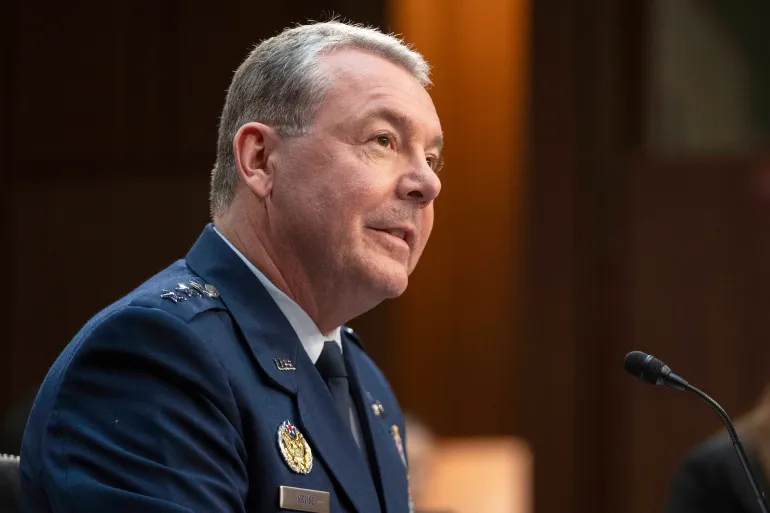
The reasons for the dismissal of Lieutenant General Jeffrey Kruse, who had been leading the Defense Intelligence Agency (DIA) since early 2024, were not immediately disclosed. However, President Trump had previously criticized the agency’s initial findings on US strikes against Iran. The DIA’s initial assessment, which was widely reported by US media, contradicted Trump’s claims that the strikes had completely destroyed the nuclear sites, drawing the ire of both the president and officials within his administration.
A senior defense official, speaking anonymously, stated on Friday that Kruse “will no longer serve as DIA director” but provided no further explanation for the general’s departure. Before becoming the DIA director, Kruse served as the adviser for military affairs to the director of national intelligence and held positions including director of intelligence for the coalition against the ISIL (ISIS) group. According to officials who spoke with both the AP and Reuters, Hegseth also fired Vice Admiral Nancy Lacore, the chief of the Navy Reserve, and Rear Admiral Milton Sands, a Navy SEAL officer who oversees the Naval Special Warfare Command.
All three military officials stated that they were unaware of the reasons for their dismissals by the Trump administration, which has consistently demanded loyalty across the government. U.S. Senator Mark Warner, the vice chairman of the Senate Select Committee on Intelligence, commented that “the firing of yet another senior national security official underscores the Trump administration’s dangerous habit of treating intelligence as a loyalty test rather than a safeguard for our country.” Since starting his second term in January, Trump has overseen a purge of top military officers, including the chairman of the Joint Chiefs of Staff, General Charles “CQ” Brown, whom he fired without explanation in February.
Other senior officers dismissed this year include the heads of the US Navy and Coast Guard, the general who headed the National Security Agency, the vice chief of staff of the US Air Force, a Navy admiral assigned to NATO, and three top military lawyers. The chief of the US Air Force also made a surprise announcement that he planned to retire halfway through his tenure. While Hegseth has maintained that the president is simply choosing the leaders he wants for top positions, Democratic lawmakers have expressed concerns about the potential politicization of the traditionally neutral U.S. military.
Earlier this year, Hegseth also ordered a reduction of at least 20 percent in the number of active-duty four-star generals and admirals and a 10 percent cut in the overall number of general and flag officers. The news of Kruse’s firing came two days after Director of National Intelligence Tulsi Gabbard announced that she was revoking—on Trump’s orders—the security clearances of 37 current and former US intelligence professionals. Gabbard also announced the first major overhaul of her office since its creation, cutting personnel by more than 40 percent by October 1, which will save over $700 million per year.
