

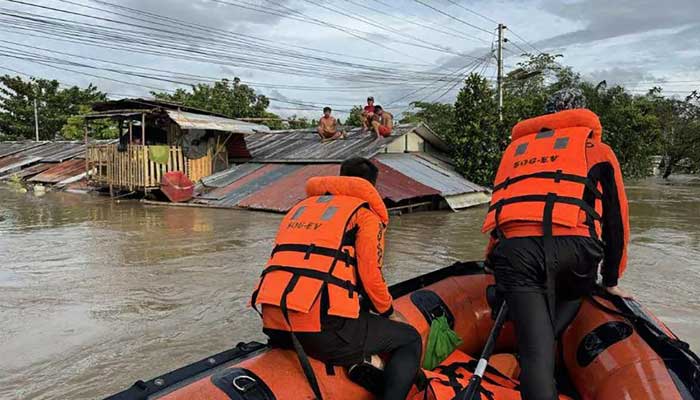
The death toll in the Philippines from Severe Tropical Storm Bualoi climbed to 11 on Saturday as the cyclone tracked toward Vietnam, authorities confirmed.
Bualoi severely impacted smaller islands in the central Philippines on Friday, causing extensive damage that included toppling trees and power pylons, ripping off roofs, triggering floods, and necessitating the evacuation of 400,000 residents.
According to provincial disaster official Noel Lungay, the tiny island of Biliran was among the hardest hit, reporting eight deaths and two missing individuals. “There was widespread flooding and some roads remained under water early today,” he told AFP. He added, “Evacuees are starting to return to their homes as the weather improves.”
The office of civil defense in Manila had earlier confirmed three additional deaths on the nearby islands of Masbate and Ticao, including two people who were crushed by a tree and a wall felled by the intense winds. The office reported that fourteen people remain missing across the central Philippines, though details were not provided, and over 200,000 people were still housed in evacuation centers along the storm’s path.
Bualoi struck shortly after Super Typhoon Ragasa, which had previously claimed 14 lives across the northern Philippines.
On Saturday, Bualoi was moving across the South China Sea at typhoon strength with sustained winds of 120 kilometers (75 miles) per hour, according to the Philippines’ state weather service. It is forecast to be positioned off the coast of central Vietnam by Sunday afternoon.
The Philippines is struck by an average of 20 storms and typhoons annually, routinely hitting vulnerable regions where millions live in poverty. Scientists warn that these storms are becoming more potent due to the warming effects of human-driven climate change.
These storms occur as the Philippine public is consumed by outrage over a scandal involving fraudulent flood-control projects that allegedly cost taxpayers billions of dollars. Thousands took to the streets in protest on Sunday to voice their anger; however, the peaceful demonstrations were later overshadowed by street clashes that involved police vehicles being set on fire and the windows of a precinct headquarters being shattered.
