

Current Situation
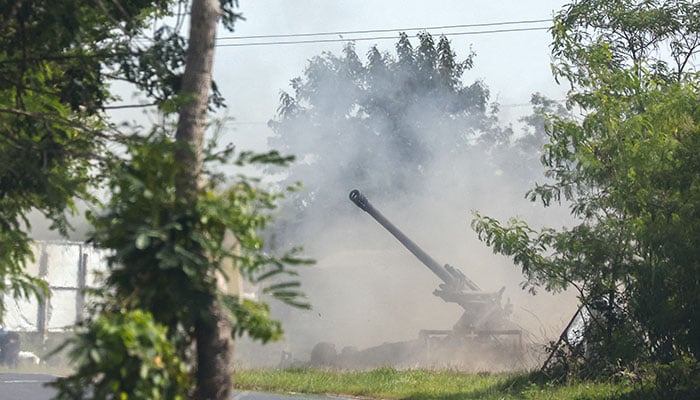
Thailand and Cambodia are experiencing their most severe conflict in over a decade, marked by heavy artillery exchanges across their disputed border. This ongoing confrontation has resulted in at least 16 fatalities and the displacement of tens of thousands of individuals. Tensions between these Southeast Asian nations began escalating in May following the killing of a Cambodian soldier during a brief gunfight, and have since steadily intensified, leading to diplomatic disputes and now, armed clashes.
Clashes erupted early Thursday in a contested area adjacent to an ancient temple, quickly spreading to other regions along the disputed frontier, with heavy artillery fire continuing for a second consecutive day. Thailand recalled its ambassador from Phnom Penh on Wednesday and expelled Cambodia’s envoy. This diplomatic action was in response to a second Thai soldier losing a limb to a landmine, which Bangkok alleged was recently laid by rival troops; Cambodia, however, dismissed this accusation as baseless.
Both sides accuse each other of initiating the firing that triggered the conflict on Thursday, which has thus far claimed the lives of at least 15 civilians, predominantly on the Thai side. Cambodia has deployed truck-mounted rocket launchers, which Thailand claims have been used to target civilian areas. In response, the Thai armed forces dispatched US-made F-16 fighter jets, one of which was used to bomb military targets across the border. Local authorities report that approximately 130,000 people have been evacuated from border areas in Thailand to safer locations, while around 12,000 families on the Cambodian side have been moved away from the frontlines.
Origins of the Dispute
For over a century, Thailand and Cambodia have contested sovereignty at various undemarcated points along their 817 km land border. This border was first mapped by France in 1907 when Cambodia was a French colony. That map, later disputed by Thailand, was based on an agreement that the border would follow the natural watershed line between the two countries. In 2000, both nations agreed to establish a Joint Boundary Commission to peacefully resolve overlapping claims, but little progress has been made in settling these disputes. Claims over the ownership of historical sites have frequently inflamed nationalist sentiments between the two countries. A notable incident occurred in 2003 when rioters set fire to the Thai embassy and Thai businesses in Phnom Penh following an alleged remark by a Thai celebrity questioning jurisdiction over Cambodia’s World Heritage-listed Angkor Wat temple.
Previous Flashpoints
The 11th-century Hindu temple of Preah Vihear, known as Khao Phra Viharn in Thailand, has been central to the dispute for decades, with both Bangkok and Phnom Penh asserting historical ownership. The International Court of Justice (ICJ) awarded the temple to Cambodia in 1962, but Thailand has consistently maintained its claim to the surrounding land. Tensions escalated in 2008 after Cambodia attempted to list the Preah Vihear temple as a UNESCO World Heritage site, leading to skirmishes over several years and at least a dozen deaths, including during a week-long artillery exchange in 2011. Two years later, Cambodia sought an interpretation of the 1962 verdict, and the ICJ again ruled in its favor, stating that the land around the temple was also part of Cambodia and ordering Thai troops to withdraw.
Factors Behind Recent Troubles
Despite their historical rivalry, the current governments of Thailand and Cambodia share warm relations, partly due to the close ties between their influential former leaders, Thailand’s Thaksin Shinawatra and Cambodia’s Hun Sen. However, nationalist sentiment has recently resurfaced in Thailand after conservatives last year questioned the government’s plan to negotiate with Cambodia for joint exploration of energy resources in undemarcated maritime areas. Critics warned that such a move could risk Thailand losing the island of Koh Kood in the Gulf of Thailand. Tensions also rose in February when a group of Cambodians, escorted by troops, sang their national anthem at another ancient Hindu temple claimed by both countries, Ta Moan Thom, before being halted by Thai soldiers.
An attempt by then-Thai Prime Minister Paetongtarn Shinawatra, Thaksin’s daughter, to de-escalate the situation in a call last month with Hun Sen spectacularly backfired. A recording of the conversation was initially leaked and subsequently released in full by the Cambodian leader. In the call, the 38-year-old prime minister appeared to criticize a Thai army commander and show deference to Hun Sen, sparking public outrage and a complaint from a group of senators, which ultimately led to her suspension by a court order on July 1.
Resolution Efforts
Following the May 28 clash, both countries swiftly pledged to ease tensions, prevent further conflict, and seek dialogue via their joint border commission at a June 14 meeting. The neighboring nations have issued diplomatically worded statements committing to peace while also vowing to protect their sovereignty, even as their militaries have been mobilizing near the border.
Meanwhile, Cambodia has stated that existing mechanisms are not functioning effectively and that it plans to refer disputes in four border areas to the ICJ to resolve “unresolved and sensitive” issues that it believes could escalate tensions. Thailand, however, has not recognized the ICJ’s rulings on this dispute and prefers to resolve it bilaterally. Since Thursday’s clashes, Cambodia has written to the United Nations Security Council, urging the body to convene a meeting to halt what it describes as “unprovoked and premeditated military aggression” by Thailand. Thailand, on the other hand, seeks to resolve the conflict through bilateral negotiations but maintains that talks can only proceed after Cambodia ceases violence.
