

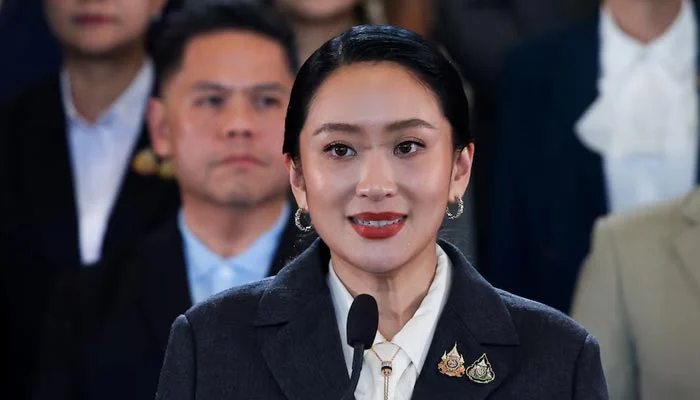
Thailand’s Constitutional Court dismissed Prime Minister Paetongtarn Shinawatra from office on Friday for an ethics violation, just a year after she took power. This decision represents another significant blow to the Shinawatra political dynasty and could lead to a new period of turmoil for the country. Paetongtarn, who was Thailand’s youngest prime minister, is the sixth premier from or backed by the billionaire Shinawatra family to be removed by either the military or the judiciary in a two-decade-long power struggle among the nation’s elite.
In its ruling, the court stated that Paetongtarn violated ethics in a leaked telephone call from June. During the call, she appeared to show deference to Cambodia’s former leader Hun Sen at a time when both countries were on the verge of an armed border conflict. Fighting broke out weeks later and lasted for five days.
The court’s decision clears the way for parliament to elect a new prime minister. This process may be prolonged, as Paetongtarn’s ruling Pheu Thai party has lost its bargaining power and faces the challenge of maintaining a fragile coalition with a razor-thin majority. In a 6-3 decision, the court concluded that Paetongtarn had prioritized her private interests over those of the nation, damaging the country’s reputation and eroding public confidence.
The court’s statement said, “Due to a personal relationship that appeared aligned with Cambodia, the respondent was consistently willing to comply with or act in accordance with the wishes of the Cambodian side.”
The ruling brings a premature end to the premiership of the daughter and protégé of influential tycoon Thaksin Shinawatra. At 39, Paetongtarn was a political newcomer who was thrust into the spotlight after the same court unexpectedly dismissed her predecessor, Srettha Thavisin, a year ago. Paetongtarn had apologized for the leaked call, saying she was trying to prevent a war.
Uncertainty Ahead
Paetongtarn is the fifth premier in 17 years to be removed by the Constitutional Court, highlighting its central role in the intractable power struggle between the elected governments of the Shinawatra family and a network of powerful conservatives and royalist generals with significant influence.
The focus will now shift to who will replace Paetongtarn. Thaksin is expected to be at the center of negotiations among parties and other power-brokers to keep Pheu Thai in charge of the coalition. Deputy Prime Minister Phumtham Wechayachai and the current cabinet will serve as a caretaker government until a new prime minister is elected, with no set deadline for the process.
There are five people eligible to become prime minister, with only one from Pheu Thai: 77-year-old Chaikasem Nitisiri. He is a former attorney general with limited cabinet experience who has maintained a low profile in politics. Other potential candidates include former premier Prayuth Chan-ocha, who has retired from politics and led a military coup against the last Pheu Thai government in 2014, and Anutin Charnvirakul, a deputy premier who withdrew his party from Paetongtarn’s coalition over the leaked phone call.
The ruling plunges Thailand into further political uncertainty at a time of growing public discontent over stalled reforms and a sluggish economy, which the central bank expects to grow by only 2.3% this year. Any future Pheu Thai administration would likely be a coalition with a slim majority and could face frequent parliamentary challenges from an opposition with strong public support that is pushing for an early election.
“Appointing a new prime minister…will be difficult and may take considerable time,” said Stithorn Thananithichot, a political scientist at Chulalongkorn University. “It’s not easy for all parties to align their interests,” he said. “Pheu Thai will be at a disadvantage.”
