

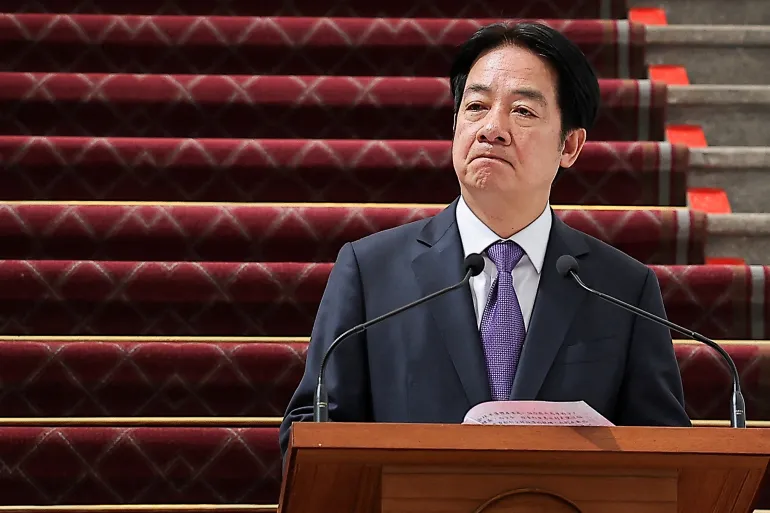
The planned trip by the Taiwanese leader was reportedly called off after US officials expressed their opposition to his stop in New York, according to three individuals familiar with the matter, as cited by a newspaper. While Lai’s office had not formally announced his Latin American itinerary, on Monday, it stated that the president had cancelled all international travel to prioritize ongoing tariff negotiations with the US and oversee typhoon recovery efforts in southern Taiwan.
Taiwan’s president is not officially permitted to visit the US, given that Washington does not recognize its government. However, Taiwanese leaders have historically utilized “transit stops” within the US to engage with senior administration officials outside of the capital. For instance, in 2023, then-Taiwanese President Tsai Ing-wen made use of a transit stop to visit New York and Los Angeles during Joe Biden’s presidency. Beijing, which asserts sovereignty over democratic Taiwan, responded to Tsai’s US stopover by conducting military exercises in the Taiwan Strait to convey its displeasure.
Trump’s reported decision to block Lai’s stopover comes amidst news that the US president himself is reportedly aiming for a trip to China, though he clarified that he is not “seeking” a “summit” with his Chinese counterpart, Xi Jinping. “The Fake News is reporting that I am SEEKING a ‘Summit’ with President Xi of China. This is not correct, I am not SEEKING anything! I may go to China, but it would only be at the invitation of President Xi, which has been extended,” Trump posted on Truth Social late Monday night.
Reuters indicated that Trump may intend to visit China around the time of the Asia-Pacific Economic Cooperation (APEC) summit in South Korea, scheduled from October 31 to November 1. Whether this meeting will materialize hinges on the outcome of ongoing trade discussions between the US and China, aimed at resolving the tariff disputes initiated by Trump earlier this year. US and Chinese officials are currently in Stockholm this week, working to finalize a tariff agreement before a “truce” expires on August 12. However, numerous complex issues, including export controls, are on the agenda, which could potentially prolong the negotiations.
