

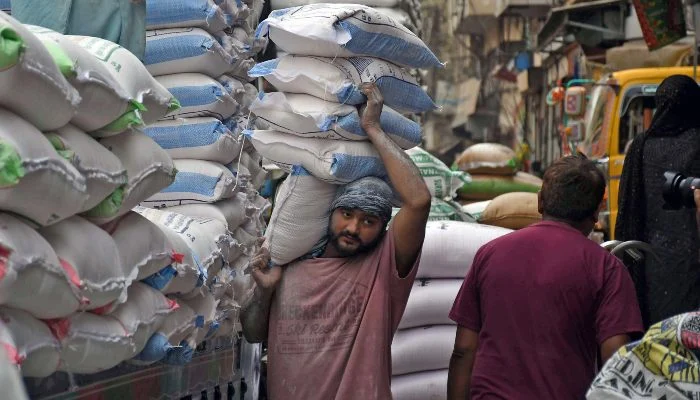
Wheat and flour prices have surged dramatically, with wheat climbing by Rs300 this week to reach Rs3,100 per maund (40kg). This marks a continuation of a month-long upward trend, during which wheat gained nearly Rs1,000 per 40kg and the price of a 20kg flour bag increased by approximately Rs500.
The steady rise in both wheat and flour prices has raised serious concerns about market manipulation and a lack of effective government oversight. Critics allege that the provincial government’s sudden decision to stop regulating the wheat market without prior notice created an environment where price manipulation could flourish. This lack of oversight may have enabled wheat hoarders to artificially inflate prices, worsening the situation.
According to Asim Raza, Chairman of the Pakistan Flour Mills Association (PFMA), the government is facing significant challenges in controlling wheat prices. Raza warned that the ongoing increase in wheat prices is likely to trigger a corresponding rise in flour prices soon. In response, the association is actively working to understand the causes and potential market implications of this trend.
Market insiders say the current situation highlights the complex relationship between government policies, market dynamics, and price fluctuations in the wheat and flour sectors. Khaliq Arshad, Chairman of the Progressive Flour Millers Group (PFMG), cautioned that low wheat reserves in the country could be a primary reason for the rising prices. He estimated that Punjab’s reserves, in both public and private sectors, are just over 2.5 million tonnes, which is insufficient to meet demand until April 2026. He believes that if authorities fail to take corrective measures, wheat and flour prices will continue to climb. The upward trend in grain prices prompted traders to sell stored wheat on the open market, which is why the price reversed from Rs3,250 to Rs3,100 per 40kg.
When asked, he stressed that federal and provincial governments need to adopt a proactive strategy to supplement wheat stocks to meet domestic demand before the next harvesting season. He warned that importing wheat may become inevitable given the current and evolving situation.
Majid Abdullah, President of the PFMG, noted that stakeholders are closely watching the situation, anticipating the potential impact on the broader food market. He revealed that a notification from the Punjab government, which capped the price of wheat at Rs2,900 per 40kg and flour at Rs1,750 in the retail market, is no longer being followed. He added that powerful market forces are now dictating supply, demand, and prices. Abdullah emphasized that the issue is a simple matter of supply and demand, and if the government wants to maintain flour prices at a certain level, its policy must be revised to reflect ground realities.
When contacted, Salma Butt, Special Assistant to the Chief Minister for Price Control & Commodities Management, was unavailable for comment on the surge in wheat and flour prices.
