

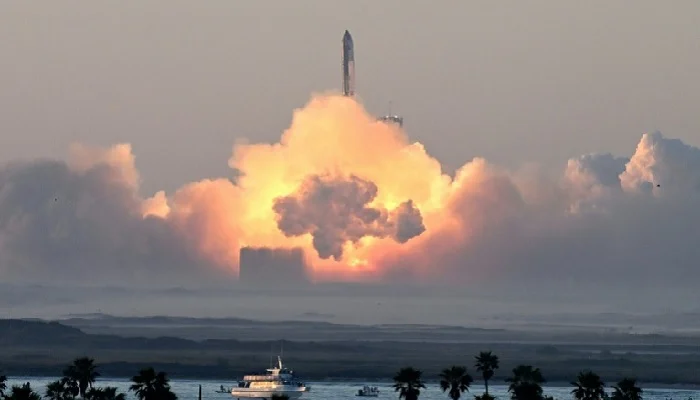
SpaceX announced on Friday that its Starship megarocket is scheduled for a new test flight next weekend, after recent attempts have ended in spectacular explosions.
The largest and most powerful launch vehicle ever built, Starship is a key component of NASA’s plan to return Americans to the Moon and is central to Elon Musk’s vision of colonizing Mars.
However, repeated test failures, which have sent debris raining down over the Caribbean and disrupted flights, have put pressure on SpaceX to achieve a successful trial run.
The rocket’s 10th test flight is set to launch as early as August 24 from the company’s Starbase facility in Texas, according to SpaceX’s website.
During two test flights earlier this year, the rocket’s upper stage—the part designed to carry crew and cargo—erupted shortly after launch. In its most recent test in late May, Starship successfully reached space but then blew up after a fuel leak caused it to lose control. The propulsion system was also supposed to perform a planned splashdown in the Gulf of Mexico but disintegrated before reaching the water.
Standing at 403 feet (123 meters) tall, the black-and-white behemoth is designed to be fully reusable and launch at a relatively low cost. SpaceX has long relied on its “fail fast, learn fast” philosophy, which has helped it become a leader in commercial spaceflight.
However, the latest series of setbacks, including an explosion during a routine ground test in June, has raised serious questions about the project’s progress. Despite these issues, Musk—known for his ambitious timelines—maintains that the rocket will launch its first uncrewed missions to Mars next year.
SpaceX has also faced sharp criticism over the environmental impact and disruption caused by its launches. In June, Mexican President Claudia Sheinbaum threatened to sue the company over debris and contamination from its launches.
Despite the recent setbacks, more Starship tests are expected in the coming months, as the US aviation regulator has approved the company to increase its annual launches from five to 25.
