

Seoul:
South Korea’s government has officially acknowledged and accepted accountability for facilitating overseas adoptions through fraudulent practices, including falsifying documents and switching identities, during a decades-long process that saw over 140,000 children sent abroad.
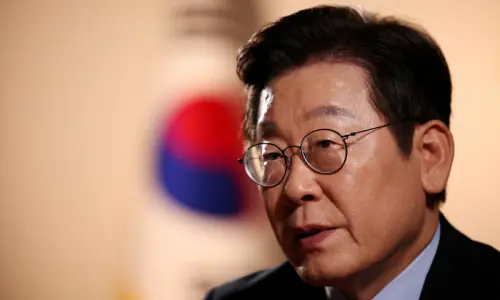
In a statement, President Lee Jae Myung offered a historic apology, saying, “At such times, the state did not fully meet its responsibilities. On behalf of the Republic of Korea, I offer my heartfelt apology and words of comfort to overseas adoptees, their families, and their birth families who have endured suffering.”
The apology follows recent court rulings and investigations by the Truth and Reconciliation Commission, which confirmed that “unjust human rights violations occurred during overseas adoption procedures.”
Key Statistics and Historical Context:
- 140,000+ Children: Between 1955 and 1999, South Korea sent more than 140,000 children overseas for adoption, making it one of the world’s largest exporters of children for decades.
- Mixed-Race Children: International adoptions initially began after the 1950-53 Korean War primarily as a way to remove mixed-race children—born to local mothers and American GI fathers—from a society that emphasized ethnic homogeneity.
- Big Business: In the 1970s and 1980s, overseas adoption became a big business, generating millions of dollars for international adoption agencies as the country rapidly emerged from post-war poverty.
- Current Figures: Even as South Korea has grown into Asia’s fourth-largest economy, President Lee noted that an average of more than 100 children have still been sent abroad for adoption each year in the 2020s. The main driver for these recent adoptions is the ostracism faced by unmarried women who give birth in a conservative society.
