

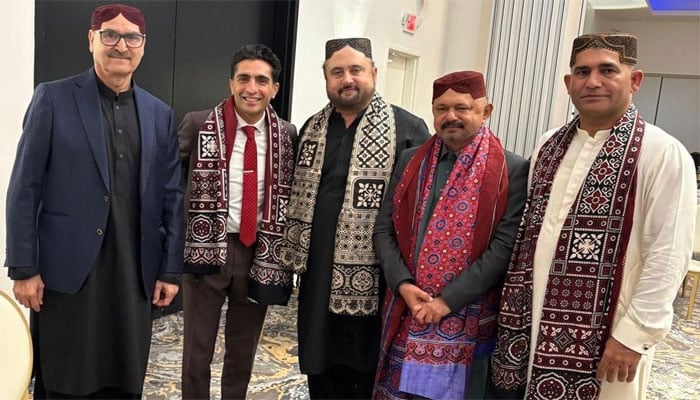
The Sindhi Association of North America (SANA) Dallas chapter celebrated Sindh Cultural Day with great enthusiasm and grandeur, bringing together a large number of Sindhi families from Dallas and surrounding areas. The vibrant event not only unified the local community but also successfully showcased the rich heritage and traditions of Sindh on American soil.
The ceremony was graced by the presence of several prominent figures, including Texas State Assembly Member Salman Bhojani, Vice Consul Farhan Ahmed from the Consulate General of Pakistan in Houston, SANA central leaders Asghar Pathan and Asad Sheikh, and many other community figures.
Addressing the gathering, Texas Assembly Member Salman Bhojani stated that Sindhi culture is a symbol of peace, love, and tolerance, and today, Dallas paid tribute to this great heritage. Vice Consul Farhan Ahmed of the Pakistan Consulate in Houston praised the Sindhi Ajrak (traditional shawl) and Topi (cap) as symbols of Pakistan’s identity, noting that the annual celebration of Sindhi Cultural Day reinforces a positive image of Pakistan globally.
SANA leaders Asghar Pathan and Asad Sheikh emphasized that Sindhis carry their traditions wherever they go, affirming that this unwavering cultural pride is the identity of Sindh. Other speakers highlighted that Sindh is more than just a region; it is a radiant metaphor for civilization, love, and human values. They noted that the Ajrak, Topi, literature, music, and folk arts are integral to Sindh’s identity and its cultural trust.
The event featured a stunning exhibition of Sindhi handicrafts, while children’s performances played a crucial role in passing the cultural legacy on to the next generation. Attendees, who were welcomed with gifts of Sindhi Ajrak and Topi, felt a deep connection to their roots, with many expressing that, despite being thousands of miles away, the atmosphere in Dallas felt like being back in the streets of Hyderabad or Larkana.
The celebration concluded with the traditional and energetic “Ho Jamalo” folk dance, where elders, women, youth, and children all joined in, allowing the essence of Sindhi culture to permeate the atmosphere long after the festivities ended.
