

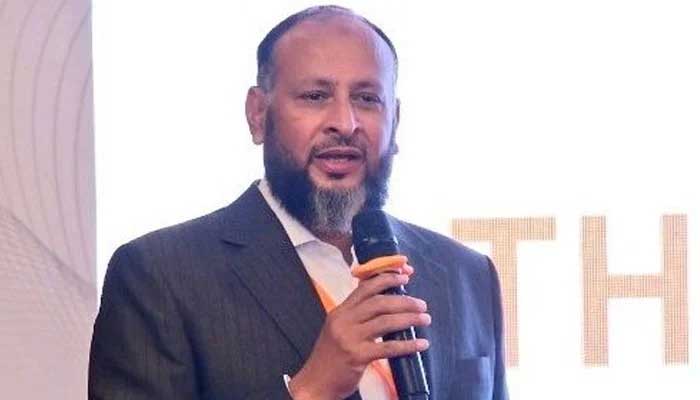
The Sindh High Court (SHC) on Friday suspended a provincial ombudsman’s order to remove K-Electric (KE) Chief Executive Officer (CEO) Moonis Alvi from his position. The order had been issued after he was found guilty of harassing a female colleague.
The court delivered its verdict in response to a petition filed by the K-Electric CEO seeking to overturn the Sindh Provincial Ombudsman’s decision. This development follows the ombudsman’s order a day earlier to remove Alvi from service and impose a penalty of Rs2.5 million.
The complaint was originally filed by the power company’s former chief marketing and communication officer, who accused CEO Alvi, Chief People Officer Rizwan Dallia, Chief of Security Col (retd) Wahid Asghar, and Member of the Board of Directors and Chairman of the Board HR Committee Khalid Rafi of “causing harassment, intimidation and mental agony.”
The K-Electric CEO, along with his lawyer Barrister Abid Zuberi, appeared before the court today. During the hearing, SHC Justice Faisal Kamal Alam questioned the legal basis of the ombudsman’s order. Alvi’s lawyer argued that the Federal Ombudsman, not the Provincial Ombudsman, has the jurisdiction to hear the case, and pleaded that his client’s removal and penalty were unlawful.
After hearing the arguments, the court suspended the provincial ombudsman’s order and directed the KE chief executive officer to deposit the Rs2.5 million fine with the court’s registry. The SHC also issued notices to the Provincial Ombudsman and the complainant in the case.
Written Order
In his written order, Ombudsperson Justice (retd) Shahnawaz Tariq noted that allegations of sexual harassment are “heinous” and expose a “dark side of the corporate sector.” Justice Tariq observed, “In our conservative and patriarchal society, it is usually difficult for a woman to report such deeply disturbing incidents due to fear of future career prospects; apprehension of counter allegations hurled against her character, and to protect her dignity, self-esteem and self-respect amongst her family, friends, organization, and society at large where prevailing notions of honour and taboos play a dominant role.”
He stated that “the employer, supervisor, or manager under any circumstances has no right to disrespect, insult, or abuse his subordinates, especially women as this offensive behaviour of the employer constitutes harassment as envisaged under section 2(h) of the Act, 2010.” He added, “Indeed, workplace harassment is characterised by a sustained pattern of mistreatment influenced by gender, power relations, or hierarchical disparities, which cultivates an atmosphere of fear and oppression in the workplace. Sexual harassment is widely recognised as a reflection of power dynamics, rather than simply a sexual act, highlighting its deep ties to workplace harassment and the broader context of gender inequality.”
In his defense, Moonis Alvi claimed that the complainant’s services were terminated a month before she filed her complaint, meaning she was not an employee of KE and the allegations did not fall under the legal definition of harassment. He denied that the company’s culture is patriarchal or sexist and asserted that KE believes in equal opportunities for all employees. He maintained that he has a highly professional record and a good reputation, and that the complainant’s allegations were false and motivated by revenge for her termination.
Moonis Alvi’s Response
On the social media platform X (formerly Twitter), K-Electric CEO Alvi stated that he has always upheld the values of integrity and dignity in his professional interactions and believes in fostering safe and inclusive workplaces.
He wrote, “The recent verdict is deeply distressing to me. While I respect the legal process and the institutions that uphold it, I must, in good conscience, state that the findings do not reflect the truth of the situation as I experienced it. This has been a painful journey — not just professionally, but personally. I am currently reviewing the decision with my legal counsel and will be exercising my right to appeal.”
He concluded, “It is for anyone who feels wronged to be heard. I remain committed to ensuring that the truth is fully brought to light, through all lawful means available. In the meantime, I remain grateful for the support of those who know me, who have worked alongside me, and who believe in due process. My respect for the principles of justice and workplace dignity remains unwavering.”
