

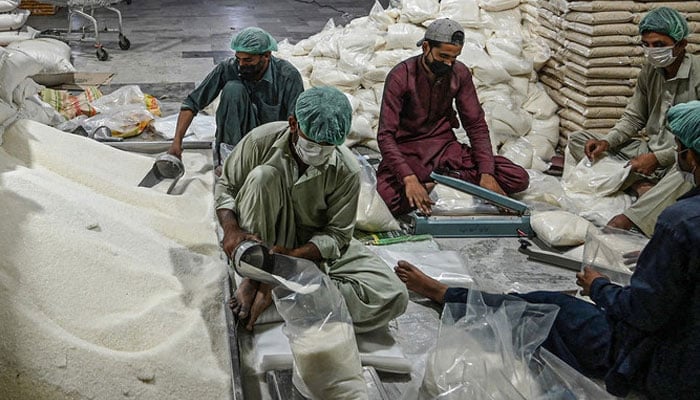
In a major policy U-turn, the state-run Trading Corporation of Pakistan (TCP) has drastically reduced its sugar import tender from 300,000 metric tons to just 50,000 metric tons. This decision comes as a result of intense pressure from domestic millers and mounting concerns from the International Monetary Fund (IMF) regarding policy violations linked to the ongoing $7 billion loan program, as reported by The News on Wednesday.
The TCP’s move, formally announced via an official corrigendum, follows a behind-the-scenes agreement between the federal government and Pakistan’s powerful sugar millers, many of whom are also members of parliament. This deal involves raising the ex-mill sugar price from Rs159 to Rs165 per kilogram. Additionally, the bid opening date for the tender has been postponed to July 22, 2025.
This Rs6 per kg price increase effectively grants the sugar industry billions in fresh profits. This is despite retail prices remaining stubbornly high, hovering near Rs200 per kg, which is well above the government’s earlier price cap of Rs164 per kg announced in March by Deputy Prime Minister Ishaq Dar.
The rollback in imports signifies a dramatic departure from Islamabad’s previous commitment to bring in half a million tonnes of tax-free sugar. This earlier plan was intended to combat record-high prices and alleviate public outrage over inflation. However, the IMF has sharply criticized the decision to waive nearly all import duties without prior consultation, labeling it a direct violation of Pakistan’s written commitments under the Extended Fund Facility (EFF).
According to officials, the IMF dismissed Pakistan’s justification of a national “food emergency” and warned that the tax-free import policy – executed without the lender’s prior approval – breached two core conditions of the bailout. The Finance Ministry had previously cautioned that such a move could jeopardize the entire loan program, which is already under strain due to repeated policy reversals.
Insiders at the Ministry for National Food Security informed the publication that lobbying efforts by sugar millers intensified immediately after the initial import plan was announced. “They activated their political links, pushed back hard, and ultimately got what they wanted — a rollback of large-scale imports and a sweet Rs6 per kg bonus,” a senior official stated.
Sugar remains a politically volatile commodity in Pakistan, with over 80% of sugar mill ownership linked to lawmakers. Despite repeated attempts to regulate prices, enforcement has been weak. Market rates have consistently defied official caps, forcing consumers to pay nearly 20% more than the government’s announced ceiling.
