

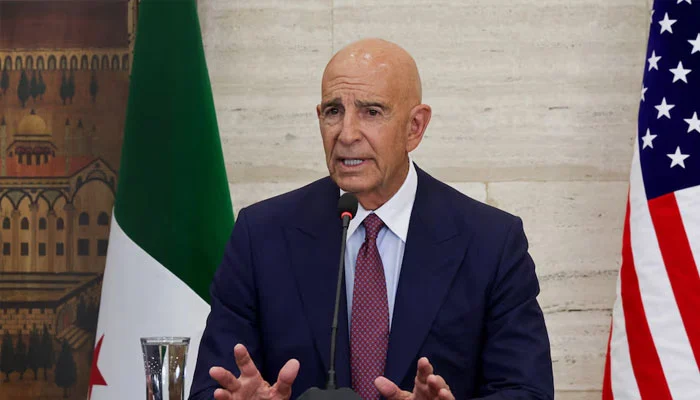
A senior U.S. envoy stated on Tuesday that Syria and Israel are nearing a “de-escalation” agreement. Under this deal, Israel would cease its attacks, and Syria would agree not to move any machinery or heavy equipment near the Israeli border.
Speaking to reporters during the UN General Assembly meetings in New York, U.S. Special Envoy for Syria Tom Barrack said this agreement would be the first step toward a broader security deal that the two nations have been negotiating.
Syria and Israel are currently in talks to reach a deal that Damascus hopes will lead to a halt in Israeli airstrikes and the withdrawal of Israeli troops who have advanced into southern Syria.
U.S. President Donald Trump had aimed to finalize an agreement between the two sides for an announcement this week, but not enough progress has been made so far. Barrack added that the ongoing Rosh Hashana holiday, the Jewish New Year, has also slowed down the process.
“I think everybody is approaching it in good faith,” Barrack said.
Israel and Syria have been adversaries in the Middle East for decades. Despite the overthrow of Syria’s long-time President Bashar al-Assad last December, territorial disputes and deep-seated political mistrust between the two countries persist.
Israel has expressed hostility toward the new Syrian government, citing President Ahmed al-Sharaa’s past links to jihadist groups, and has lobbied Washington to keep Syria weak and decentralized.
After months of encroaching into the demilitarized zone, Israel abandoned the 1974 truce on December 8, the day a rebel offensive ousted Assad. Israel then struck Syrian military assets and sent troops to within 20 km (12 miles) of Damascus.
Al-Sharaa said last week that since then, Israel has conducted over 1,000 strikes on Syria and carried out more than 400 ground incursions.
Speaking at an event in New York shortly before Barrack, al-Sharaa, a former al Qaeda leader who led the rebel forces that overthrew Assad’s government last year, expressed concern that Israel might be stalling the talks.
“We are scared of Israel. We are worried about Israel. It’s not the other way around,” he stated.
