

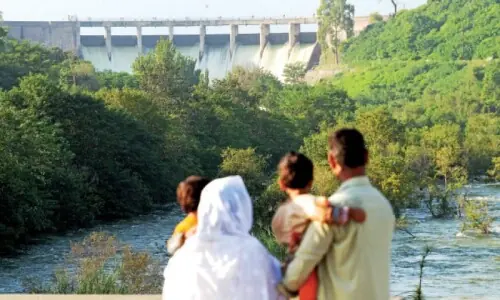
During a meeting of the Senate Standing Committee on Climate Change, chaired by Senator Sherry Rehman, alarming findings about the water quality of Rawal and Simli dams were revealed. A study by the Pakistan Council of Research in Water Resources showed that 62% of the water supplied after filtration was unsafe for drinking, and water from Rawal Dam was 100% unsafe for human consumption.
The meeting observed that despite previous orders from the Supreme Court, sewage contamination in the water persisted. Senator Rehman criticized attempts to conceal this information, stating, “When surface water is unsafe at the source, filtration becomes meaningless. We are here to audit your work, not to stay silent.” The report covered the period from July to August 2025. The committee noted that while the Supreme Court had previously directed the Punjab government to take immediate action on Rawal Dam’s sewage contamination, no steps had been taken.
Senator Rehman demanded greater transparency in water quality reporting and called for urgent measures to protect Rawal and Simli dams from contamination. “Pakistan is facing climate catastrophes every year,” she said. “Relief must not be delayed, governance cannot remain this slow, and resources cannot be consumed by administration instead of frontline action. Whether it is flood relief, glacial melt, or drinking water safety, we need urgent course correction now.”
Discussing the recent floods, she urged the government to immediately provide Benazir Income Support Programme (BISP) aid to nearly three million affected families nationwide. “Delays in financial transfers are causing misery among three million people,” she said. Instead of implementing new mini-budgets, the country should seek international support, as it did in 2022, she added. The committee endorsed her recommendation.
The committee also directed officials to map the country’s waterways, identify blockages in the Indus River and its tributaries, and explore affordable water storage solutions. Committee members also expressed concern about “faulty forecasts” from the Pakistan Meteorological Department.
The National Disaster Management Authority (NDMA) informed the committee that the recent floods had killed 998 people and injured 1,062, with three million people affected in Punjab alone. Nearly 300,000 displaced people are currently living in tents, with 2,000 active relief camps nationwide. Senator Rehman instructed officials to share detailed data on affected individuals, improve the standards of relief camps, and ensure they have adequate water, electricity, and health services.
Turning to the GLOF-II project, she criticized delays, noting that since 2017, only 15% of its budget had been spent on early warning systems, while 30% was used for administrative costs.
