

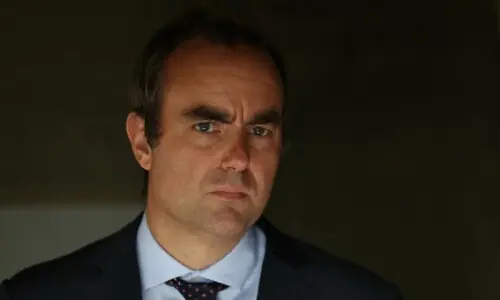
In a swift decision following the ousting of his previous government, French President Emmanuel Macron has appointed Sébastien Lecornu as the new prime minister. The 39-year-old Lecornu, a close ally of Macron, is the seventh premier of his mandate. This choice signals that Macron is prioritizing a trusted ally to navigate the current political crisis, rather than seeking to broaden his government’s appeal.
Lecornu, who had been in his post for over three years, is seen as a discreet but highly skilled operator. Unlike some of his predecessors, he is not known to harbor presidential ambitions, which is a crucial quality for Macron. The Elysee Palace announced that Macron has tasked Lecornu with consulting political forces in parliament to adopt a national budget and make essential decisions for the coming months. The formal handover of power is scheduled for Wednesday.
The quick appointment comes after the previous prime minister, François Bayrou, resigned just nine months into his term, a day after his austerity budget led to a vote of no confidence. The budget, aimed at reducing France’s debt, had been a source of a lengthy political standoff. The vote saw 364 deputies vote no confidence in the government, while only 194 supported it. Bayrou was Macron’s sixth prime minister since his 2017 election and the fifth since 2022.
The political turmoil is a result of last year’s legislative elections, which resulted in a hung parliament and left Macron in a vulnerable position. The crisis has also caused a slight surge in France’s borrowing costs, indicating a drop in investor confidence.
Social Tensions and Future Political Landscape
In addition to the political upheaval, France is also facing growing social tensions. A left-wing collective, “Block Everything,” has called for a day of action on Wednesday, and trade unions have urged workers to strike on September 18. This social unrest adds to the challenges facing the new prime minister.
The 2027 presidential election remains wide open, with analysts predicting the French far right, led by Marine Le Pen, will have its best-ever chance of winning. Macron is constitutionally forbidden from seeking a third term. Le Pen described Lecornu’s appointment as the “final shot of Macronism,” while the Socialist Party denounced Macron’s decision not to include them, warning of “legitimate social anger and institutional stalemate.” However, former prime minister Edouard Philippe expressed optimism, saying that Lecornu “has the qualities” to find an agreement with other parties.
