

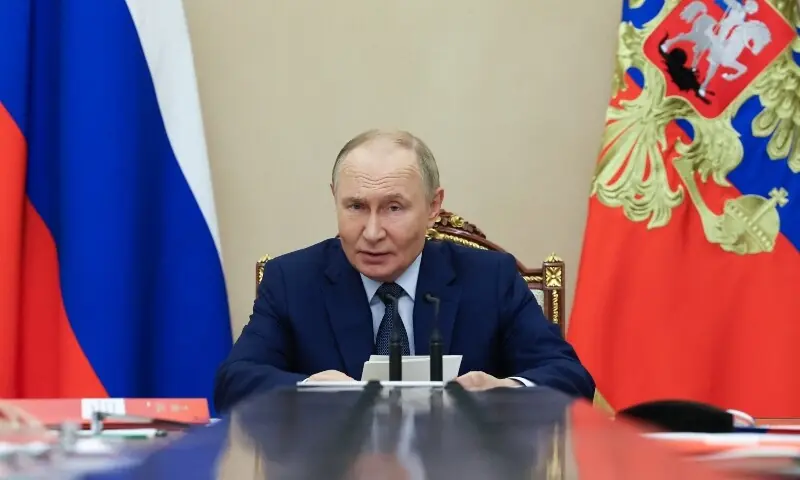
Russia is proposing a one-year extension of the central quantitative limitations of the New START treaty, which is set to expire on February 5, 2026. Russian President Vladimir Putin stated that this extension is conditional on the United States taking a similar step and not undermining the existing balance of deterrence.
Key Details of the Proposal
- One-Year Extension: The proposal would extend the treaty’s core quantitative limits for one year. This means both sides would continue to be restricted to a maximum of 1,550 deployed strategic nuclear warheads each.
- No Inspection Resumption: The proposal does not include a resumption of the on-site inspections, which were a key component of the original treaty. Inspections were suspended during the COVID-19 pandemic and have not resumed since.
- Conditional Offer: The offer is contingent on the US reciprocating and not taking actions that would disrupt the strategic balance. Analysts see this condition as a response to US proposals, such as President Trump’s plan to build a massive air-defense shield known as the “Golden Dome.”
Background of the New START Treaty
The New START (Strategic Arms Reduction Treaty) was signed in 2010 and is the last remaining nuclear arms reduction agreement between the world’s two largest atomic powers. The treaty:
- Limits each country to a maximum of 1,550 deployed strategic nuclear warheads.
- Restricts deployed and non-deployed strategic delivery vehicles (e.g., intercontinental ballistic missiles, submarine-launched ballistic missiles, and heavy bombers) to 800 for each side.
- Limits deployed strategic delivery vehicles to 700 for each side.
The treaty has been a cornerstone of strategic stability between the two nuclear powers, who together possess over 80% of the world’s nuclear warheads. However, talks to extend the agreement have stalled since Russia’s invasion of Ukraine in 2022.
Historical Context of Arms Control
This proposal comes amid a breakdown of several key arms control agreements between Russia and the US. For instance:
- Intermediate-Range Nuclear Forces (INF) Treaty: This landmark 1987 agreement, which banned medium-range missiles, was formally withdrawn from by both countries in 2019.
- Comprehensive Nuclear Test Ban Treaty (CTBT): In 2023, Russia revoked its ratification of the CTBT, though it has stated it will maintain a moratorium on nuclear testing.
This deteriorating landscape of arms control has raised fears of a new nuclear arms race and increased strategic instability. Analysts view Russia’s latest proposal as a way to control the political narrative and respond to US policy shifts.
