

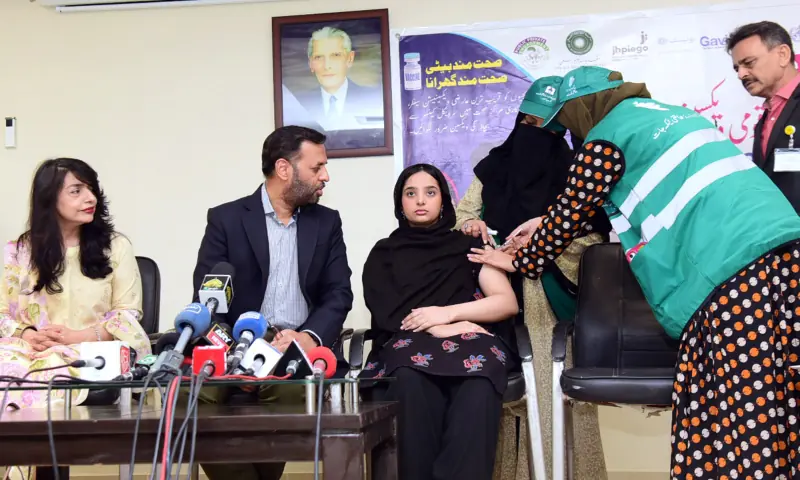
Federal Health Minister Syed Mustafa Kamal had his daughter vaccinated against cervical cancer to counter the misleading propaganda spreading on social media. At a press conference, he stated that while he has never before brought his family into the public eye in his 30-year political career, he took this step to prove with action, not words, that the vaccine is safe and effective.
Kamal emphasized that he cares for the nation’s daughters as much as he does for his own and that the purpose of the campaign is to protect people from disease. He stressed that Pakistan’s healthcare system cannot provide treatment for every citizen, and thus, prevention through vaccination is a crucial path forward. The minister urged the public to embrace this and other future vaccines to shield the country from life-threatening illnesses like cancer, which he called a “deadly disease that affects not just an individual but entire families.”
The federal, Punjab, and Sindh governments launched the first-ever cervical cancer vaccination campaign on September 15, targeting millions of girls aged 9 to 14 until September 27. Officials from the Sindh health department are facing challenges, including vaccine hesitancy in some parts of Karachi, which they attribute to misleading information on social media. Despite this, the department claims to have achieved 60% coverage, vaccinating over 550,000 girls within the first four days. Pakistan is the 149th country to introduce this vaccine, which is already in use in other Muslim-majority nations like Saudi Arabia, Qatar, and Indonesia.
