

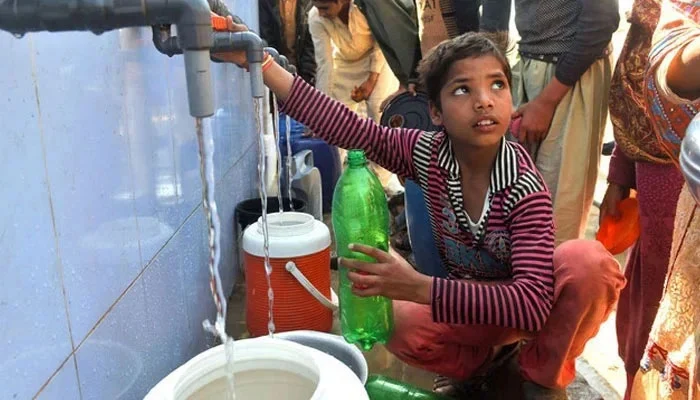
Residents of Karachi are no strangers to power outages, but these frequent breakdowns are now compounding their difficulties by severely disrupting the operations of the Karachi Water & Sewerage Corporation (KWSC) and causing significant interruptions in the city’s water supply, The News reported on Monday, citing a KWSC spokesperson.
The spokesperson stated that power outages at the KWSC’s installations persist unabated. Just 24 hours after power was restored at the Dumlottee Pumping Station, another outage occurred, halting water supply to various areas, including Malir Cantonment, Khokhrapar, and Memon Goth.
While electricity has been restored at the North East Karachi Old Pump House, several other major facilities remain without power, the spokesperson lamented.
A power failure at the Dhabeji Pumping Station occurred at 10 PM on Thursday, and over 70 hours have passed without resolution, rendering the station inoperative and intensifying the crisis, the spokesperson added. Additionally, two major pumps at the K-III Pump House are currently shut down due to the ongoing outage, severely affecting water distribution in densely populated areas like Nazimabad, New Karachi, Landhi, and Korangi.
“As a result, the city has suffered a shortfall of approximately 240 million gallons of water over the past 70 hours, compounding the challenges faced by residents already struggling to meet their daily water needs,” the spokesperson highlighted.
The KWSC has issued a strong appeal to KE authorities to immediately restore power to all affected installations to prevent the crisis from worsening and further alleviating the hardships faced by the city’s residents.
KE Responds: Monsoon Outages Attributed to Illegal Connections and Infrastructure Strain
Meanwhile, K-Electric (KE) issued a press statement asserting that during Karachi’s first monsoon spell, which spanned nearly three days, KE teams remained actively engaged across the city to ensure power restoration and public safety.
The electricity provider’s spokesperson stated that while the vast majority of their 2,100-plus feeders remained stable, isolated outages were reported due to illegal connections, lack of strict adherence to safety protocols, and infrastructure strain.
“All such cases were immediately addressed, with field teams dispatched despite rain. Restoration efforts were also prioritized at key water pumping stations, including Dhabeji and North East Karachi (NEK) old pumping station, which supplies water to limited areas.”
The spokesperson affirmed that NEK-II and NEK-III remained operational throughout, and major supplies to the KWSC largely continued from KE’s end. However, a fault observed on the consumer side of the NEK old pump impacted local supply.
He added that KE’s ground teams were promptly deployed to begin restoration work, and the fault was repaired. Teams were also actively deployed to the Dhabeji pumping station, but waterlogging posed hurdles for the maintenance team.
Offering condolences over the safety incidents reported during the first monsoon spell, he clarified that five of these incidents did not involve KE infrastructure. He pointed out that in two cases, illegal tampering had created unsafe conditions. For instance, the incident in Korangi 32-B occurred inside consumer premises while an electrician was repairing a water motor. Similarly, incidents in SITE Area, Surjani Town, and New Karachi Sector 11-J were traced to internal wiring faults within the respective premises.
“At Manghopir, no current leakage from KE’s system was found. In Korangi Sector 9, illegal shifting of a service bracket at under-construction premises led to an unfortunate incident, while in Clifton Block 5, an attempted theft of an underground LT cable damaged a feeder pillar box and cable, triggering the incident.”
He further noted that the incident in Lyari is under investigation, with initial findings indicating no connection to KE infrastructure. KE reiterates its appeal to the public to avoid any contact with power infrastructure, maintain a safe distance, especially during rains, and report unsafe conditions via 118 or KE’s WhatsApp service.
The spokesperson concluded that as monsoon activity continues, ensuring public safety requires both operational vigilance and citizen responsibility. “Strict adherence to safety guidelines and timely coordination between utilities and civic bodies remain essential to minimizing risk and maintaining urban resilience.”
