

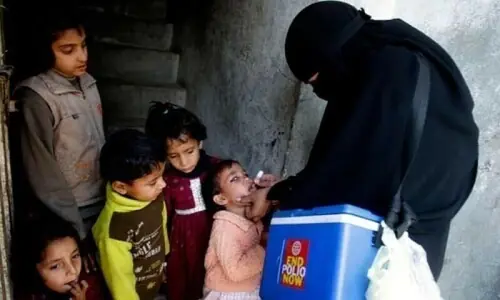
In its latest report, “The Glass Mountain,” the Independent Monitoring Board (IMB) on polio stated that after 37 years and $22 billion invested, traditional methods are no longer effective. IMB Chairman Sir Liam Donaldson wrote in a letter to the World Health Organization (WHO) that the confluence of “persistent viral transmission, unprecedented geopolitical disruption, and severe financial constraints” fundamentally threatens the program’s survival.
He noted that the optimism of 2023 has been replaced by the “stark reality of resurgence,” as historical virus reservoirs—a reference to Pakistan and Afghanistan—have become reinfected.
The board identified several systemic weaknesses, including:
- “Performance-blind funding” where resources are provided regardless of outcomes.
- Lack of “unambiguous country ownership,” leading to a perception that polio eradication is an external priority rather than a local one.
- Accountability systems that produce reports instead of consequences.
A Fundamental Shift in Strategy
To address these issues, the IMB has proposed a major strategic change:
- Shifting Responsibility: The board has suggested transferring responsibility for stopping the wild poliovirus in Pakistan and Afghanistan to the WHO Eastern Mediterranean Regional (EMRO) Ministerial Polio Subcommittee.
- Regional Ownership: Sir Donaldson argued that this move could combat the “perception that polio eradication is something ‘the West wants’,” which has contributed to community hostility, boycotts, and attacks on polio workers in Pakistan. This proposal has been formalized in the 2026 GPEI Action Plan.
- Tackling Geopolitical Disruptions: The report highlighted major geopolitical disruptions, including the “United States withdrawal from WHO, the dismantling of USAID, and the severe curtailment of CDC’s global health mandate,” as significant challenges.
Pakistan’s Progress Questioned
The report also challenges Pakistan’s claims of progress. While Islamabad asserts it had interrupted polio transmission from 2021 to 2023, the IMB said this was likely an “inadvertent result of Covid restrictions” rather than programmatic improvements. An anonymous Pakistani polio expert agreed with the IMB’s assessment, citing a lack of accountability, innovation, and integration within the program.
The expert suggested that the solution lies in “shifting the management and ownership in real sense to the government, restructuring the program, integrating with [Essential Immunization Program] and holding the chronic poor performers to account at the high level.”
