

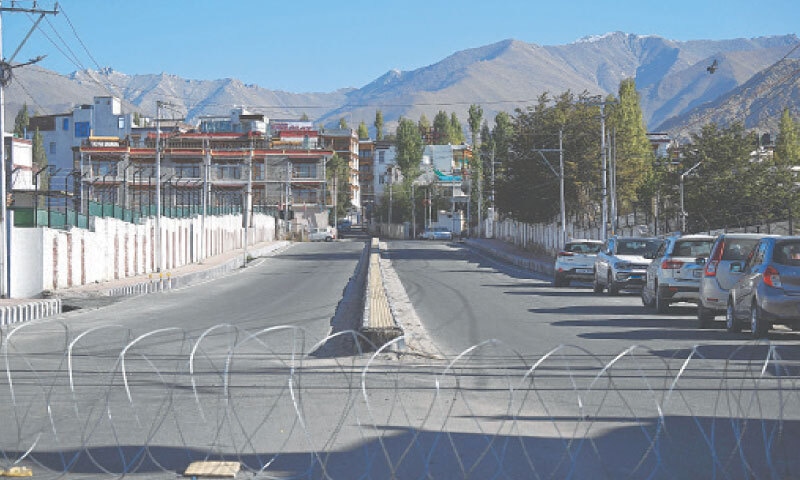
PAKISTAN/LADAKH – The health crisis in Pakistan continues to deepen with new polio cases, while in India-administered Ladakh, public rage over direct rule from New Delhi has boiled over, leading to violent protests and casualties.
Pakistan’s Public Health Challenge: Polio Resurgence
In Pakistan, the fight against the paralyzing poliovirus faces new hurdles as the National Institute of Health (NIH) confirmed two new cases, both involving girls. This brings the total number of reported polio cases in to 29, underscoring the severe challenge of eradication in a region where the virus remains endemic.
In response, the NIH has announced a major nationwide polio vaccination campaign scheduled for October 13 to 19, aiming to protect over million children under the age of five. The institute is urging parents to ensure their children receive the crucial doses, emphasizing that vaccination is the only effective shield against the highly infectious and incurable disease.
Ladakh Protests: Autonomy Demands and Development Fears
Meanwhile, in the strategically vital and sparsely populated Ladakh region, bordering China and Pakistan, deep resentment against New Delhi’s direct rule erupted into street violence. Crowds in the main city, Leh, torched a police vehicle and the offices of Prime Minister Narendra Modi’s Hindu-nationalist Bharatiya Janata Party (BJP). Initial reports indicate four people died in the unrest.
The demonstrations are primarily driven by fears that the 2019 decision to strip Ladakh of its partial autonomy and place it under central control has left residents vulnerable to losing their traditional livelihoods, land rights, and cultural identity.
Protesters, led by the Apex Body Leh, are demanding constitutional autonomy under the “Sixth Schedule” of India’s constitution, which would grant a local legislature power over land use and jobs. Locals fear that large-scale solar and industrial plans, managed by external officials, will endanger crucial grazing grounds for pashmina goat herding. The protests were organized in solidarity with prominent activist Sonam Wangchuk, who was detained by police on Friday.
Despite historically supporting Indian troops, many Ladakhis now feel betrayed by the central government, with lawyer Mustafa Haji expressing the community’s shifting sentiment: “For years we have helped protect India’s borders. Now we want ourselves to be protected.”
