

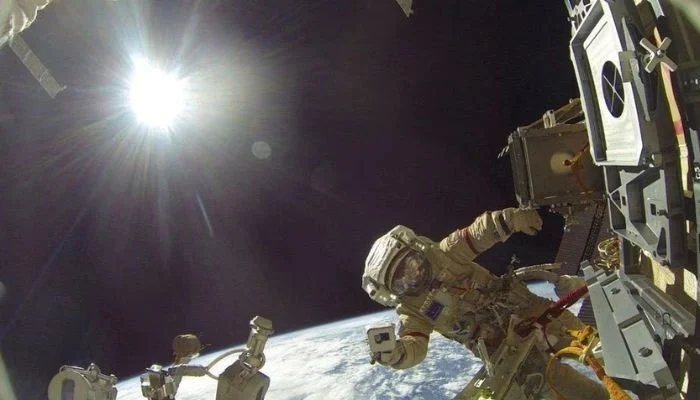
ISLAMABAD – Pakistan is poised for a monumental leap into human spaceflight, with the final selection of two candidates scheduled for October (this month) under the national Astronaut Programme. This landmark initiative, executed in close partnership with the China Manned Space Agency (CMSA), sets the stage for Pakistan’s first astronaut to travel to the Chinese Space Station (CSS), Tiangong.
The collaboration, formalized earlier this year through a key agreement between the Space and Upper Atmosphere Research Commission (Suparco) and the CMSA, specifies that the two selected individuals will undergo one year of extensive training at the Astronaut Centre of China. One of the two will be specialized as a scientific payload specialist, a crucial role focused on conducting unique research during the orbital mission.
Targeting the October 2026 Launch
Following the completion of their training, one astronaut is scheduled to spend one week aboard the Chinese Space Station in October 2026. This mission is designed to be a high-impact scientific endeavor, not merely a symbolic journey.
In preparation, Suparco invited scientific experiment proposals from researchers, scientists, and students across Pakistan. The response has been overwhelming, with 300 experiments already shortlisted for potential inclusion. The research will span critical fields such as:
- Biological and Medical Sciences (including aerospace medicine).
- Applied Physics, Fluid Mechanics, and Microgravity Studies.
- Material Sciences, Space Radiation, and Astronomy.
The CSS is equipped with state-of-the-art experimental racks, facilitating complex, multi-domain research intended to generate findings that can drive advancements in medical research, environmental monitoring, and applied technology back on Earth.
A Strategic Leap in Bilateral Relations
This human spaceflight mission is a cornerstone of a broader, long-term strategic partnership between Beijing and Islamabad.
- Action Plan (2025–2029): The agreement falls under the Action Plan (2025–2029) for a closer China-Pakistan partnership in the new era. This framework emphasizes boosting technological cooperation, including the joint selection and training of astronauts, and the establishment of a Pakistan Space Centre to expand domestic space capabilities.
- Deep Space Goals: Both nations reaffirmed their commitment to implementing the 2021–2030 Space Cooperation Outline Program. This includes working on joint lunar and deep space exploration, specifically multilevel assessments of the International Lunar Research Station (ILRS) and enhanced collaboration in advanced space technologies.
This venture marks Pakistan’s entry into human space exploration, leveraging its strategic alliance with China to propel its scientific community onto the global orbital stage.
