

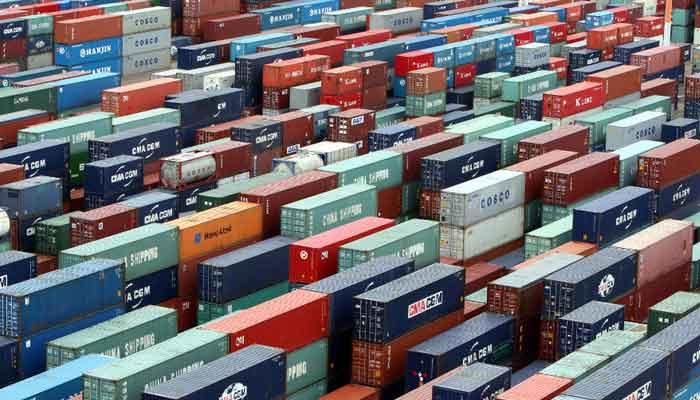
Pakistan is poised for a significant shift in its economic strategy, aiming to foster export-led growth through comprehensive tariff reforms. Over the next five years, the nation plans to drastically reduce its average tariff rate from 20.19% to a mere 9.7%. This ambitious initiative is a cornerstone of the draft National Tariff Policy 2025-30, which also seeks to eliminate regulatory duties and gradually phase out additional customs duties by 2029. These details were shared with a parliamentary panel on Wednesday by officials, as reported by The News on Thursday.
Streamlining Customs Duties and Abolishing Outdated Schedules
As part of the tariff rationalization plan, the existing five-tier customs duty structure will be simplified into a more streamlined four-slab system: 0%, 5%, 10%, and 15%. This reform will also see the maximum customs duty lowered to 15% within five years. Furthermore, the outdated 5th Schedule, a vestige of previous tariff regimes, is slated for abolition. These sweeping reforms are central to the newly introduced National Tariff Policy 2025–30, which is specifically designed to invigorate export-led growth and stimulate job creation. The Ministry of Commerce, the Ministry of Finance, and the Federal Board of Revenue jointly presented and explained the policy during a briefing to the National Assembly’s Standing Committee on Finance and Revenue on Wednesday.
Driving Competitiveness and Phasing Out High Tariffs
The overarching goal of these reforms is to make imports more affordable, thereby encouraging local industries to enhance their competitiveness on a global scale. This strategic pivot aims to shift the economy away from its historical reliance on import-driven consumption, a factor that has frequently contributed to balance of payment crises. Officials informed the parliamentary finance panel that under this new policy, the government will progressively reduce overall average tariffs from the current 20.19% to 9.7% by 2030. The reduction will occur in stages: average tariffs will be cut to 15.65% in the first year, followed by annual reductions to 13%, 11.5%, and 10.25%, ultimately reaching 9.7% by the final year (2030).
Targeted Reductions in Customs and Regulatory Duties
Specific reductions are also planned for various duty categories. The average customs duty (CD), currently at 11.93%, will be brought down to 11.18% in the first year, then to 11%, 10.5%, 10%, and finally 9.7% by 2030. Additional customs duty (ACD), which currently averages 3.66%, will be significantly reduced to 1.76% in the first year, 1% in the second, 0.5% in the third, and completely eliminated by the fourth and fifth years. Similarly, regulatory duty (RD) will see a substantial cut from 4.6% to 2.71% in the first year, followed by reductions to 1% in the second, 0.5% in the third, 0.25% in the fourth, and complete elimination by 2030.
Overcoming Barriers and Embracing Global Competition
Commerce Secretary Jawad Paul underscored the urgency of these reforms, stating, “High tariffs are our biggest barrier.” He acknowledged that Pakistan’s past free trade agreements (FTAs) had not yielded the desired positive outcomes, emphasizing, “We have been protecting local industries for the last 40 years—it’s time to open up.” While some local manufacturers might face increased competition from cheaper imports, officials maintain that this shake-up is essential. FBR’s Chairman Rashid Langrial added, “Tariffs have become a protection wall.”
Projected Economic Impact and Implementation Strategy
Commerce officials cited World Bank modeling that projects a significant increase in exports (10–14%) and imports (5–6%) if the policy is fully implemented. The drafting process involved extensive consultation with the FBR and key stakeholders, and a cabinet-level implementation committee has been established to ensure diligent follow-through. Finance Minister Muhammad Aurangzeb highlighted the fundamental shift in the government’s approach, moving from using tariffs primarily as a revenue tool to leveraging them for economic reform. He stated, “In the past, we used tariffs to solve balance of payments issues. Now, we’re using them to boost competitiveness.”
Ensuring Policy Continuity and Addressing Other Fiscal Challenges
Despite the ambitious nature of these reforms, concerns regarding policy continuity remain. Syed Naveed Qamar, Chairman of the NA Finance Committee, questioned whether the subsequent government would adhere to the current course. The Commerce Secretary responded confidently, asserting, “This policy, like the last one, is built to last five years.” Beyond tariff reforms, the committee also deliberated on enforcement measures to combat Pakistan’s estimated Rs300 billion tax loss from untaxed cigarettes. They rejected police action in favor of entrusting excise and revenue officials with this task. The FBR also reported a decline in tire smuggling and indicated that more anti-smuggling measures are forthcoming.
