

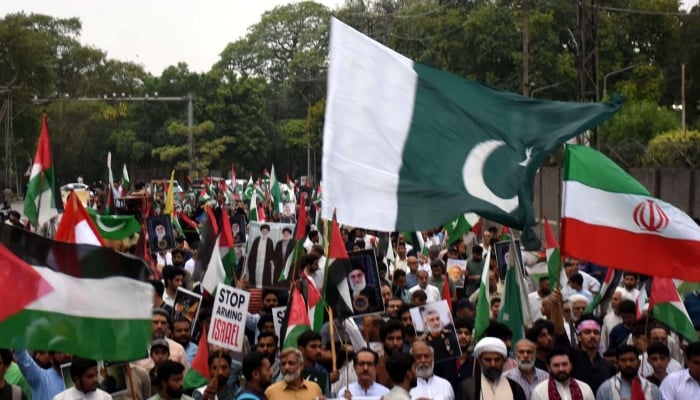
Despite considerable speculation following a high-profile luncheon meeting between Field Marshal Asim Munir and US President Donald Trump at the White House on Wednesday, Pakistan’s position in support of Iran amidst its ongoing conflict with Israel remains “100% the same,” a well-placed source has informed this correspondent.
Speaking on the condition of anonymity, the source—who is privy to the details of the White House meeting—emphasized Pakistan’s unwavering stance. When asked by this correspondent whether Pakistan’s position on the Iran-Israel conflict had shifted after the Trump-Munir meeting, and if Pakistan would continue its support for Iran as before, the source asserted, “We are the only ones who are trying to do something for them [Iran].” Their emphatic response was: “100% the same.”
The Trump-Munir meeting, which concluded with generous praise from the US President for the Pakistani Field Marshal, triggered a wave of disappointment among certain segments in Pakistan, particularly Pakistan Tehreek-e-Insaf (PTI) supporters. This development not only unsettled New Delhi but also incensed PTI’s online base, many of whom took to social media to criticize both Trump and the Pakistani military leadership.
A PTI leader, closely associated with the party founder and currently absconding, was among those spearheading the spread of conspiracy theories suggesting that Pakistan’s policy on the Iran-Israel front might be shifting under US pressure. However, such speculations were dispelled on Thursday when Pakistan’s Foreign Office unequivocally reiterated the country’s longstanding position.
According to a report by APP, Foreign Office Spokesperson Shafqat Ali Khan condemned what he described as “unjustified and illegitimate aggression” by Israel against Iran. He urged the international community and the United Nations to take decisive action to halt Israeli military actions and hold it accountable for its violations of international law. Khan further affirmed that Pakistan “stood in resolute solidarity with the people of Iran” and strongly denounced Israel’s “blatant provocations,” warning that these actions pose a serious threat to peace and stability in the region and beyond.
The reaffirmation from the Foreign Office serves as a direct rebuttal to those casting doubts on Pakistan’s foreign policy direction. Despite the geopolitical ripples generated by the Trump-Munir meeting, Islamabad appears steadfast in its regional commitments, particularly its support for Iran in the face of Israeli aggression.
