

This year, Pakistan has faced unprecedented floods and landslides due to record monsoon rains, triggered by climate change. According to the National Disaster Management Authority (NDMA), since late June, over 1,000 people have been killed and nearly 1,100 injured in monsoon-related disasters.
In 2022, the country was hit by widespread devastation from floods that killed 1,700 people, destroyed agricultural land, displaced millions, and caused an estimated $30 billion in losses. Following this disaster, Pakistan hosted an international donors’ conference in Geneva to appeal for global support for its flood recovery.
Earlier this year, the Senate Standing Committee on Economic Affairs was informed that of the $10 billion pledged by various countries, only $500 million came as a grant, with the rest being loans, as reported by Profit.
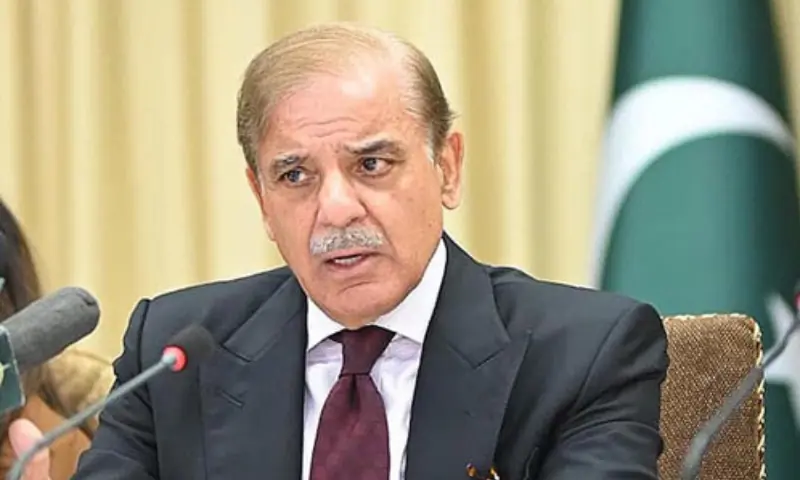
Speaking at a special climate event convened by UN Secretary-General António Guterres and the president of Brazil—the host of COP 30—Prime Minister Shehbaz Sharif stated, “Loans upon loans, and adding to loans, is not a solution.” This event was held for member states to present their new Nationally Determined Contributions (NDCs) with targets for 2035.
PM Shehbaz affirmed Pakistan’s commitment to being part of the solution to the climate crisis, expressing hope that the international community would also honor its commitments for the sake of the country’s future generations.
He reminded delegates that Pakistan was still recovering from the scars of the 2022 floods, which caused losses exceeding $30 billion and displaced millions.
“This year, intense monsoon rains, cloudbursts, flash floods, and devastating urban flooding have impacted over five million people, destroyed 4,100 villages, and claimed more than 1,000 precious lives,” he added.
Highlighting Pakistan’s minimal contribution to global greenhouse gas emissions, the prime minister noted that despite a negligible share in global emissions, “we bear impacts far beyond our share.”
However, he stated that the country’s commitment to its climate agenda remains firm.
In 2022, Pakistan was ranked among the countries most vulnerable to climate change.
“In our 2021 Nationally Determined Contribution, Pakistan committed to an unconditional 15% reduction in projected greenhouse gas emissions by 2030,” he said.
As part of the overall goal to cut emissions by 50%, he shared that Pakistan has already fulfilled its unconditional pledge of a 15% reduction.
“Renewables are currently providing over 32% of Pakistan’s power mix. Solar energy has grown sevenfold since 2021,” the prime minister added.
Furthermore, he emphasized that 23,000 hectares of mangrove forests have been restored.
He expressed regret, however, that the implementation of Pakistan’s national adaptation plan was “hampered, and hampered severely, due to inadequate international climate finance.”
PM Shehbaz announced several new targets: increasing the share of renewables and hydropower to 62% of the country’s energy mix by 2035, expanding nuclear energy capacity by 1,200 megawatts by 2030, shifting 30% of transport to cleaner mobility by 2030, and establishing 3,000 charging stations nationwide. He also announced the scaling up of climate-smart agriculture, safeguarding water security, and advancing the plantation of 1 billion trees.
Earlier in his remarks, UN Secretary-General Antonio Guterres said it was still possible to limit the global temperature rise to 1.5 degrees Celsius by the end of the century.
He told the gathering that clean energy was driving jobs, growth, and sustainable development, while also generating the fastest and cheapest electricity and protecting economies from volatile fossil fuel markets.
“The bottom line: clean is competitive, and climate action is imperative,” he remarked.
He said the Paris Agreement had made a difference over the last 10 years, adding, “Now, we need new plans for 2035 that go much further, and much faster.”
The UN chief stressed that “COP30 in Brazil must conclude with a credible global response plan to get us on track” and “show a credible path to mobilizing the $1.3 trillion annually in climate finance by 2035, as agreed at COP29 in Baku,” including identifying funding sources, making finance accessible, and ensuring accountability.
He also underscored that “developing countries that did least to cause the crisis are suffering most,” calling for “effective debt relief and scaled-up solutions like debt swaps and disaster pause clauses.”
