

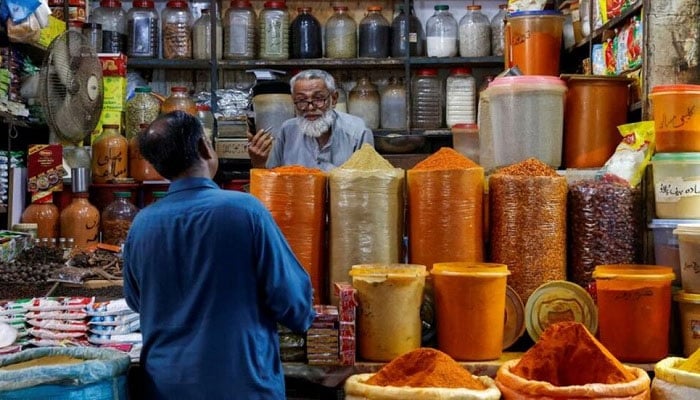
The Pakistan Bureau of Statistics (PBS) announced on Friday that consumer inflation accelerated to 4.1% year-on-year in July, a significant increase from 3.2% in June. This rise was primarily driven by increasing prices for food items, fuels, and medicines.
On a month-on-month basis, consumer price inflation in July was 2.9%.
The higher inflation rate follows the State Bank of Pakistan’s assessment of a worsening inflation outlook, which led it to maintain the key interest rate at 11%. The bank’s monetary policy committee stated on Wednesday that energy prices, particularly for gas, have risen more than anticipated. It believes that the real policy rate should be sufficiently positive to keep inflation within the target range of 5%–7%.
Pakistan is currently implementing a series of economic reforms under a $7 billion International Monetary Fund (IMF) program. This includes a contractionary government budget passed in June that cuts spending to help curb the fiscal deficit.
According to data released by the PBS, the Sensitive Price Indicator (SPI) inflation decreased by 0.9% year-on-year in July. This compares to a 1.9% decrease a month earlier and a 15.7% increase in July 2024. On a month-on-month basis, SPI inflation increased to 3.1% in July 2025, while it had shown no change the previous month and a 2.0% increase in July 2024.
During the week, out of 51 items, prices for 11 increased, 12 decreased, and 28 remained stable. The items that recorded the largest week-on-week price increases included tomatoes (17.26%), chicken (4.76%), and bananas (2.97%).
Conversely, commodities with the biggest week-on-week price drops were eggs (1.80%), firewood (1.11%), and cooked beef (1.08%).
On a year-on-year basis, prices for some commodities decreased significantly, including onions (49.32%), tomatoes (42.31%), and garlic (23.78%). Meanwhile, prices for other items saw substantial increases, such as ladies’ sandals (55.62%), gas charges for Q1 (29.85%), and sugar (21.66%).
