

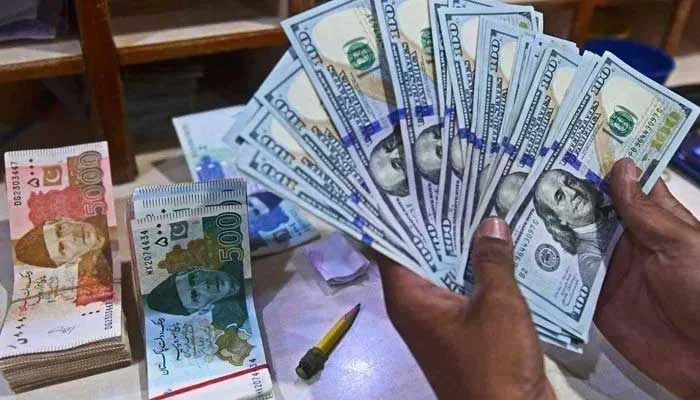
According to a report from The News on Thursday, Pakistan’s external debt and liabilities, which stand at approximately $130 billion, are heavily concentrated in just five currencies, with the U.S. dollar alone accounting for nearly 58% of the total burden.
“The external debt portfolio is predominantly denominated in a few major currencies. The US dollar leads with a 57.8% share, followed by Special Drawing Rights (SDRs) at 29.88%, Chinese Yuan 5.21%, Japanese Yen 3.95%, and the Euro 2.62%,” states the government’s latest Debt Management Strategy (DMS) for 2026-2028.
The Finance Ministry’s strategy emphasizes that external financing will continue to rely primarily on multilateral and bilateral sources that offer concessional terms and longer maturities. However, to diversify its funding, Pakistan plans to re-enter international capital markets with new instruments, including Panda Bonds, Sustainable Bonds, and Eurobonds—contingent on favorable global interest rates and domestic economic stability.
A $1 billion Panda Bond program has already been established, with the first issuance of $200-250 million scheduled for FY2026, followed by additional tranches in the medium term. Preparatory work is also underway for the launch of Sustainable Bonds, supported by a newly developed Sustainable Financing Framework that is currently under cabinet review. This framework will guide the structure, maturity, and repayment terms of all future sustainable bond issuances.
Although access to Eurobond markets has been limited since 2022, the strategy outlines a plan for re-entry as conditions improve. In the meantime, Panda Bonds—Renminbi-denominated securities in the Chinese market—are being developed as an alternative. This move is aimed at diversifying funding sources, lowering borrowing costs, reducing refinancing risk, and enhancing Pakistan’s financial integration with Chinese markets.
To actively manage foreign exchange risks, the government intends to use hedging instruments and develop domestic futures and interest rate swap markets. Innovative options, such as debt-for-nature swaps, are also being considered to help manage external liabilities while aligning with climate goals.
Domestic debt is expected to remain the primary source of government financing during the strategy period. Under the International Monetary Fund (IMF) program, the ceiling for government guarantees is set at Rs5,600 billion as of the end of June 2025. By March 2025, guarantees worth Rs405 billion—equivalent to 0.35% of GDP—had been issued, raising the total outstanding stock to Rs4,548 billion. These include guarantees extended to state-owned enterprises like TCP and PASSCO for commodity-related financing.
