

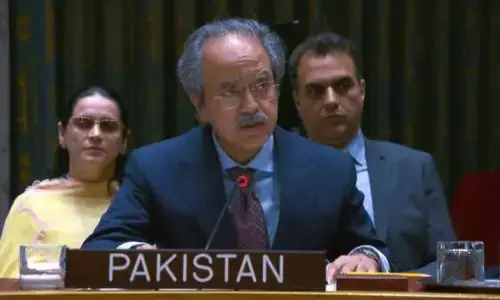
Ambassador Asim Iftikhar Ahmed, Pakistan’s permanent representative to the UN, addressed a UN Council meeting on Afghanistan on Tuesday, stating that organizations such as Al Qaeda, IS-Khorasan, TTP, the East Turkestan Islamic Movement (ETIM), and Baloch insurgent factions like the BLA and Majeed Brigade continue to operate freely from across the border. He presented what he called credible evidence of these groups’ cooperation, including joint training sessions, illicit arms trading, providing refuge to terrorists, and conducting coordinated attacks. According to the ambassador, over 60 terrorist camps function as hubs for cross-border infiltration, targeting civilians, security personnel, and development projects within Pakistan.
The envoy noted that this threat has also spread into cyberspace, with nearly 70 propaganda accounts linked to Afghan IP addresses spreading extremist messages. He emphasized the need for social media platforms to cooperate fully with governments to curb these dangerous networks.
Ambassador Ahmed informed the Council that Pakistan and China had jointly requested the Security Council’s 1267 Sanctions Committee to designate the BLA and Majeed Brigade as terrorist organizations. He urged the Council to act promptly on this request to help prevent their activities. He also specifically mentioned the TTP, describing it as the largest UN-designated group operating on Afghan soil, with an estimated 6,000 fighters. The ambassador stated that Pakistan has successfully thwarted numerous infiltration attempts and seized large stockpiles of sophisticated military equipment left behind by international forces during their withdrawal from Afghanistan. He pointed out that these efforts have come at a great cost, noting that 12 Pakistani soldiers were killed in a single incident just this month.
He also commented that while four years of Taliban rule have brought an end to decades of civil war, Afghanistan remains affected by sanctions, poverty, drug trafficking, and concerns over human rights. He lamented that the UN’s 2025 Humanitarian Needs and Response Plan has only received 27% of the required $2.42 billion in funding. The envoy concluded by reminding the Council that Pakistan has been hosting millions of Afghan refugees for more than four decades, often with inadequate international assistance.
